

Best Kids Wireless Headphones for Safe Listening

About the author...
Dave has been taking gadgets apart since he was old enough to be told not to. Every pick here is checked against the manufacturer's own documentation rather than the retail listing, and each star rating starts from a product's real Amazon customer score before being adjusted for performance, build quality, features and value. Read more about how ratings are calculated.
Table of contents
- Key Takeaways (TL;DR)
- How We Choose
- Quick Comparison
- iClever BTH13 Cat Ear Kids Headphones
- JBL Jr 310 BT Kids On-Ear Headphones
- JBL JR 460NC Noise Cancelling Kids Headphones
- Belkin SoundForm Mini Kids Wireless Headphones
- BuddyPhones PlayTime Volume-Limiting Kids Headphones
- Puro Sound Labs BT2200 Plus Kids Bluetooth Headphones
- EarFun K3 Kids Wired Headphones
- iClever OWS01 Kids Open-Ear Headphones
- JLab JBuddies Studio 2 Wireless Kids Headphones
-
Best Kids Wireless Headphones FAQ
- Is 85dB actually a safe volume for children?
- Do volume-limited headphones actually hold their limit?
- On-ear or over-ear for a child?
- Is Bluetooth safe for children to wear?
- How long should a child wear headphones for?
- Do kids' headphones need a microphone?
- Are open-ear or air-conduction kids headphones actually safer?
- The Best Kids Wireless Headphones for You
The best kids wireless headphones for most families are the iClever BTH13, because they are one of only two pairs here that will drop to roughly 75dB rather than the usual 85dB, and they run for about 50 hours between charges. Eight other pairs below suit different ages, budgets and journeys.
That 75dB number is the reason this guide exists. Almost every pair of children's headphones on sale advertises an 85dB volume cap as its headline safety feature. The WHO and ITU joint standard on safe listening sets its reference exposure for adults at 80dB over 40 hours a week, and for children it uses a lower figure of 75dB over the same period.1 So the cap that the entire category treats as "the safe one" sits above the level that standard uses for kids.
This is not a reason to panic, and it does not make 85dB headphones dangerous. Exposure is a product of loudness and time, so an hour of audiobook at 85dB is a very different thing from a whole weekend of it. But it does change what you should look for. A pair that can be set lower is genuinely more useful than a pair fixed at 85dB, and a pair your child will actually keep on their head beats a stricter pair they refuse to wear.
Key Takeaways (TL;DR)
- 85dB is the category standard, not a target. Treat it as a ceiling you can sit under, not a goal.
- Switchable caps beat fixed ones. The iClever BTH13, iClever OWS01, and the BuddyPhones drop to around 74-75dB.
- Time matters as much as volume. Long listening at a moderate level adds up the same way a short blast does.
- Battery claims are the most honest spec here. Every figure below comes from the manufacturer's own documentation.
- On-ear suits smaller heads, over-ear seals better and is usually more comfortable for longer sessions.
- A wired fallback is worth having for flights, school laptops and flat batteries.
- Fit and durability decide the purchase. Headphones that pinch get abandoned within a week.
How We Choose
Every pair here is judged on the same four things: how it actually sounds and whether the volume cap holds, how well it survives being shoved into a bag, whether its extra features earn their place, and what it costs relative to the others in this list. Specs are taken from each manufacturer's own documentation rather than the retailer's bullet points, which are frequently wrong. The JBL Jr 310 listing, for example, currently lists a different model in its box contents.
We don't run our own lab tests on these — no dedicated rig, no controlled conditions. What we do instead: read through the verified-purchase reviews in full, not just the star average, weighting the ones written weeks or months after purchase over launch-week first impressions, since that's where wear, reliability problems, and real-world performance gaps actually show up. Where a product genuinely lacks that kind of track record, we say so in its write-up rather than papering over it.
Quick Comparison
Each product's overall rating starts from its real Amazon customer rating, then gets adjusted by up to half a star for real-world performance, build quality, features, and value. Click a product name to jump straight to its full review below.
| Product | Best For | Type | Key Detail | Volume Cap |
|---|---|---|---|---|
|
iClever BTH13 Cat Ear Kids Headphones 4.9 |
Most families, and the safest cap | Over-ear | 50h battery | 74 / 85 / 94dB switchable |
|
JBL Jr 310 BT Kids On-Ear Headphones 4.8 |
Best sound per pound | On-ear | 30h battery | 85dB fixed |
|
JBL JR 460NC Noise Cancelling Kids Headphones 4.8 |
Long journeys and noisy rooms | Over-ear | ANC, 20h | 85dB fixed |
|
Belkin SoundForm Mini Kids Wireless Headphones 4.7 |
School bags and spilled drinks | On-ear | 30h battery | 85dB fixed |
|
BuddyPhones PlayTime Volume-Limiting Kids Headphones 4.6 |
Toddlers and pre-schoolers | On-ear | 24h battery | 75 / 85 / 94dB switchable |
|
Puro Sound Labs BT2200 Plus Kids Bluetooth Headphones 4.6 |
Kids who actually care about sound | Convertible | 83% isolation | 85dBA, Bluetooth 5.1 |
|
EarFun K3 Kids Wired Headphones 4.6 |
Flights and devices without Bluetooth | Wired over-ear | No battery, 85/94dBA switch | 40mm driver, 3.5mm jack |
|
iClever OWS01 Kids Open-Ear Headphones 4.5 |
Cycling, scooters and staying aware outdoors | Open-ear (air conduction) | 74/85dBA, 11h battery | TPE build, Bluetooth 5.4 |
|
JLab JBuddies Studio 2 Wireless Kids Headphones 4.8 |
Longest battery life and sibling sharing | On-ear | 65+ hour battery | Cloud Foam cushions, 2-year warranty |
iClever BTH13 Cat Ear Kids Headphones
Best Overall
based on 11786 Amazon reviews (4.7★), adjusted for performance, build and value
What We Love About the Three-Level Cap
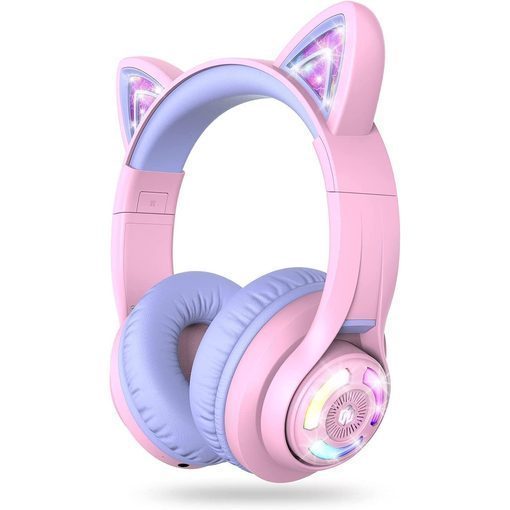
The light-up cat ears are what sells these to children, and the volume switch is what should sell them to you. Three settings cover roughly 74dB, 85dB and 94dB, so you can set a genuinely conservative level for a young child and raise it later. Almost nothing else at this price offers that. The battery is the other headline: about 50 hours with the lights off, which in practice means charging it roughly monthly rather than weekly. One reviewer, a single dad managing five kids' worth of snatching and dropping, said that after having them "for a couple of months now" the headphones had "stood up very well to all the tugs, throws and drops you would expect."
The Three-Level Cap: All The Details
These are over-ear, foldable, and rated by iClever for ages three to sixteen, which is a wide span but reflects an adjustable headband with a lot of travel. There is a 3.5mm socket for wired use, a built-in microphone for calls and lessons, and the LEDs switch off independently to save power. The sound is the compromise. It is clear enough for audiobooks, videos and games, but bass is soft and detail is ordinary next to the JBL or the Puro. For most children, that trade is worth making.
JBL Jr 310 BT Kids On-Ear Headphones
Best Sound Per Pound
based on 4972 Amazon reviews (4.6★), adjusted for performance, build and value
What We Love About the Grown-Up Tuning
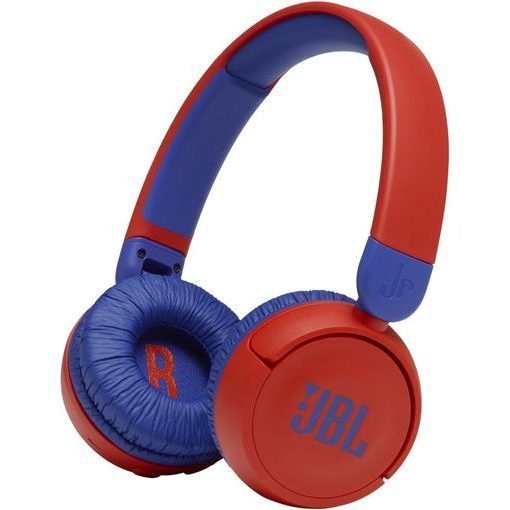
This is the pair that sounds most like proper headphones. JBL has not simply thinned everything out to hit the volume cap, so music keeps some weight to it and speech stays clear. Battery life is 30 hours and a full charge takes under two hours from empty.2 If your child has started caring what their music sounds like but you are not spending premium money, start here. Worth flagging honestly: none of its reviews report back after any real stretch of ownership, mostly first-impression praise for the sound and the fit, so there's no verified long-term signal behind the near-5-star average yet.
The Grown-Up Tuning: All The Details
The cap is fixed at 85dB with no lower setting, which is the main thing separating it from our top pick. It is on-ear rather than over-ear, so it sits lighter but seals less, and noisy environments will tempt a child to turn it up. There is a built-in microphone, an inline control panel, reusable stickers, and a 3.5mm input for wired listening. Impedance is 32 ohms across a 20Hz to 20kHz range, so it drives easily from a tablet or laptop.
JBL JR 460NC Noise Cancelling Kids Headphones
Best For Long Journeys
based on 257 Amazon reviews (4.5★), adjusted for performance, build and value
What We Love About the Noise Cancelling
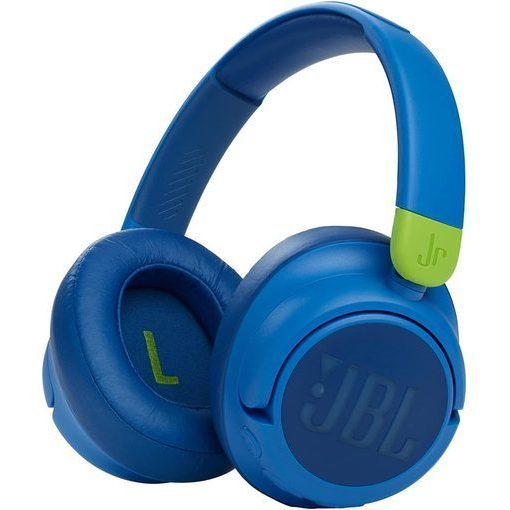
Active noise cancelling matters more on children's headphones than it does on yours, and not for the reason people assume. Cutting the drone of a car or a plane removes the reason a child reaches for the volume in the first place, so the 85dB cap stops feeling restrictive. On a long journey this is the difference between a cap that works and a cap that gets fought. There's no honest long-term signal to lean on yet, either: with only three reviews visible at the time of writing and none of them describing more than a first listen, there simply isn't the ownership history the other picks here have.
The Noise Cancelling: All The Details
These are over-ear, so they seal properly before the electronics do anything. Battery life runs to around 20 hours with cancelling switched on and closer to 30 with it off, recharging in about two hours. There is a microphone for calls and a 3.5mm cable in the box for aircraft sockets and flat batteries. The catch is the review history: 257 ratings is a fraction of what the iClever and Belkin have, so there is less collective evidence about how these hold up over years.
Belkin SoundForm Mini Kids Wireless Headphones
Best For School
based on 2520 Amazon reviews (4.5★), adjusted for performance, build and value
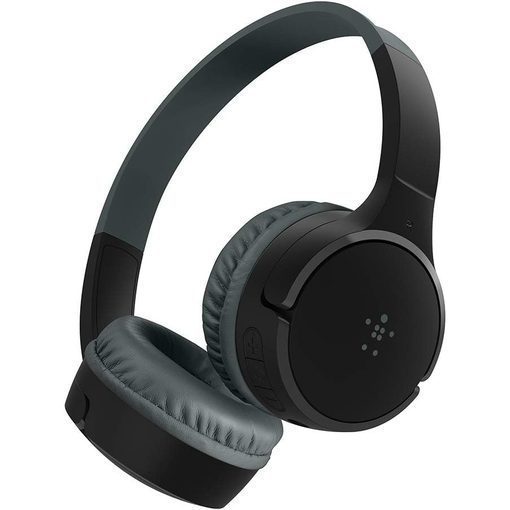
What We Love About the Spill Testing
Belkin builds these to be treated badly. The company tests the materials against what it describes as two years of spills and accidents, which is a more useful claim than most durability marketing because it names a timeframe. Battery life is up to 30 hours, and a ten-minute charge buys around three hours of playback, which rescues a lot of mornings.3 Real ownership backs that durability claim up, too: one buyer said "we've had this product for years now and wow they are still so loved and used by my kids everywhere we go."
The Spill Testing: All The Details
The cap is 85dB in Bluetooth mode, fixed, with no lower setting. They are on-ear, sized for smaller heads, and rated from age three up. USB-C handles charging. Sound is the weakest part of the package: perfectly fine for lessons, videos and audiobooks, noticeably flatter than the JBL for music. Buy these because they will survive a school bag, not because they will impress anyone.
BuddyPhones PlayTime Volume-Limiting Kids Headphones
Best For Younger Children
based on 1497 Amazon reviews (4.4★), adjusted for performance, build and value
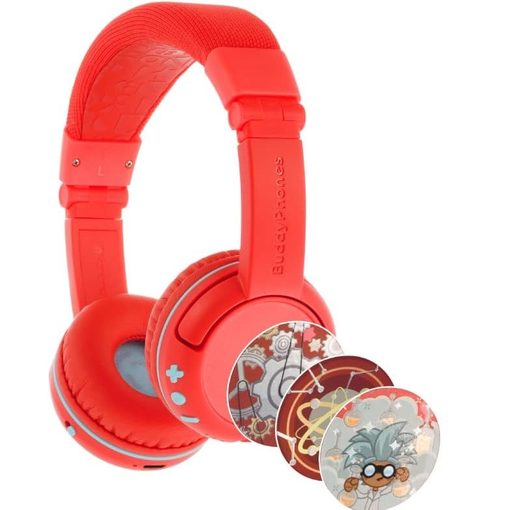
What We Love About the Toddler Mode
Three parent-set modes cover 75dB, 85dB and 94dB, and the controls are deliberately awkward for small fingers so a child cannot quietly move themselves up a level. The 75dB setting is the lowest genuine option in this list and lines up with the figure the WHO and ITU standard uses for children. onanoff pitches these at ages three to seven, and the sizing reflects that. One parent who'd already returned a pricier noise-cancelling pair that failed within two months reported back that these were holding up well: "kids havent damaged them yet and we are a few months in."
The Toddler Mode: All The Details
Battery life is 24 hours over Bluetooth, with an audio cable included for wired use that runs as long as the source device does. A second headphone socket lets a sibling plug into the same audio, which defuses a specific and familiar argument on car journeys. There is also a StudyMode that lifts the vocal range to make speech easier to follow. They are on-ear and fold flat, and a travel bag and sticker discs come in the box. Older children will outgrow the fit before they outgrow the features.
Puro Sound Labs BT2200 Plus Kids Bluetooth Headphones
Best Sound Quality
based on 530 Amazon reviews (4.4★), adjusted for performance, build and value
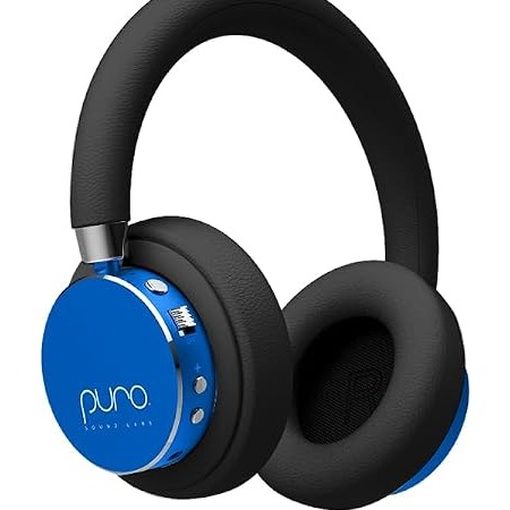
What We Love About the Passive Isolation
Puro's approach is the one that makes the most sense to me. Rather than fighting the volume cap, it blocks around 83% of ambient noise passively, so 85dBA is plenty loud enough because there is less noise to compete with.4 The ear cushions swap between on-ear and over-ear, which is unusual and genuinely useful as a child grows. One buyer who'd previously churned through headphones that "all broken very quickly" said these had "been excellent for over 18 months," a track record long enough to be a genuine signal rather than launch-week enthusiasm.
The Passive Isolation: All The Details
The limit is 85dBA, battery life is 20 hours of playback with 200 hours of standby, and it runs Bluetooth 5.1. USB-C charges it and a 3.5mm cable is included. It is the most expensive pair here by a clear margin and the shortest-lived on a charge, which is why it scores lowest on value despite scoring highest on sound. If your child has outgrown novelty headphones and notices the difference, this is the upgrade. If they are six and want cat ears, it is money wasted.
EarFun K3 Kids Wired Headphones
Best Wired Pick
based on 305 Amazon reviews (4.5★), adjusted for performance, build and value
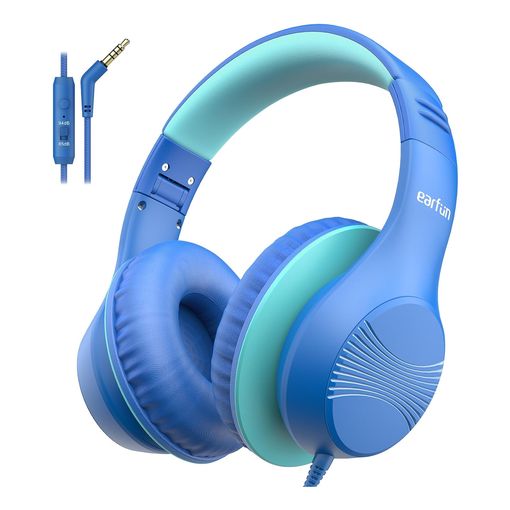
What We Love About Going Wired
Every other pair on this list is fighting a battery: charging schedules, a dead pack on a long flight, a toddler who won't remember to plug it in overnight. The K3 sidesteps all of that by simply not having one. It plugs into anything with a 3.5mm jack, so it works with school Chromebooks that block Bluetooth pairing, in-flight entertainment systems, and hand-me-down tablets without ever needing a charge. An inline switch on the cable still toggles between 85dB and 94dB, so you're not giving up the volume cap to get there. None of the verified-purchase reviews we found establish a real ownership timeframe, mostly quick first impressions on fit and comfort, so there's no long-term wear signal to report on this one yet.
The Wired Pick: All The Details
A 40mm dynamic driver drives the sound, with an 18-ohm impedance that runs happily off a tablet's headphone jack without needing extra amplification. The build is straightforward: soft cushioned pads, an adjustable headband, and a folding hinge, with nothing electronic to fail beyond the volume switch itself. EarFun backs it with a standard 30-day return window rather than an extended warranty, and the brand has a genuine track record, with over 100 awards from audio outlets according to its own listing. The tradeoff for going wired is obvious: no Bluetooth means no cord-free freedom, and the cable is the one thing here that can eventually fray with daily tugging.
iClever OWS01 Kids Open-Ear Headphones
Best For Outdoor Awareness
based on 665 Amazon reviews (4.4★), adjusted for performance, build and value
What We Love About the Open-Ear Design
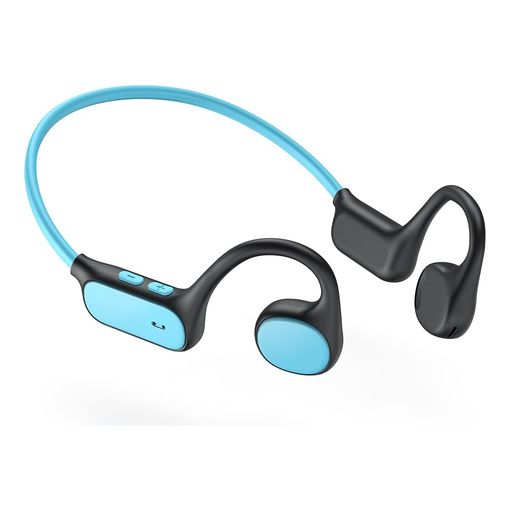
Every other pair on this list covers the ear, at least partly, which is exactly the point for a bedroom or a car seat but a real problem for a child riding a bike or crossing a car park with music on. The OWS01 sits just outside the ear canal using air conduction rather than sealing over it, so a child can hear a shout, a car, or a doorbell while still listening. iClever's own product page states the volume limit at 74 or 85dBA, matching the lower of the two settings on our overall pick.5 At 0.8oz it's the lightest headphone in this entire lineup. One reviewer, weighing in after a shorter ownership window, was upfront about the gap rather than papering over it: she gave it four stars and wrote plainly that she "can't comment on longevity yet," which is a more honest signal than a rushed five-star review would have been.
The Outdoor-Awareness Pick: All The Details
The housing is soft TPE with a memory-steel wire in the back-hanging band that bends through a full 360 degrees without deforming, and Amazon's own spec sheet lists roughly 11 hours of battery life per charge, noticeably shorter than the wireless norm elsewhere in this post. Bluetooth 5.4 handles the connection, and there's no 3.5mm jack for a wired fallback if the battery runs out. One real limitation worth naming plainly: nothing in iClever's own listing or product page mentions a built-in microphone, so treat this as an audio-only pick rather than one for calls, unlike most of the rest of this lineup.
JLab JBuddies Studio 2 Wireless Kids Headphones
Best Battery Life
based on 237 Amazon reviews (4.4★), adjusted for performance, build and value
What We Love About the Battery-Life Pick
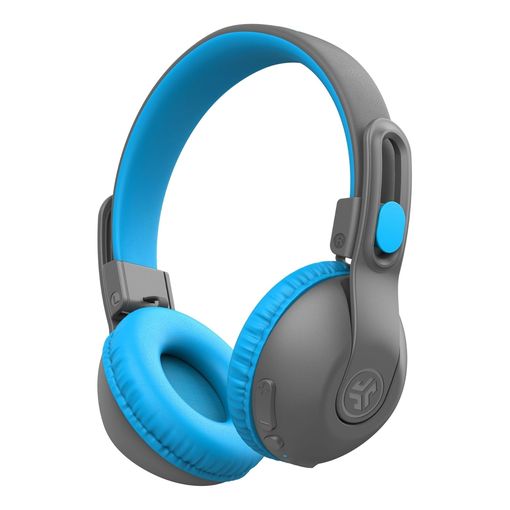
JLab rates the JBuddies Studio 2 at over 65 hours of wireless playtime, comfortably beating every other wireless pair in this post and turning weekly charging into more of a monthly chore.6 A share port lets a second pair plug in via USB-C so two children can listen to the same source together, similar in spirit to the BuddyPhones' second jack but built around JLab's own Cloud Foam cushions instead. The volume limiter defaults to 85dB with an adjustable step up to 95dB for louder environments, both figures confirmed directly on JLab's own product page rather than just the Amazon listing.6 Real-world durability backs the battery claim up too: one buyer summed it up simply, saying they'd "had for over a year and worked great."
The Battery-Life Pick: All The Details
Pinch-free hinges and smooth-sliding metal adjusters are built specifically around small fingers, and the design covers a wide age range, from six-year-olds through young teens, thanks to a generous headband adjustment. JLab backs the JBuddies Studio 2 with a two-year limited warranty, longer than most of the rest of this lineup and a genuine sign the brand expects these to last. It can run wired over USB-C if the battery ever does die, useful for a flight where Bluetooth headphones aren't permitted during boarding. With 237 reviews behind it, the track record here is real but thinner than the highest-volume picks above, so weigh that against the standout battery figure.
Best Kids Wireless Headphones FAQ
Is 85dB actually a safe volume for children?
It is a reasonable ceiling rather than a guaranteed safe level. The WHO and ITU joint standard uses 80dB over 40 hours a week as its reference exposure for adults and a lower 75dB figure for children.1 Because exposure combines loudness and duration, the same standard notes that listening at 100dB for 16 minutes does roughly the same damage as 80dB for 40 hours. A fixed 85dB cap is much better than no cap, but it works best alongside limits on how long headphones stay on.
Do volume-limited headphones actually hold their limit?
Mostly, but the cap applies to the headphones, not to whatever is feeding them. Some models limit reliably over Bluetooth and less strictly when used wired, since a wired connection can bypass the electronics doing the limiting. If a pair offers both, it is worth assuming the wired mode is the louder one.
On-ear or over-ear for a child?
Over-ear seals better, which usually means a child listens at a lower volume for the same perceived loudness, and it tends to be more comfortable over long periods. On-ear is lighter and fits smaller heads more easily. For a pre-schooler, on-ear is normally the practical choice; from around seven or eight, over-ear becomes the better one.
Is Bluetooth safe for children to wear?
Bluetooth transmits at very low power, far below the levels that regulators set limits around, and there is no established evidence of harm from it. The realistic risk from a pair of headphones is the sound level and how long it is used, not the radio.
How long should a child wear headphones for?
There is no single official number, but the useful principle is that exposure accumulates. Regular breaks matter more than any specific limit, and the WHO's concern is with cumulative recreational listening rather than any one session.7 A practical approach is a break every hour and keeping headphones off during activities that do not need them.
Do kids' headphones need a microphone?
If they will be used for online lessons, calls or gaming, yes. Every pair here has one except the open-ear iClever OWS01, which is built around outdoor awareness rather than calls, so check that spec before buying for a specific purpose. If headphones are purely for watching videos and listening to music, a microphone makes no difference either way.
Are open-ear or air-conduction kids headphones actually safer?
They change the tradeoff rather than eliminating risk outright. An open-ear design like the iClever OWS01 leaves the ear canal uncovered, so a child stays aware of traffic, a shout, or someone approaching, which matters more for outdoor use than for a plane seat or a bedroom. It doesn't seal out background noise the way an over-ear pair does, so a child in a genuinely loud environment may still be tempted to push the volume higher to compensate. Treat it as the right tool for cycling to school or playing in the garden, not a universal upgrade over a sealed pair.
The Best Kids Wireless Headphones for You
For most families the iClever BTH13 is the sensible buy: a switchable cap that goes lower than the category standard, enormous battery life, and a design children actually want to wear. If sound quality matters more, the JBL Jr 310 BT is the better listen for modest money and the Puro BT2200 Plus is the proper upgrade. Choose the JBL JR 460NC if your child travels a lot, the Belkin SoundForm Mini if the headphones are heading into a school bag every day, and the BuddyPhones PlayTime if your child is still small enough to need a 75dB option. If Bluetooth pairing keeps getting blocked by a school Chromebook, the wired EarFun K3 sidesteps the problem entirely, and the JLab JBuddies Studio 2 is worth a look if monthly rather than weekly charging matters more to you than anything else on this list.