

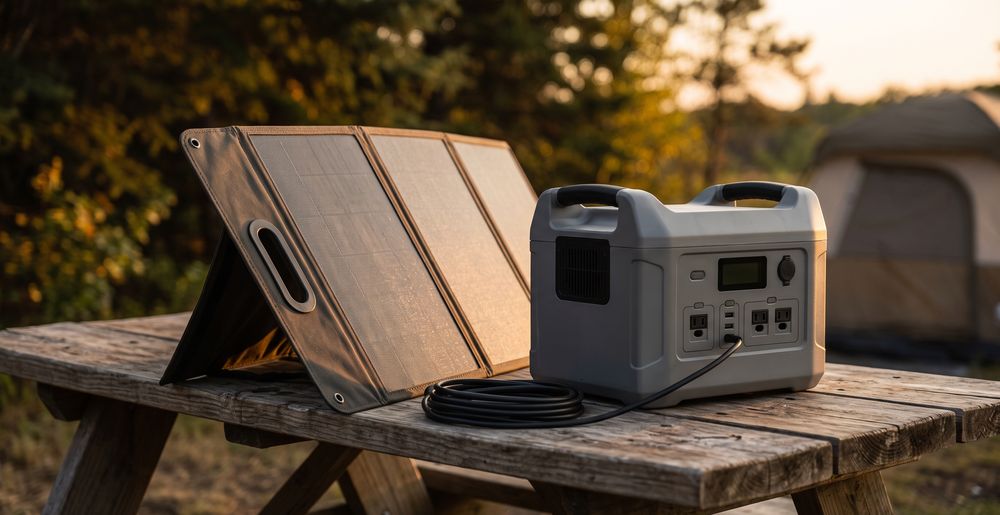
Best Solar Generator for Backup and Off-Grid Power

About the author...
Dave has been taking gadgets apart since he was old enough to be told not to. Every pick here is checked against the manufacturer's own documentation rather than the retail listing, and each star rating starts from a product's real Amazon customer score before being adjusted for performance, build quality, features and value. Read more about how ratings are calculated.
Table of contents
- Key Takeaways (TL;DR)
- How We Choose
- Quick Comparison
- Jackery Explorer 1000 v2 with SolarSaga 100W Solar Panel
- EcoFlow DELTA 2 Max Portable Power Station
- Anker SOLIX C800 Portable Power Station
- BLUETTI EB3A Portable Power Station
- EcoFlow RIVER 2 Portable Power Station
- Anker 521 Portable Power Station (PowerHouse 256Wh)
- AFERIY P310 Portable Power Station
- DJI Power 1000 Portable Power Station
-
Best Solar Generator FAQ
- What is the difference between marketed capacity and usable capacity?
- Does LiFePO4 battery chemistry actually matter, or is it marketing?
- Will the bundled solar panel actually recharge the battery in a day?
- Can I just plug a solar panel into a wall socket?
- What is the difference between continuous and surge wattage?
- Can I take a solar generator on a flight?
- Is it safe to run a CPAP machine or other medical equipment off one of these?
- How long will one of these last before the battery degrades noticeably?
- What size solar generator do I actually need?
- The Best Solar Generator for You
The best solar generator for most people is the Jackery Explorer 1000 v2, sold with a SolarSaga 100W panel. Its 1070Wh LiFePO4 battery and 1500W AC output cover weekend camping and a genuine power cut, without the weight or price of the larger units below. Seven alternatives follow, covering more raw power, faster recharging, and lower entry prices depending on what you actually need to run.
A solar generator is really two products wearing one name. It's a rechargeable battery pack with a built-in AC inverter, plus, usually, a folding solar panel to top it up away from a wall socket. It has nothing to do with a fuel-burning generator beyond the shared job of keeping the lights on. That distinction matters, because it changes what the thing is actually good for. There is no exhaust to vent, no fuel to store, and no engine noise. But there is also a hard capacity ceiling. Once the battery runs out, you are waiting on a wall socket or the sun, not pouring in another jerry can.
What separates a good unit from a disappointing one comes down to a handful of numbers, and marketing copy tends to blur them together. How much of the rated capacity can you actually pull out through the inverter? Is the battery built on lithium iron phosphate (LiFePO4) or an older nickel-based chemistry? And is the bundled solar panel even large enough to refill the battery in a normal day, rather than a lab-perfect one? We checked manufacturer spec sheets rather than Amazon bullet points to sort out which of these eight actually deliver.
Key Takeaways (TL;DR)
- LiFePO4 batteries last far longer than older lithium chemistries. All eight picks here use it, rated for roughly 2,500 to 4,000+ cycles versus 1,000-2,000 for NMC.1
- Usable output is lower than the marketed watt-hours. Expect roughly 85-90% of rated capacity once it passes through the AC inverter.
- Continuous wattage matters more than surge wattage. Surge figures cover a brief motor start-up, not sustained running load.
- A bundled solar panel is rarely enough to fully recharge a large unit in one realistic day. Rated watts assume lab conditions; real sun delivers less.2
- Warranty length is a real signal of confidence, though not a perfect one. It ranges from 2 years to 7 years across this group; a long warranty from a newer, less established brand is worth weighing alongside everything else, not read in isolation.
- Every unit here is too large for standard aircraft carry-on. Passenger lithium battery rules cap out at 160Wh; all eight exceed that.3
- A bigger battery is not always the right buy. Weight and price both scale with capacity, and a 256Wh unit covers more use cases than it sounds like.
How We Choose
We judged each unit on four things. Continuous AC output measured against what its capacity should realistically support, and the battery chemistry and cycle-life rating behind the marketed capacity. We also weighed how useful the port selection and recharge speed are day to day, and price relative to the other seven units here, not the wider market. Every capacity, wattage, and cycle-life figure was checked against the manufacturer's own spec page, not the Amazon listing. Portable power stations are a category where retailer bullet points regularly round up.
We don't run our own lab tests on these — no dedicated rig, no controlled conditions. What we do instead: read through the verified-purchase reviews in full, not just the star average, weighting the ones written weeks or months after purchase over launch-week first impressions, since that's where wear, reliability problems, and real-world performance gaps actually show up. Where a product genuinely lacks that kind of track record, we say so in its write-up rather than papering over it.
Quick Comparison
Each product's overall rating starts from its real Amazon customer rating, then gets adjusted by up to half a star for real-world performance, build quality, features, and value. Click a product name to jump straight to its full review below.
| Product | Best For | Type | Key Detail | AC Output |
|---|---|---|---|---|
|
Jackery Explorer 1000 v2 with SolarSaga 100W Solar Panel 4.9 |
One balanced kit for most households | Power station + solar panel | 1070Wh | LiFePO4, 1500W AC, 4000-cycle battery |
|
EcoFlow DELTA 2 Max Portable Power Station 4.7 |
Home backup buyers who need real headroom | Expandable power station | 2048Wh (expandable to 6144Wh) | LiFePO4, 2400W AC / 3400W surge |
|
Anker SOLIX C800 Portable Power Station 4.9 |
Buyers who hate waiting around to recharge | Power station | 768Wh | LiFePO4, 1200W AC / 1600W surge |
|
BLUETTI EB3A Portable Power Station 4.4 |
The cheapest well-tested way into the category | Compact power station | 268Wh | LiFePO4, 600W AC / 1200W surge |
|
EcoFlow RIVER 2 Portable Power Station 4.4 |
Backpackers who count every gram | Compact power station | 256Wh | LiFePO4, 300W AC / 600W surge |
|
Anker 521 Portable Power Station (PowerHouse 256Wh) 4.3 |
The lowest-cost entry point into the category | Compact power station | 256Wh | LiFePO4, 200W AC, 5-year warranty |
|
AFERIY P310 Portable Power Station 4.7 |
Buyers who want the single biggest battery and longest warranty here | Expandable power station | 3840Wh (expandable to 11,520Wh) | LiFePO4, 3600W AC, 2-7yr warranty with registration |
|
DJI Power 1000 Portable Power Station 4.8 |
Buyers who need power-tool-grade output without a huge battery | Power station | 1024Wh | LiFePO4, 2200W continuous AC, 4,000-cycle battery |
Jackery Explorer 1000 v2 with SolarSaga 100W Solar Panel
Best Overall Solar Generator
based on 125 Amazon reviews (4.6★), adjusted for performance, build and value
What We Love About the All-Rounder Kit
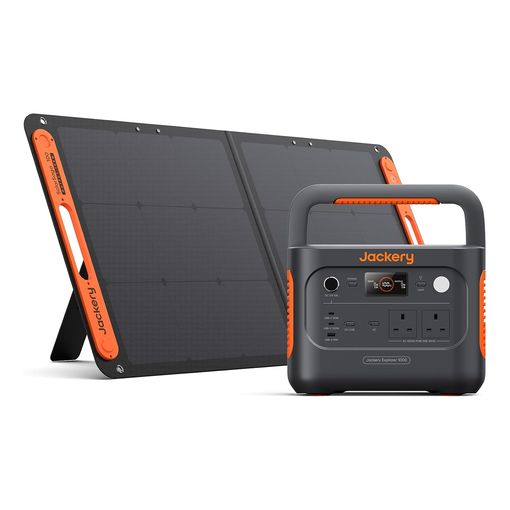
This is the pick that avoids picking a lane. A 1070Wh LiFePO4 battery with 1500W of continuous AC output runs a mini fridge, a laptop, and a run of lights at the same time. That puts it well above the small units in this roundup, without the bulk of the true home-backup options. Jackery ships it with an actual SolarSaga 100W folding panel, rather than leaving solar as an accessory you have to buy separately. The AC inverter is pure sine wave too, which means it produces clean power that's safe for sensitive electronics, not the choppier output cheaper inverters put out. Its reviews are plentiful and enthusiastic, several describing it running a CPAP machine, a hot plate or a laptop within the first weeks of ownership, but none we found pinned down months or years of use the way a handful of the other products in this lineup do, so weigh the early praise as exactly that rather than a proven long-term track record.
The All-Rounder Kit: What's Inside
Jackery rates the battery for 4,000 cycles to 80% capacity, among the higher figures in this group, and backs the unit with a 3-year warranty extendable to 5.4 Full wall recharge takes around 1.5 hours. Three pure sine wave AC outlets plus dual 100W USB-C ports cover most simultaneous-device scenarios. The catch is the bundled panel. A single 100W panel makes a real dent in the battery across a full sunny day, but it won't fully refill a 1070Wh pack from empty unless conditions are close to ideal. Treat it as a trickle-charge companion, not the unit's primary charging method.
EcoFlow DELTA 2 Max Portable Power Station
Best for Home Backup Power
based on 299 Amazon reviews (4.4★), adjusted for performance, build and value
Why the Home Backup Pick Earns Its Spot
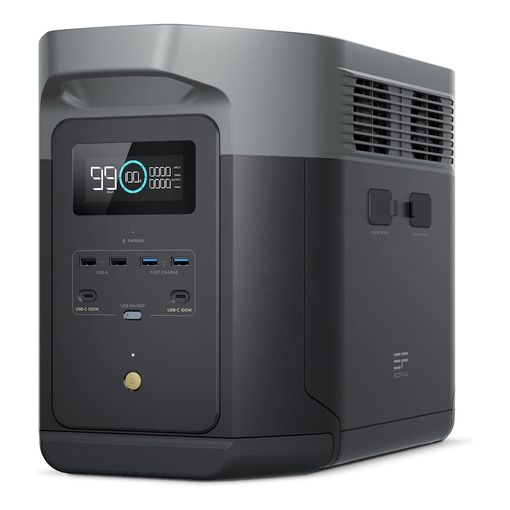
At 2048Wh with 2400W of continuous AC output, this is the only unit here that can realistically stand in for a chunk of a home's circuits during an outage. It can run a fridge, a router, and several lights for an extended stretch, not just a few hours. Two extra battery ports let you add EcoFlow's own expansion packs, pushing total capacity up to 6144Wh. That means buyers can start smaller and scale up later, instead of committing to the ceiling on day one. Solar input tops out at a genuinely useful 1000W across dual MPPT inputs, far beyond what the smaller units here can accept. One owner who'd had the unit for nearly a year reported it had already powered their fridge and freezer through half a dozen outages without a hitch, real confirmation that the home-backup pitch holds up beyond the first few weeks.
Powering a Home Circuit: The Details
The battery is LiFePO4 rated for 3,000 cycles to 80% capacity, and EcoFlow backs it with a 5-year warranty, tied for the longest in this roundup.5 Wall charging is fast, up to 80% in a little over an hour. X-Boost mode lets the inverter push demanding motor-driven appliances up to 3400W in short bursts, well past its 2400W continuous rating.5 None of this comes cheap, and at 23kg it isn't something you carry to a campsite in one trip. This is a unit bought for a fixed spot near a wall socket, not one that gets thrown in a rucksack. Buyers expecting camping-grade portability at this capacity will be disappointed.
Anker SOLIX C800 Portable Power Station
Fastest Recharge
based on 592 Amazon reviews (4.5★), adjusted for performance, build and value
The Case for the Fastest Recharge
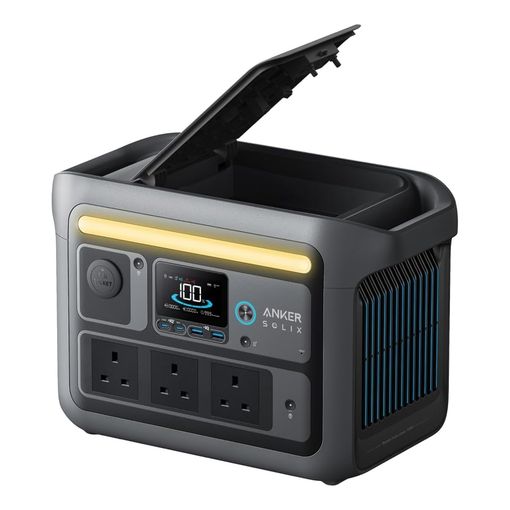
Anker's UltraFast mode pulls a full recharge from empty to 100% in well under an hour on wall power.6 That's a genuine practical advantage over units that take an hour or more just to hit 80%. Paired with a 768Wh battery and 1200W continuous AC output (1600W with SurgePad engaged for brief high-draw moments), it sits in a comfortable middle ground between the small grab-and-go units and the heavier home-backup pack above. Five hundred and ninety-two Amazon reviews at 4.5 stars is a solid track record for a unit at this price tier. The drop-tested unibody shell and integrated cooling reflect a build quality that shows up in the review pattern too. One owner who'd used it across two full summers of camping trips said it was still handling all their charging, air-bed inflating and lighting duties without complaint, a genuine multi-season confirmation rather than a first-week impression.
Inside the Sub-Hour Charger
The battery is LiFePO4 rated for 3,000 cycles to 80% capacity.6 Solar input caps at 300W, enough to take it from empty to 80% in around 2.3 hours with a full-size panel connected. That's well ahead of what the smaller units here can manage. It ships without a solar panel in this listing, so factor that into the total cost if solar charging matters to you. The five AC outlets are a genuinely generous number for a unit this size, and the storage compartment under the lid is a small but useful touch for keeping cables tidy.
BLUETTI EB3A Portable Power Station
Best Value Solar Generator
based on 5705 Amazon reviews (4.2★), adjusted for performance, build and value
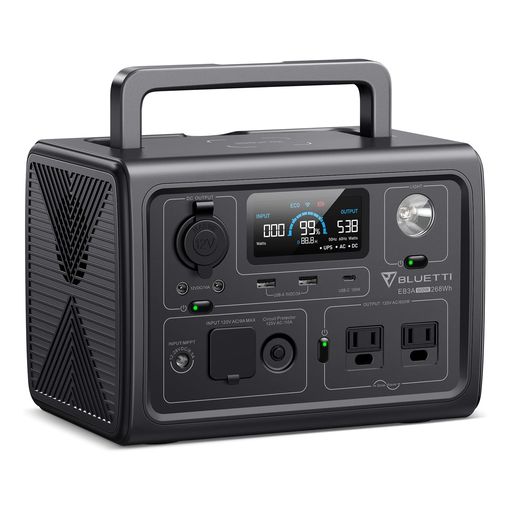
What Makes the Value Pick Worth It
Over 5,700 Amazon reviews make this the single most road-tested unit in this roundup, by a wide margin. A 4.2-star average across that many buyers is a more reliable signal than a shinier rating built on a few hundred reviews. The 268Wh LiFePO4 battery and 600W AC output (1200W surge) won't run a fridge, but it comfortably covers phones, a laptop, a CPAP machine, or a router through a short outage. Combined AC and solar fast-charging pulls it to 80% in around half an hour. Its UPS pass-through mode switches over fast enough to keep a desktop PC running through a brief mains interruption. Its reviews are thin on genuine long-term reports, too: the only one on the listing at the time of writing wasn't a Verified Purchase, so there's no dated ownership account here to weigh alongside the wider rating.
The Budget Unit's Real Limits
This is where the roundup is honest about tradeoffs, rather than pretending everything here is excellent. BLUETTI backs the EB3A with a 2-year warranty, the shortest in this lineup. Its cycle-life rating of 2,500 to 80% capacity is also the lowest figure in this lineup, though still comfortably ahead of older lithium chemistries.7 Solar input maxes out at 200W, workable for topping up but slow for a full recharge from empty. At 4.6kg it is light enough to travel with. For buyers whose actual need is backing up small electronics rather than appliances, the gap between this and the pricier units matters less than the price difference does.
EcoFlow RIVER 2 Portable Power Station
Most Portable Solar Generator
based on 349 Amazon reviews (4.4★), adjusted for performance, build and value
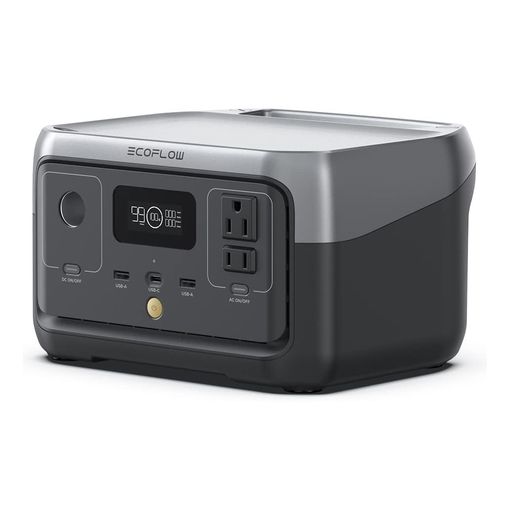
Why This Is the One to Grab and Go
At 3.5kg, this is the lightest unit in the entire roundup by a clear margin, closer to a large laptop bag than a piece of equipment you plan a trip around. The 256Wh LiFePO4 battery recharges fully from a wall socket in about 60 minutes, quick for a unit at any size. X-Boost mode lets its 300W rated inverter push through devices rated as high as 600W in short bursts, covering more small appliances than the number on the box suggests. Its review section was empty at the time of writing, so unlike most of the other products here, there's no dated ownership account to weigh this one against yet.
Built Light: What You're Trading Away
Three hundred watts of continuous output is genuinely the lowest ceiling in this roundup. Treat this as a device charger and camping-light unit, not anything with a compressor or heating element in it. EcoFlow rates the battery for 3,000-plus cycles and backs it with a 5-year warranty, both strong figures for the price point.8 It pairs with a 110W solar panel sold separately. EcoFlow's own figures put a full solar recharge at around 3 hours in strong, consistent sun, a claim that assumes better conditions than most gardens see on a cloudy afternoon. For a bag that goes on every trip regardless of destination, the weight saving is worth the output ceiling.
Anker 521 Portable Power Station (PowerHouse 256Wh)
Most Affordable Entry Point
based on 302 Amazon reviews (4.3★), adjusted for performance, build and value
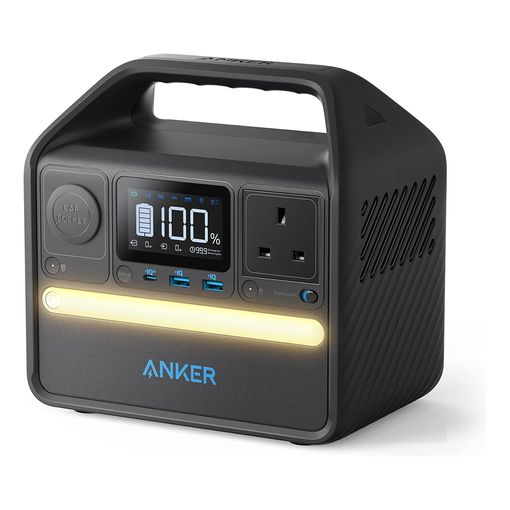
The Low-Cost Way Into the Category
If the goal is simply finding out whether owning a solar generator changes anything for you, this is the cheapest reasonable way to do it. It won't put you off the whole category the way a genuinely weak unit might. The 256Wh LiFePO4 battery pairs with a five-port layout: one AC outlet, two USB-A, one USB-C at up to 60W, and a car socket, plus a built-in LED light bar that turns the whole front panel into a lantern. Anker backs it with a 5-year warranty despite the low price, a genuinely strong commitment at this end of the market.9 One owner posted an update after more than a year of ownership confirming it was "still working perfectly" at the same level of performance as day one, exactly the kind of longevity signal a star rating alone can't provide.
Where the Entry-Level Anker Falls Short
Two hundred watts of continuous AC output is the lowest figure in this entire roundup, and a single AC outlet means no running two mains devices at once. It will charge phones, a laptop, and small USB devices without complaint, but will trip on almost anything with a motor or heating element. A full recharge from a wall adapter takes several hours, noticeably longer than the faster-charging units above, and its solar input caps at 65W, so an oversized panel won't charge it any faster than a well-matched one would.9 It is a genuinely capable small-device charger for the price, but buyers picturing anything closer to appliance-level backup should look further up this list.
AFERIY P310 Portable Power Station
Largest Battery in This Lineup
based on 306 Amazon reviews (4.6★), adjusted for performance, build and value
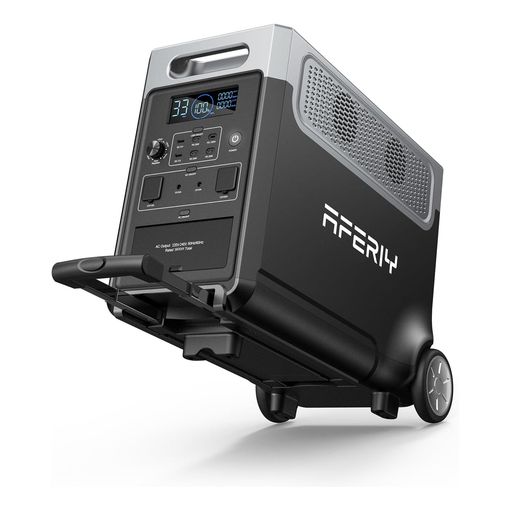
Why the Biggest Battery Here Earns Its Spot
At 3840Wh, this is the largest single unit in the lineup, well past the EcoFlow DELTA 2 Max's base capacity and close to double the Jackery's. A 3600W continuous AC output means it can run several genuinely heavy appliances, a microwave, a coffee machine, a fridge, at the same time rather than one at a time, and two expansion ports let the total climb to 11,520Wh if a single unit still isn't enough.10 AFERIY's base warranty is 2 years, but it extends to 5 or 7 years once you register the product, the longest achievable figure in this roundup, and wheels plus a telescoping handle make a 42kg unit at least possible to move without a trolley. Its review section is thinner than the more established brands' here: most of what we found was either too short to establish real ownership time or turned out to describe one of AFERIY's smaller sibling models rather than this exact 3840Wh unit, so we can't offer a genuine longevity account for the P310 itself the way we can for several other products in this roundup.
The Biggest Battery: All The Details
The battery is LiFePO4, rated for 4,000-plus cycles to 80% capacity, roughly in line with the strongest figures elsewhere in this lineup.10 Combined AC and solar charging takes it from empty to 99% in around 1.5 hours, and solar input tops out at a genuinely serious 2000W, well beyond anything else here. Thirteen output ports, including three AC sockets, cover a lot of simultaneous devices. The catch is size and weight. At 42kg this isn't something carried far by hand, and as a newer entrant to the category it doesn't have the multi-year review history that Jackery, EcoFlow, or Anker have built up. Buyers prioritising the biggest possible battery and the longest warranty on the page should weigh that against the deeper track record of the more established brands above.
DJI Power 1000 Portable Power Station
Highest Power-to-Capacity Ratio
based on 821 Amazon reviews (4.5★), adjusted for performance, build and value
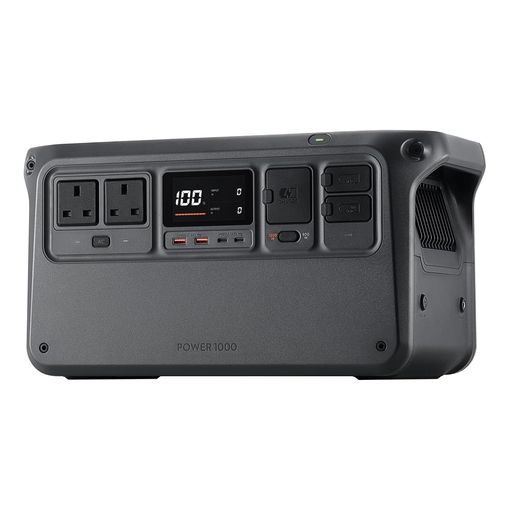
What Sets the DJI Apart
DJI is better known for drones and cameras than power stations, but the Power 1000 pushes 2200W of continuous AC output from just a 1024Wh battery, a higher power-to-capacity ratio than anything else in this roundup.11 That means it can run a pressure washer, a table saw, or a space heater that would trip a similarly sized unit from another brand; one reviewer described running a 1.5kW pressure washer off it while it simultaneously fast-charged from the mains, reporting it handled both loads without issue. Its longevity picture is more mixed. One verified buyer titled their review "Lasted a week," reporting an internal fuse failure on the second charge that left the unit unable to charge at all, a genuine downside amid an otherwise strong 4.5-star average across 821 reviews. That early-failure account is worth weighing against the far larger number of positive, longer-running reviews sitting alongside it.
The Power-Dense Pick: All The Details
DJI rates the LFP cell for 4,000 cycles, translating to roughly 10 years of use at one full cycle a day, and backs the unit with a 5-year warranty once the two-year extension is registered.11 A full recharge from empty takes about 70 minutes on mains power, and dual 140W USB-C ports handle laptops and other high-power devices quickly. Solar charging requires DJI's own MPPT adapter module sold separately, capping input at 800W across up to two modules. The SDC port also fast-charges select DJI drone batteries directly, a genuinely useful extra for anyone already in that ecosystem, though it adds nothing if you aren't.
Best Solar Generator FAQ
What is the difference between marketed capacity and usable capacity?
The watt-hour figure on the box is what the battery cells store, not what you can pull out through the AC inverter. Converting stored DC power to AC loses some energy as heat, so real-world usable output typically lands around 85 to 90% of the rated figure rather than the full number on the box. Charging through a DC or USB port instead of the AC inverter recovers more of that lost margin, since it skips the conversion step entirely.
Does LiFePO4 battery chemistry actually matter, or is it marketing?
It matters. After capacity and wattage, it's the single most important spec in this category. Lithium iron phosphate (LiFePO4, sometimes written LFP) cells are commonly rated for around 2,000 or more full charge cycles before dropping to 80% of original capacity. Older nickel-based lithium chemistries such as NMC typically manage only 1,000 to 2,000 cycles under comparable conditions.1 Every product in this roundup uses LiFePO4, which is now standard across reputable brands. Budget listings from lesser-known sellers still turn up with older chemistries though, so it's worth confirming rather than assuming.
Will the bundled solar panel actually recharge the battery in a day?
Usually not fully, and this is where solar generator marketing oversells the most. A panel's rated wattage is measured under standard test conditions, using strong, direct sunlight hitting the panel head-on. A real garden rarely matches that for more than a couple of hours around midday. Jackery's own product documentation for its SolarSaga panels states plainly that the 100W rating is achieved in an ideal lab setting, and that real output shifts with the sun's changing angle and light intensity through the day.2 A single 100W panel charging a 1070Wh battery is doing well to add half the battery back across a full day of typical weather. Treat any bundled panel as a way to slow the drain during extended off-grid use, not as a guaranteed full recharge.
Can I just plug a solar panel into a wall socket?
In some markets, yes, within limits, but that's a different product from anything in this roundup. The UK and parts of the EU now allow small, socket-connected solar systems, typically capped around 800W, without the full electrician-installed setup a rooftop system needs, provided the product is certified and the network operator is notified. Germany's balcony-solar rules were the model other countries have since followed; Plugin Solar Expert compares the certified plug-in systems available on the UK side of this. Portable power stations like the ones above are a different category entirely: battery storage you charge and carry, not a panel wired into your home's circuit. Rules vary by country and change over time, so check your local regulations before buying either.
What is the difference between continuous and surge wattage?
Continuous (or "rated") wattage is what the inverter can sustain for as long as the battery holds charge. Surge or peak wattage is a short burst, usually just a few seconds. It covers the spike some motors and compressors need to start up, before they settle to their running wattage. A fridge might draw 1200W to start and then only 150W running. So a unit's surge rating tells you whether it can get that appliance moving at all, while the continuous rating tells you whether it can keep it running. Buying on the surge number alone is a common mistake, since it's always the larger, more flattering figure on the box.
Can I take a solar generator on a flight?
Not in carry-on luggage, in almost every case, and not in checked luggage at all. The International Air Transport Association's passenger guidance allows lithium batteries up to 100 watt-hours in carry-on without restriction. It permits 100 to 160Wh only with airline approval, and generally disallows anything above 160Wh on passenger aircraft entirely.3 Every product in this roundup exceeds that 160Wh ceiling, several by a wide margin. None of them are flight luggage in the way a phone power bank is. Airline rules can vary further by carrier and country, so check with your specific airline before planning to travel with one.
Is it safe to run a CPAP machine or other medical equipment off one of these?
Many owners do use portable power stations as backup for CPAP machines and similar equipment during outages. The pure sine wave output on every unit here is the right type of power for sensitive medical electronics. That said, none of these are medical-grade backup devices. A power station's UPS or pass-through mode is not instant on every model, meaning some allow a brief interruption during the switch to battery. Anyone relying on continuous power for a medical device should confirm compatibility with the device manufacturer and their clinician, rather than assuming any consumer power station is an adequate substitute for dedicated medical backup power.
How long will one of these last before the battery degrades noticeably?
For the LiFePO4 units in this roundup, expect several years of regular use before capacity loss becomes noticeable. Their rated cycle counts of 2,500 to 4,000-plus translate to roughly seven to over ten years at one full cycle a day.456781011 Most owners cycle far less often than daily, since these are backup and travel devices rather than always-on appliances. That stretches the real-world lifespan further still. Storing the unit partially charged, rather than fully empty or fully topped up, and avoiding extreme heat both help the battery hold its rated cycle life longer.
What size solar generator do I actually need?
Add up the continuous wattage of everything you plan to run at once, not just one device at a time. Buy comfortably above that figure, rather than right at the edge. For charging phones, a laptop, and running some lights during a short outage, something in the 250 to 300Wh, 200 to 600W range, like the EB3A, RIVER 2, or Anker 521, covers it. For a fridge, a router, and a heavier device load over a longer outage, look at the 1000Wh-plus, 1200W or higher tier the Jackery, Anker C800, EcoFlow DELTA 2 Max, and DJI Power 1000 occupy. If you need to run several heavy appliances at once or want the biggest possible buffer for a multi-day outage, the AFERIY P310 is the largest single battery in this roundup. Buying too small is the more common mistake. A unit that trips its inverter under load is worse than one that's slightly oversized.
The Best Solar Generator for You
Buy the Jackery Explorer 1000 v2 if you want one unit that handles both camping and a household power cut, without overcommitting on weight or price. It also helps that the solar panel comes in the box, rather than as an afterthought. Step up to the EcoFlow DELTA 2 Max if a real outage means keeping a fridge and several rooms running for hours, not minutes. That only makes sense if you have a fixed spot to park it near a wall socket. Choose the Anker SOLIX C800 if recharge speed matters more to you than outright capacity. The BLUETTI EB3A is the value pick backed by the deepest review history here, well suited to small electronics and short outages rather than appliances. Grab the EcoFlow RIVER 2 if weight is the deciding factor. Consider the Anker 521 only if your needs are genuinely light and the price is the main draw. Go for the AFERIY P310 if you want the single biggest battery here and the longest warranty to go with it, and accept a lighter review history in exchange. Pick the DJI Power 1000 if you need power-tool-grade continuous output from a mid-size unit rather than the biggest battery you can buy.