

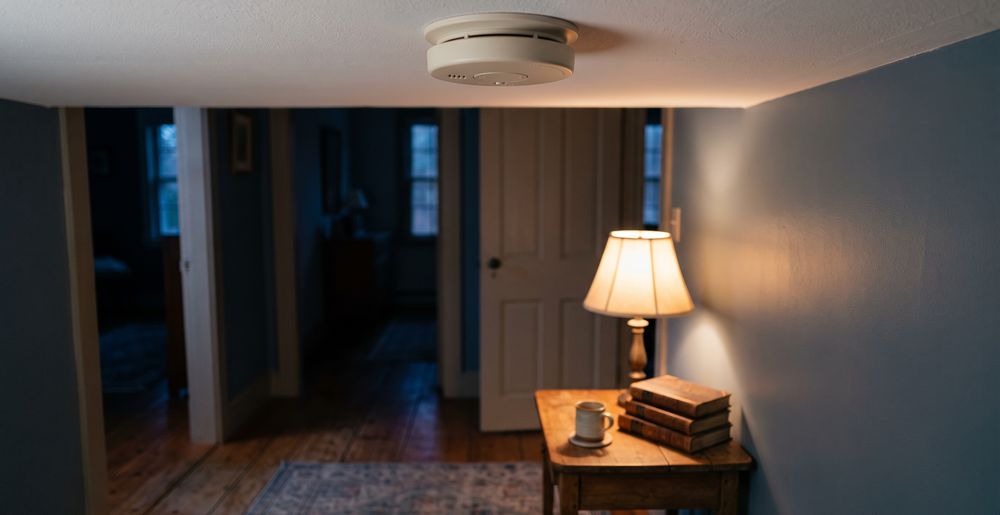
Best Smart Smoke and CO Detector for Whole-Home Alerts

About the author...
Dave has been taking gadgets apart since he was old enough to be told not to. Every pick here is checked against the manufacturer's own documentation rather than the retail listing, and each star rating starts from a product's real Amazon customer score before being adjusted for performance, build quality, features and value. Read more about how ratings are calculated.
Table of contents
- Key Takeaways (TL;DR)
- How We Choose
- Quick Comparison
- X-Sense SC07-WX Wi-Fi Smoke and Carbon Monoxide Alarm
- X-Sense SC07-MR Smart Smoke and CO Alarm
- Aroha Smart Connect Combination Smoke and CO Alarm
- First Alert SC5 Smart Smoke and Carbon Monoxide Alarm
- MOES Smart Smoke and Carbon Monoxide Detector, 2-Pack
- X-Sense XP0A-iR Wi-Fi Smoke and CO Alarm, 2-Pack
- X-Sense Wi-Fi Carbon Monoxide Detector XC04-WX
- frient Intelligent Smoke Alarm
-
Best Smart Smoke and CO Detector FAQ
- What's the best combined smoke and CO alarm?
- Is it worth paying extra for a smart smoke/CO detector over a basic one?
- First Alert or Kidde, which is better?
- What's the CO spec people get wrong most often?
- Do these alarms need a separate hub to work?
- How long do smart smoke and CO alarms actually last?
- Where should I install a CO alarm in my home?
- Can a smart smoke and CO alarm work alongside other smart home devices I already own?
- The Best Smart Smoke and CO Detector for You
The best smart smoke and CO detector right now is the X-Sense SC07-WX. It connects over Wi-Fi with no separate hub required, and it carries the largest base of verified reviews among app-connected combo alarms here. See the comparison below for how seven other well-reviewed alarms stack up depending on your household's setup.
A smart smoke and CO alarm folds two separate jobs into one wall-mounted unit. A photoelectric sensor watches for smoke, and an electrochemical sensor watches for carbon monoxide, an invisible gas produced by anything that burns fuel indoors. Add app connectivity and the unit can push an alert to your phone whether you're upstairs asleep or across town, instead of relying purely on the built-in siren. That matters most for anyone who travels, rents out a property, or simply wants confirmation their home is covered while they're away. Combined smoke-and-CO units and single-purpose alarms both remain common on the market. A combo unit saves a wall socket and an install, but it also means one failed sensor can take the whole device offline.
What separates a genuinely useful smart alarm from a disappointing one usually comes down to three things. Does it connect to a phone reliably? Do the underlying sensors carry independent certification rather than just marketing claims? And does the battery or wiring setup actually match the home you have? A slick app is worthless if the Wi-Fi link drops every few days. A hub-based system promising whole-home coverage is also a poor fit for someone living alone in a one-bedroom flat who doesn't want extra hardware just to get started.
Key Takeaways (TL;DR)
- CO sensor certification matters more than marketing copy: look for UL 2034 or EN 50291 testing, not just a claimed ppm figure.
- Direct Wi-Fi versus hub-based changes the shopping list, since hub systems add hardware cost but link every alarm together.
- App reliability varies by ecosystem. Google Home, Zigbee, and Tuya-based apps behave differently and aren't interchangeable.
- Sealed 10-year batteries save maintenance, but the whole unit gets replaced rather than just a cell.
- Interconnection isn't universal. Some standalone Wi-Fi units won't sound together even inside the same house.
- The 10-year replacement date still applies. Smart features don't extend a sensor's actual working life.
- Review volume beats marketing claims. Check how many verified owners rated a listing, not just its star count.
How We Choose
Each alarm is scored on how reliably its smoke and CO sensors perform against their own published specifications, not just the bullet points on the Amazon listing. We weigh build quality and sensor certification, and whether app and hub features are genuinely useful rather than padding. Price is judged against the other seven products here, not the wider market. Connectivity claims, sensor response times, and hub compatibility are checked against each manufacturer's own spec page wherever one exists, since combo alarm listings are prone to copying detail from a different SKU in the same range.
We don't run our own lab tests on these — no dedicated rig, no controlled conditions. What we do instead: read through the verified-purchase reviews in full, not just the star average, weighting the ones written weeks or months after purchase over launch-week first impressions, since that's where wear, reliability problems, and real-world performance gaps actually show up. Where a product genuinely lacks that kind of track record, we say so in its write-up rather than papering over it.
Quick Comparison
Each product's overall rating starts from its real Amazon customer rating, then gets adjusted (up to ±0.5) for real-world performance, build quality, features, and value. Click a product name to jump straight to its full review below.
| Product | Best For | Type | Key Detail | Connectivity |
|---|---|---|---|---|
|
X-Sense SC07-WX Wi-Fi Smoke and Carbon Monoxide Alarm 4.5 |
Buyers wanting app alerts without extra hardware | Smart smoke & CO alarm | Direct 2.4GHz Wi-Fi, no hub required | Photoelectric smoke + electrochemical CO sensor |
|
X-Sense SC07-MR Smart Smoke and CO Alarm 5.0 |
Multi-room homes wanting every alarm to sound together | Smart smoke & CO alarm (hub-based) | Expandable to 50 devices via SBS50 base station | SBS50 base station, 500m range, whole-home interlink |
|
Aroha Smart Connect Combination Smoke and CO Alarm 4.1 |
Budget-conscious buyers wanting basic app alerts | Smart smoke & CO alarm | 10-year sealed, non-replaceable battery | Tuya/Smart Life app, EN 14604 & EN 50291 certified |
|
First Alert SC5 Smart Smoke and Carbon Monoxide Alarm 3.5 |
Existing Nest Protect owners and Google Home households | Smart smoke & CO alarm (hardwire) | Designed as the official Nest Protect replacement | Precision Detection sensing, Google Home compatible |
|
MOES Smart Smoke and Carbon Monoxide Detector, 2-Pack 4.2 |
Homes already running a Zigbee smart hub | Smart smoke & CO alarm (Zigbee) | Zigbee 2-pack, requires an existing gateway | Zigbee gateway required, live LCD ppm/dB readout |
|
X-Sense XP0A-iR Wi-Fi Smoke and CO Alarm, 2-Pack 4.8 |
Covering two rooms without buying a hub | Smart smoke & CO alarm (2-pack) | Two independent Wi-Fi units with spoken location alerts | Direct Wi-Fi, voice location alerts, not interlinked |
|
X-Sense Wi-Fi Carbon Monoxide Detector XC04-WX 4.8 |
Homes that already have smoke alarms and want a dedicated smart CO monitor | Standalone Wi-Fi CO alarm | CO-only alarm, no smoke sensor, for pairing with existing smoke coverage | Figaro electrochemical CO sensor, 10-year sensor life |
|
frient Intelligent Smoke Alarm 4.4 |
Households wanting a well-integrated smart smoke alarm outside a closed ecosystem | Open-ecosystem Zigbee smoke alarm | Zigbee smoke-only alarm; works with Home Assistant, SmartThings, and Homey, not locked to one gateway brand | EN14604 certified, built-in temperature sensor, 3-year battery |
X-Sense SC07-WX Wi-Fi Smoke and Carbon Monoxide Alarm
Best Overall Smart Smoke & CO Alarm
based on 2235 Amazon reviews (4.2★), adjusted for performance, build and value
What We Love About the Overall Pick
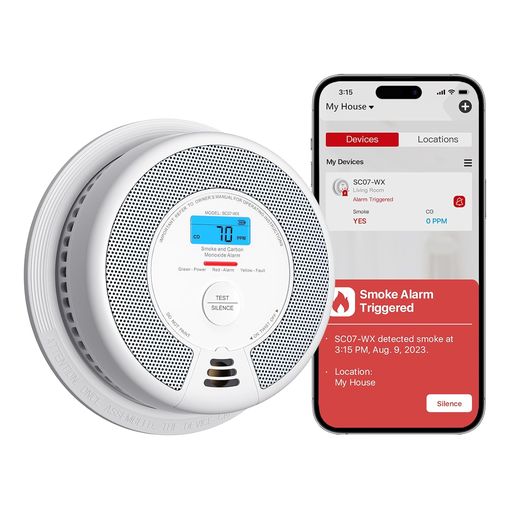
This is the alarm to buy if you want reliable app alerts without adding a hub or bridge to your network. It pairs directly over 2.4GHz Wi-Fi to the X-Sense Home Security app. It's also the most-reviewed product in this roundup by a wide margin, with over 2,200 verified ratings at the time of writing. X-Sense's own spec page lists a CO sensor calibrated to trigger within 60 to 240 minutes at 70ppm, dropping to 4 to 15 minutes once concentration reaches 400ppm.1 That's a graduated response broadly in line with how CO alarm standards are meant to behave. The photoelectric smoke sensor and replaceable CR123A battery round out a unit that's straightforward to live with day to day. Long-term ownership reports are more mixed than the star average suggests: one buyer who'd had two units for two years reported the battery on one failing with a constant alarm, and said they'd come to doubt whether the units reliably detect smoke from burning toast at all.
Overall Pick: All The Details
The SC07-WX runs on a single replaceable CR123A lithium cell, rated for about a year between changes, with the sensor assembly itself good for 10 years from the manufacture date.1 Inside the app you get a CO concentration history log and an immediate push alert once levels pass 100ppm, plus the option to share access with up to 12 family members. One limitation worth flagging: this specific model doesn't support X-Sense's SBS50 base station or interlink with other alarms, so if a unit sounds in the kitchen, one upstairs in a bedroom won't. For a single room or a small flat that's rarely an issue. For a larger multi-room home wanting alarms that sound together, the hub-based pick below is the better fit.
X-Sense SC07-MR Smart Smoke and CO Alarm
Best for Whole-Home Smart Coverage
based on 390 Amazon reviews (4.8★), adjusted for performance, build and value
Why the Whole-Home Pick Earns Its Rating
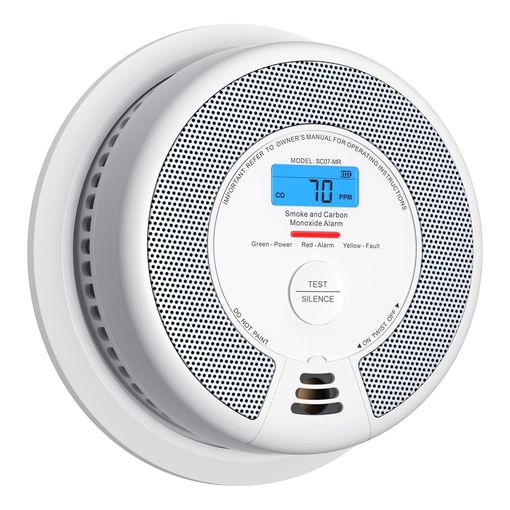
This is the highest-rated alarm in the entire lineup, and it earns that with a genuinely different approach. Every SC07-MR unit connects through X-Sense's SBS50 base station instead of talking to the app directly. That base station can manage up to 50 devices across an entire property, spanning smoke, CO, heat, and even water-leak sensors from the same connected range.2 Trigger one alarm anywhere in the system and every linked unit sounds together, not just the one that detected the hazard. A built-in Locate function lets you silence everything except the triggered alarm from your phone, genuinely useful in a house with more than a couple of rooms. One owner reporting back after roughly six months of use said the system had "not let us down yet," including correctly flagging a base-station outage during a power cut.
Whole-Home Pick: All The Details
Buy this expecting to purchase the SBS50 base station separately if you don't already own one. It's the piece that turns the alarm from a standalone unit into a connected system, and it's a real added cost on top of the alarm itself. Once paired, the base station covers roughly 500 metres of open-air range, which is generous for most homes.2 The alarm carries a 10-year working life and uses a CR123A battery rated for around 5 years, so most owners will replace it once across the unit's lifetime rather than annually. Setup adds a step compared with the standalone SC07-WX, and the extra hardware cost is the clearest downside for anyone who only needs to cover one or two rooms rather than a whole property.
Aroha Smart Connect Combination Smoke and CO Alarm
Best Budget Smart Smoke & CO Alarm
based on 345 Amazon reviews (4.0★), adjusted for performance, build and value
The Budget Pick's Strongest Case
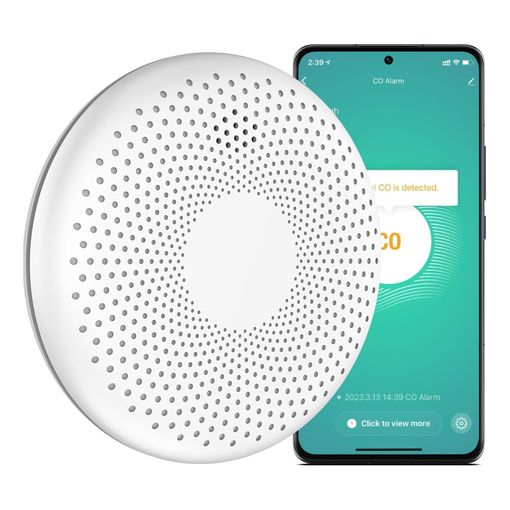
At the accessible end of this roundup, the Aroha Smart Connect still delivers the two things that actually define this category: dual smoke and CO sensing, plus a genuine app connection over the free Tuya or Smart Life apps, rather than a bare-bones siren-only unit. Owners report push notifications landing within roughly 10 seconds of a triggered alarm, and the detector carries EN 14604 and EN 50291 certification, the same testing standards behind several pricier alarms in this list.3 Sharing access with other household members costs nothing extra either. Its reviews are thin on genuine long-term use, though: the negative reports we found described the app failing to connect at all during setup, not a unit that worked for a while and then failed, so there's no verified ownership-timeframe account either way to cite here.
Budget Pick: All The Details
The battery here is sealed and rated for the full 10-year service life, which keeps ongoing costs at zero but also means the entire unit gets replaced rather than just a cell, unlike the CR123A-powered X-Sense alarms above. There's no interconnection between multiple Aroha units, so a triggered alarm in one room won't set off another elsewhere in the house. It's also worth knowing the app shows an alert when CO is detected but doesn't display a live ppm reading the way the Zigbee and X-Sense units elsewhere in this list do. That's a fair trade-off for the price rather than a dealbreaker, but anyone wanting granular CO history over time should look further up this lineup instead.
First Alert SC5 Smart Smoke and Carbon Monoxide Alarm
Best for Google Home Compatibility
based on 106 Amazon reviews (3.6★), adjusted for performance, build and value
Where the Google Home Pick Fits
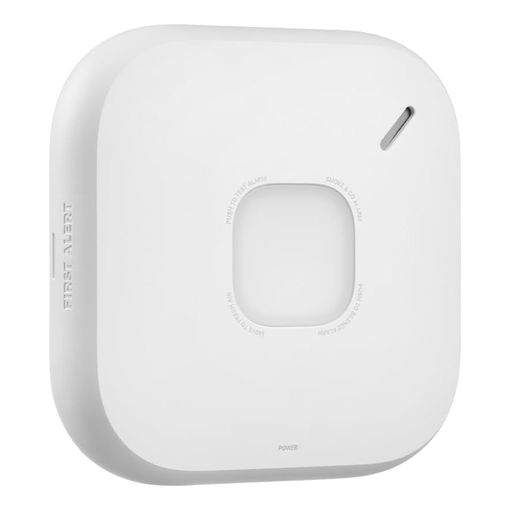
First Alert designed the SC5 specifically as a drop-in successor to the second-generation Nest Protect. It mounts on the same base plate and works through the Google Home app, a fit that matters now that Google no longer sells its own smart alarm.4 For a household already leaning on Google Home or Nest hardware elsewhere, that compatibility is the whole appeal: one less ecosystem to manage. The alarm's Precision Detection sensing is built to cut down on false alarms triggered by cooking smoke or steam, a common complaint with older ionization-only units.4 Its review section was empty at the time of writing, so unlike the rest of this lineup, there's no genuinely verified ownership account to weigh here at all — the reliability complaints referenced below come from its wider international listing.
Google Home Pick: All The Details
This is a hardwire model, so installation assumes existing smoke-alarm wiring already in the ceiling rather than a simple battery swap; a battery-only version exists too, but wasn't the listing reviewed here. Being candid about where this pick sits in the lineup matters. It carries the lowest Amazon rating and the smallest review base of any pick in this lineup, and some owners report intermittent connectivity or alarms triggering without an obvious cause. Voice alerts announce both the hazard type and general location once triggered, a genuinely useful touch when it works as intended. Anyone drawn to this pick mainly for the Google Home tie-in should read recent reviews before buying, rather than relying on brand reputation alone.
MOES Smart Smoke and Carbon Monoxide Detector, 2-Pack
Best for Zigbee Smart Home Setups
based on 15 Amazon reviews (4.2★), adjusted for performance, build and value
The Case for the Zigbee Option
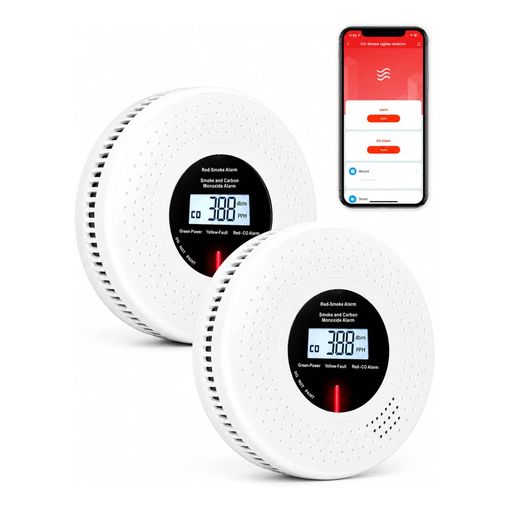
If your home already runs a Zigbee mesh through a MOES or Tuya gateway, this is the one alarm in the lineup built to slot straight into that existing setup rather than adding a separate Wi-Fi app to manage. It now ships as a two-pack, covering two rooms without buying the listing twice. A built-in LCD updates roughly every second with a live CO and smoke density reading, so you can glance at the unit itself instead of opening an app to check it's working. A 10-minute hush mode handles cooking-smoke false alarms, with a safety override that cancels the hush and sounds the full alarm if CO climbs past its highest threshold, regardless of what you've silenced. This is a new listing with no reviews establishing a real ownership timeframe yet, so there's no dated account to weigh here at all. One buyer on its wider international listing did flag a genuine integration problem worth knowing about: their Zigbee coordinator recognised the units only as a generic device rather than a proper smoke detector, losing the smart functionality entirely, and pointed to several similar unresolved reports on the manufacturer's own support pages. That's a real compatibility risk on less mainstream Zigbee setups, not just an isolated complaint.
Zigbee Pick: All The Details
A Zigbee gateway isn't included in the box and is required before any smart feature works at all, so factor that into the real cost if you don't already own compatible hardware. Each detector runs on standard replaceable batteries rated for about 3 years, shorter than the sealed 10-year cells used elsewhere in this list, but easier and cheaper to swap when they run low; MOES rates the underlying sensor assembly for a 10-year working life regardless of the battery. It's worth being upfront that this listing carries a much smaller review history than the rest of the lineup, and none of it establishes a real ownership timeframe yet, so treat its strong early rating as a promising sign rather than a settled track record the way the 2,000-plus-review X-Sense pick above can claim.
X-Sense XP0A-iR Wi-Fi Smoke and CO Alarm, 2-Pack
Best Value 2-Pack for Multi-Room Coverage
based on 176 Amazon reviews (4.5★), adjusted for performance, build and value
What Makes the 2-Pack Worth Considering
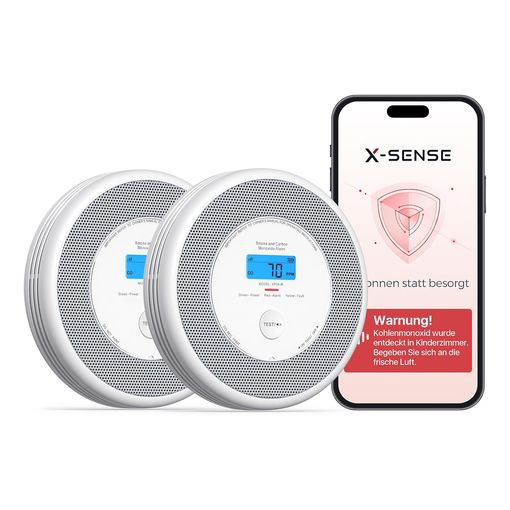
Two independent Wi-Fi-connected alarms for less than buying two standalone SC07-WX units separately covers a genuinely common need: a kitchen and a bedroom, or two floors of a small home, without touching a base station. Each unit speaks its alert out loud, naming both the hazard and the room it's mounted in, which cuts down on the confusion of a generic siren when you're trying to work out where a problem actually is. Its listing pools reviews across single-unit and multi-unit purchases of the same alarm, so we couldn't confidently attribute any single long-term review to the 2-pack specifically rather than a solo unit; treat the strong rating as a genuine signal for the alarm itself without a verified 2-pack-specific ownership account to cite.
2-Pack Pick: All The Details
Despite arriving as a pair, these units don't interlink. A CO detection in one room triggers only that unit and sends a single app notification, rather than setting off both alarms at once the way the hub-based SC07-MR does. Each alarm uses the same photoelectric-and-electrochemical sensor pairing as the rest of the X-Sense range, wrapped in a flame-retardant ABS housing rated for a 10-year service life. Sharing access with up to 12 people is included, and the slim profile makes these among the least obtrusive alarms in this roundup to mount on a ceiling.
X-Sense Wi-Fi Carbon Monoxide Detector XC04-WX
Best Standalone Smart CO Alarm
based on 1472 Amazon reviews (4.6★), adjusted for performance, build and value
What We Love About the Standalone CO Pick
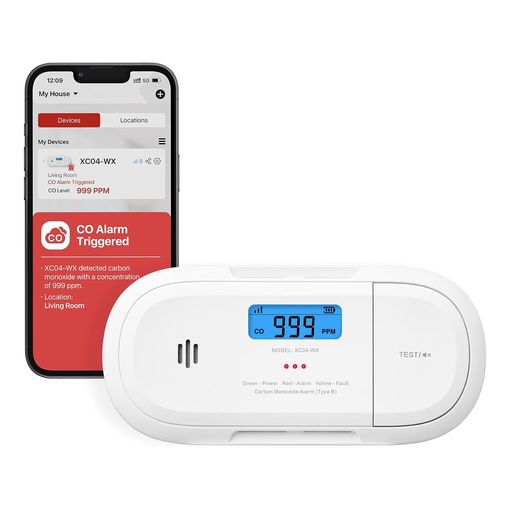
Not every home needs another combo unit. Many already have mains-wired smoke alarms installed as part of the building itself. What's actually missing is a dedicated, app-connected way to watch for carbon monoxide from a boiler, gas fire, or wood burner. The XC04-WX is built for exactly that gap. It connects straight to 2.4GHz Wi-Fi with no hub. It shows a live ppm reading on its own screen and in the X-Sense Home Security app, and it pushes a precaution warning once levels pass 100ppm, ahead of the full alarm threshold. One owner's account after well over a year of ownership was reassuringly uneventful: "Had this over a year and it's never had an issue. Battery is still showing full after 14months too."
Standalone CO Pick: All The Details
This is explicitly not compatible with the SBS50 base station and doesn't interlink with other X-Sense units. Treat it as a single-room monitor rather than a whole-home system. The electrochemical Figaro sensor is rated for 10 years. The unit runs on replaceable batteries rather than a sealed cell. Device sharing lets up to a handful of household members see alerts on their own phones, though one reviewer noted the account limit caps out before it's useful for a landlord managing several properties. It has no smoke sensor at all, so it only makes sense alongside separate fire coverage, not as a replacement for it.
frient Intelligent Smoke Alarm
Best Open-Ecosystem Smart Smoke Alarm
based on 461 Amazon reviews (4.3★), adjusted for performance, build and value
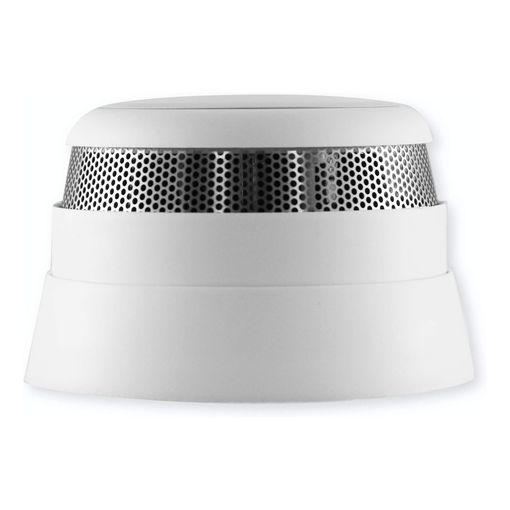
What We Love About the Open-Ecosystem Pick
The MOES pick earlier in this roundup needs a Zigbee gateway too, but it's a fairly generic one with a thin review history. This Danish-made alarm takes the same Zigbee approach. It backs that up with a genuinely open list of supported platforms: Home Assistant, SmartThings, and Homey all pair with it directly, without being tied to one company's own hub the way some smart smoke alarms are. Reviewers running Home Assistant and Zigbee2MQTT consistently describe trouble-free pairing and a built-in temperature sensor that's easy to wire into automations. One owner who'd had it running for two years reported the supplied battery was still sitting at 80% charge, a genuinely long-term account rare enough in this category to call out on its own. Like the CO pick above, this is a smoke-only device with no CO sensor. It fills a specific gap rather than replacing a combo unit outright.
Open-Ecosystem Pick: All The Details
It's certified to EN14604 and rated for a roughly 3-year battery life on a single replaceable CR123 cell, reporting status every 5 minutes to whichever hub it's paired with.5 A Zigbee hub is required before any smart feature works, the same requirement as the MOES pick. Factor that cost in if starting from nothing. It has no hush or mute function, something one reviewer specifically flagged as a gap next to competing Zigbee alarms that have since added it. At least one owner reported theirs needed a surprising amount of smoke before it triggered during a manual test, worth knowing given this is a safety device. Weigh the open-ecosystem flexibility against that mixed sensitivity report before choosing it over the MOES or a combo alarm.
Best Smart Smoke and CO Detector FAQ
What's the best combined smoke and CO alarm?
For most households, the X-Sense SC07-WX is the strongest all-round choice in this roundup. It connects directly over Wi-Fi, needs no extra hardware, and carries the largest base of verified owner reviews of any smart combo alarm here. If you're covering a larger home and want every alarm to sound together, the hub-based SC07-MR is worth the extra setup and cost instead.
Is it worth paying extra for a smart smoke/CO detector over a basic one?
It depends on what the extra spend actually buys. A basic, non-connected combo alarm from a major brand still meets the same UL 2034 or EN 50291 testing that the smart models in this list do.63 It will sound just as loudly in the room where it's installed. What a smart, app-connected model adds is a remote alert: knowing your home has a problem while you're at work, asleep, or away for the weekend, rather than relying purely on someone being in the house to hear the siren. For a rental property, a second home, or anyone who travels often, that's a real safety upgrade. For a single owner-occupied home where someone is almost always around, a basic alarm still covers the core job for less outlay.
First Alert or Kidde, which is better?
Neither wins outright, because they're not really building the same product right now. Kidde's current listings in this space are well-reviewed, well-established combo alarms. But they're standalone units without app connectivity or Wi-Fi, so they don't compete directly with the smart alarms in this roundup. First Alert's SC5, included above, is squarely a smart, app-connected alarm, but it carries a noticeably lower owner rating and more reliability complaints than either brand's non-connected models typically see. If app alerts matter to you, First Alert currently has the more directly relevant product. If a dependable standalone alarm with a strong review history is all you need, Kidde is worth cross-shopping on its own merits, outside the smart category this roundup covers.
What's the CO spec people get wrong most often?
The ppm number on its own, without the time attached to it. CO alarms aren't meant to trigger the instant they detect any carbon monoxide at all. Testing standards define a curve where higher concentrations must trigger faster and lower concentrations are allowed to take longer, precisely so the alarm doesn't sound on background levels that aren't actually dangerous. X-Sense's own spec sheet for the SC07-WX shows this clearly: the alarm won't sound for up to four hours at a borderline 70ppm, but must sound within 15 minutes once levels hit 400ppm.1 A single ppm figure quoted in isolation, without that response-time context, doesn't tell you much by itself.
Do these alarms need a separate hub to work?
Some do, some don't, and it's one of the biggest practical differences in this roundup. The SC07-WX, XP0A-iR, and XC04-WX connect straight to a phone app over Wi-Fi with no extra hardware. The SC07-MR needs X-Sense's SBS50 base station bought separately, and the MOES and frient units both need an existing Zigbee gateway before any smart feature works at all, though frient's is the more open of the two, working with several third-party hub brands rather than one closed ecosystem.2 Check which category a listing falls into before buying, since the hub-free models are the simpler and usually cheaper way to get started if you only need to cover one or two rooms.
How long do smart smoke and CO alarms actually last?
The same as non-smart ones. Fire safety authorities including the NFPA recommend replacing a smoke alarm 10 years from the manufacture date printed on the unit, regardless of how well its battery or app connection is holding up.7 Combination smoke and CO alarms typically follow that same window, though some CO-only sensors carry a shorter rated life. Smart features don't extend that clock. Note the manufacture date somewhere you'll actually see it, since chirping or an app warning at end of life is the last sign that a unit needs replacing, not the first.
Where should I install a CO alarm in my home?
General guidance is broadly consistent across most of the world. Install at least one CO alarm on every level of the home and near sleeping areas, since carbon monoxide poisoning is most dangerous while you're asleep.8 Early symptoms including headache, dizziness, fatigue, and nausea can be mistaken for a common illness, part of why relying on symptoms alone instead of a working alarm is risky.9 Exact placement recommendations can vary between countries and local building codes, so check guidance from your own national or local fire safety authority for anything beyond this general principle.
Can a smart smoke and CO alarm work alongside other smart home devices I already own?
Generally yes, though the connectivity standard matters more than the brand. A Wi-Fi alarm with its own app, like the SC07-WX or XC04-WX, sits independently of most other smart home gear. A Zigbee unit like the MOES or frient picks, or a hub-based system like the SC07-MR, is more likely to show up alongside other devices on the same gateway, and frient's broader hub support in particular makes it easier to fold into an existing Home Assistant or SmartThings setup than a brand tied to one closed app. If you're building out a wider smart home around your entryway and not just fire safety, our guide to smart locks covers the basics of keyless entry that pairs naturally with the rest of a connected home.10
The Best Smart Smoke and CO Detector for You
Start with the X-Sense SC07-WX if you want reliable app alerts without buying any extra hardware. Step up to the SC07-MR and its SBS50 base station if you're covering a larger home and want every alarm to sound together. Choose the Aroha Smart Connect if budget matters most and you can live without a live CO readout, or the MOES detector if you already run a Zigbee smart home hub. Pick the First Alert SC5 only if Google Home or Nest compatibility outweighs its weaker review history, and reach for the X-Sense XP0A-iR two-pack if you just need to cover two rooms with spoken, room-specific alerts. If your smoke coverage is already sorted and you specifically need a dedicated smart CO monitor, the X-Sense XC04-WX fills that gap on its own, and the frient Intelligent Smoke Alarm is worth a look if you'd rather a well-integrated smart smoke alarm that isn't tied to one closed ecosystem.