

Best Dash Cam for Sharp Everyday Front and Rear Footage

About the author...
Dave has been taking gadgets apart since he was old enough to be told not to. Every pick here is checked against the manufacturer's own documentation rather than the retail listing, and each star rating starts from a product's real Amazon customer score before being adjusted for performance, build quality, features and value. Read more about how ratings are calculated.
Table of contents
- Key Takeaways (TL;DR)
- How We Choose
- Quick Comparison
- Nextbase 622GW 4K Dash Cam with Image Stabilization
- Vantrue E1 Pro 4K Mini Dash Cam with STARVIS 2 Sensor
- VIOFO A119 V3 Dash Cam with Built-In GPS
- REDTIGER F17 3-Channel Dash Cam with GPS
- Nextbase 222X Dash Cam Front and Rear
- Garmin Dash Cam Mini 3
- Thinkware U1000 Dash Cam Front and Rear
- Miofive S1 Ultra Dual 4K Dash Cam Front and Rear
-
Best Dash Cam FAQ
- What's the difference between a windscreen dash cam and a mirror dash cam?
- Which dash cam brand is considered best?
- Does having a dash cam actually lower insurance premiums?
- What resolution do I actually need?
- Do I need front-and-rear (dual-channel) coverage, or is front-only enough?
- What are common dash cam setup mistakes?
- Is it legal to mount a camera on my windscreen?
- How long should a dash cam last?
- What does a cloud-connected dash cam actually add over a normal one?
- Are built-in speed camera alerts legal and reliable everywhere?
- The Best Dash Cam for You
The best dash cam for most drivers is the Nextbase 622GW, thanks to its built-in image stabilization and the widest accessory ecosystem of any camera in this lineup. Seven other well-reviewed alternatives below cover a genuinely native 4K sensor, real built-in GPS logging, three-camera cabin coverage, a camera small enough to disappear behind the mirror, remote cloud monitoring, and built-in speed camera alerts.
This roundup covers windscreen-mounted dash cams. These are small standalone cameras that clip to a suction mount or adhesive pad on the glass, usually tucked up near the top out of your direct sightline. That's a different form factor from a mirror dash cam, which replaces or clips over your actual rearview mirror and typically adds a large built-in touchscreen in its place. See our mirror dash cam guide if a bigger screen matters more to you than a discreet mount. Windscreen units are smaller and usually cheaper to start with. They're also easier to move between cars, though you often need a phone app rather than a big screen to review footage.
A dash cam earns its place by capturing something usable when it actually matters. That might be a number plate after a hit-and-run, brake lights in a rear-end shunt, or proof of who had right of way. Three things decide that: the image sensor behind the resolution claim, how wide the lens genuinely sees, and whether parking mode has a sensible power source. Touchscreens, voice control and app polish sit on top of those fundamentals. They're a convenience layer, not a substitute for them.
Key Takeaways (TL;DR)
- Sensor pixel count beats the resolution badge. A "4K" claim printed on a 5-megapixel sensor is upscaled, not native.1
- Front-and-rear (dual-channel) coverage protects you from both directions but doubles the footage you need to review after an incident.
- Parking mode needs real power. Most units only record on 12V ignition power unless you add a hardwire kit.
- GPS logging isn't universal. Some cameras log speed and route automatically; others need a paired device or skip it entirely.
- A wider lens spreads detail thinner. More degrees of view means fewer pixels land on any one number plate.
- SD card speed class matters more than capacity. A card too slow for the bitrate drops frames long before it fills up.2
- Expect a 12 to 18 month warranty as standard, occasionally extendable through direct registration with the maker.
How We Choose
Each camera is judged on what its sensor can actually deliver against its own resolution claim, how the housing and mount hold up to heat and vibration, whether the extra features are things you would genuinely use, and how it stacks up against the other five on price-to-spec. Where a maker names a sensor model, that sensor's own published pixel count is the source of truth rather than the badge on the box. Where no sensor is named, the resolution claim is recorded as marketing copy and the performance score reflects that.
We don't run our own lab tests on these — no dedicated rig, no controlled conditions. What we do instead: read through the verified-purchase reviews in full, not just the star average, weighting the ones written weeks or months after purchase over launch-week first impressions, since that's where wear, reliability problems, and real-world performance gaps actually show up. Where a product genuinely lacks that kind of track record, we say so in its write-up rather than papering over it.
Quick Comparison
Each product's overall rating starts from its real Amazon customer rating, then gets adjusted (up to ±0.5) for real-world performance, build quality, features, and value. Click a product name to jump straight to its full review below.
| Product | Best For | Type | Key Detail | Key Spec |
|---|---|---|---|---|
|
Nextbase 622GW 4K Dash Cam with Image Stabilization 4.4 |
Drivers wanting one flagship, well-supported camera | Windscreen dash cam | 4K, 140° FOV | Digital image stabilization, 10Hz GPS |
|
Vantrue E1 Pro 4K Mini Dash Cam with STARVIS 2 Sensor 4.3 |
Buyers who want a verified, genuine 4K sensor | Mini windscreen dash cam | 4K/30fps, genuine | Sony STARVIS 2 IMX678, 8.4MP |
|
VIOFO A119 V3 Dash Cam with Built-In GPS 4.9 |
Solo drivers who want built-in GPS logging | Single-channel dash cam | 2K, built-in GPS | Sony STARVIS IMX335, supercapacitor |
|
REDTIGER F17 3-Channel Dash Cam with GPS 4.6 |
Covering front, cabin, and rear at once | 3-channel dash cam | 4K+1080p×2, 3-channel | Sony STARVIS 2 IMX675, 5.12MP |
|
Nextbase 222X Dash Cam Front and Rear 4.6 |
An affordable, trusted-brand dual-camera setup | Dual-channel dash cam | 1080p+720p dual | Front+rear dual-channel, magnetic mount |
|
Garmin Dash Cam Mini 3 4.2 |
Keeping the camera nearly invisible on the glass | Ultra-compact dash cam | 30g, key-sized | 52x32x20mm body, supercapacitor |
|
Thinkware U1000 Dash Cam Front and Rear 4.2 |
Remotely monitoring your car via cloud app | Dual-channel dash cam | 4K front, cloud-connected | Sony STARVIS sensor, geo-fencing |
|
Miofive S1 Ultra Dual 4K Dash Cam Front and Rear 4.5 |
Drivers wanting built-in speed camera alerts | Dual-channel dash cam | 4K+4K dual, speed alerts | Supercapacitor, GPS speed alerts |
Nextbase 622GW 4K Dash Cam with Image Stabilization
Best Overall
based on 839 Amazon reviews (4.1★), adjusted for performance, build and value
What We Love About the Flagship Pick
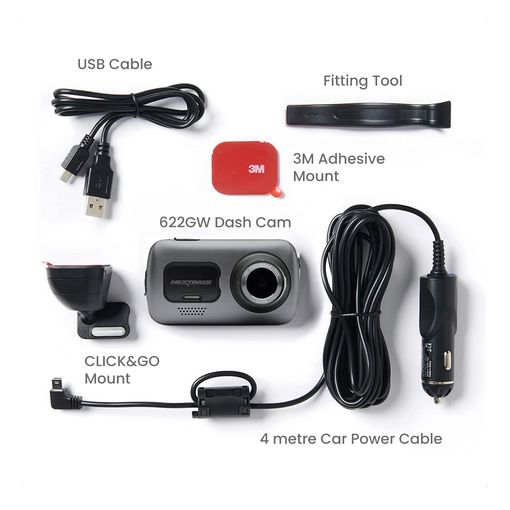
Nextbase built its name on windscreen dash cams specifically, and the 622GW is the model that shows the R&D. It's the only camera in this group with digital image stabilization. That smooths out the shake from potholes and speed bumps on a rougher road. The 140-degree lens sits behind an f/1.3 six-layer glass assembly. The 10Hz GPS logs a fix ten times a second, not once a second like cheaper units.3 It also pairs with a modular rear camera, cabin camera, or rear window camera, each sold separately. You can build the system out instead of paying for capability you don't need yet. Longevity is a genuinely mixed signal, though: one owner's unit developed random screen freezes and had to go back after five or six weeks, a reminder that even a well-supported flagship isn't immune to a bad unit.
The Flagship Pick: All The Details
Nextbase records at up to 4K at 30fps, 1440p at 60fps, or 1080p at 120fps for slow-motion review, and the microSD slot takes cards up to 256GB, with U3-rated cards recommended for 4K.3 What Nextbase doesn't publish anywhere is the actual sensor model behind that 4K figure, just a description of "larger pixels" and automatic light detection, so treat the resolution claim the way you would treat any brand that doesn't name its parts. The standard warranty runs 12 months from the date of purchase.4 At this price point you're paying mostly for the ecosystem and the stabilization rather than a verified, named sensor.
Vantrue E1 Pro 4K Mini Dash Cam with STARVIS 2 Sensor
Best Genuine 4K Sensor
based on 1510 Amazon reviews (4.0★), adjusted for performance, build and value
Why the Real-4K Pick Earns Its Spot
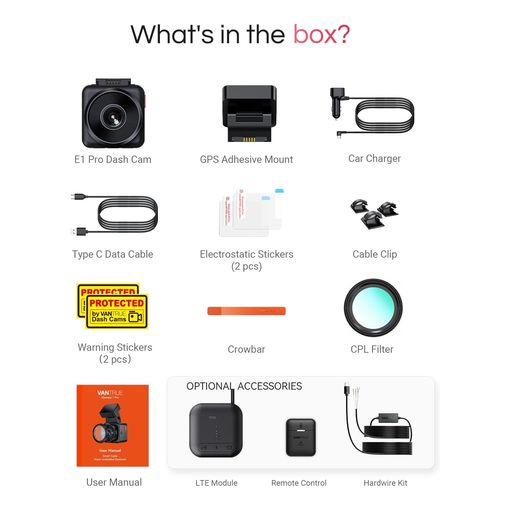
This is the one camera in the lineup whose 4K badge you can actually verify. Vantrue names the front sensor as Sony's STARVIS 2 IMX678, and Sony's own datasheet puts that part at 8.40 million effective pixels with a recommended recording resolution of 3840 by 2160, which is genuine 4K rather than an upscaled figure.56 STARVIS 2 is Sony's newer low-light pixel design, rated at a sensitivity of 2000mV or more per square micrometre with a wider dynamic range than the original STARVIS at the same pixel size.5 Vantrue also builds in a feature it calls PlatePix, tuned specifically to keep number plates legible rather than simply making the whole picture brighter. Heat is the thing to watch: one owner running two of these front and back reported the front unit had chewed through three SD cards from overheating by the six-month mark, so a high-endurance card and good airflow behind the mirror matter more here than on cameras that run cooler.
Real 4K, Mini Body: All The Details
Despite the compact housing, the E1 Pro packs an f/1.8 aperture, a 158-degree lens, 5GHz WiFi, dual-system GPS logging, and voice control in several languages.6 A CPL filter ships in the box to cut windscreen glare, and storage tops out at a generous 1TB. Vantrue backs the camera with an 18-month warranty, ahead of the 12-month standard most budget brands default to.6 The trade-off is brand depth: Vantrue is smaller and less mainstream than Nextbase or Garmin, so support infrastructure and accessory availability aren't as broad.
VIOFO A119 V3 Dash Cam with Built-In GPS
Best GPS Logging
based on 2713 Amazon reviews (4.6★), adjusted for performance, build and value
What Makes the GPS Pick Stand Out
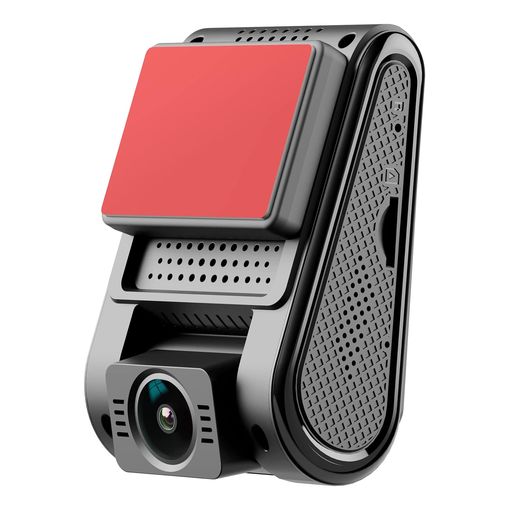
VIOFO builds a genuine GPS logger into the A119 V3. It doesn't bundle a separate module or skip GPS entirely like some rivals do. Speed and route data land in every clip without an extra purchase. The front sensor is Sony's STARVIS IMX335, rated at 5.14 million effective pixels, and VIOFO's own 2K claim of 2560 by 1600 works out to roughly 4.1 million pixels, comfortably inside what the sensor can deliver natively.78 That's the opposite problem to some cameras in this list: VIOFO isn't claiming more than its hardware can do. Nearly 2,700 ratings back this listing up, the deepest review history of anything here. One owner's review, updated after roughly four years of ownership, said it had "performed well" the whole time, exactly the kind of long-haul verdict a star average alone can't give you.
Real Specs, Real Value: All The Details
The A119 V3 is single-channel, so there's no rear camera option bundled in, and buffered parking mode needs a hardwire kit sold separately to run continuously.7 A supercapacitor replaces the battery most competitors use, which holds up better in a hot car over years of use than lithium cells do. Storage runs up to 256GB, and the 2-inch screen is small but functional for checking framing rather than reviewing footage properly. VIOFO backs it with an 18-month warranty.7 If a single, honestly-specified front camera is all you need, this is hard to beat on value.
REDTIGER F17 3-Channel Dash Cam with GPS
Best 3-Channel Coverage
based on 3384 Amazon reviews (4.4★), adjusted for performance, build and value
The Case for Covering All Three Angles
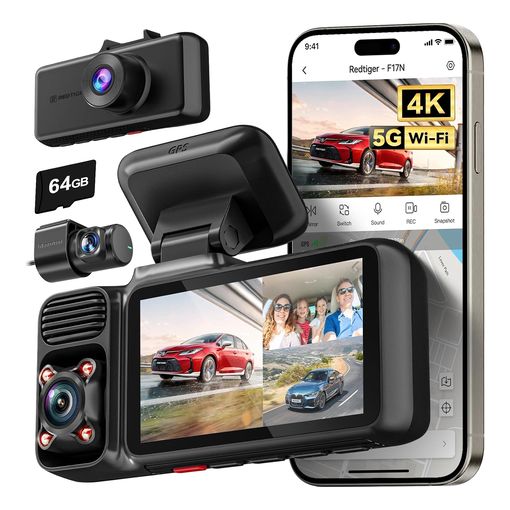
Most dash cams here watch one or two directions. The F17 watches three at once: front, cabin, and rear, at 150, 160 and 155 degrees respectively, which is genuinely useful if you drive for a rideshare platform or just want proof of what happened inside the car as well as outside it.9 With over 3,300 ratings, it carries the deepest review base of any product in this roundup, and a built-in GPS module means you're not shopping for an accessory afterward.
Three Cameras, One Honest Caveat
Here's the catch worth knowing before you buy. REDTIGER names the front sensor as Sony's STARVIS 2 IMX675. Sony's own datasheet lists that chip at 5.12 million effective pixels, with a recommended recording resolution around 2592 by 1944.91 That's well short of the roughly 8.3 million pixels a genuine 3840×2160 4K image needs. The "4K" badge on the box is being generated from a sensor that was never going to reach native 4K. The step-up F17 Elite variant fixes this by swapping in the larger IMX678 sensor. Rear and cabin cameras record at 1080p regardless. None of that makes the F17 poor value for three-way coverage, but score the front picture quality as good rather than flagship, and expect the standard 18-month warranty rather than anything longer.9 Reliability past the warranty window is also a real question: one buyer's unit started malfunctioning after just two weeks, and it was her second F17 in a row to fail early.
Nextbase 222X Dash Cam Front and Rear
Best Budget Dual-Channel
based on 1322 Amazon reviews (4.4★), adjusted for performance, build and value
Why the Affordable Dual Pick Works
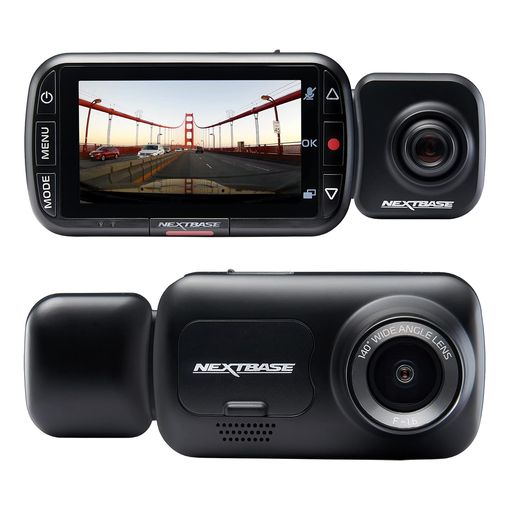
If the 622GW's price is more than you want to spend but you'd still rather buy from an established brand than a name you've never heard of, the 222X is Nextbase's answer. It ships with both a front and a rear camera as standard, connected by a proper cable rather than relying on a phone as the second lens, and the magnetic Click&Go Pro mount lets you pull the whole unit off the glass in seconds without re-aligning it next time.10 At just over 1,300 ratings and a 4.4 average, it's actually the highest-rated Nextbase camera in this roundup. None of its reviews we found settle into a genuine long-term verdict, though; the visible ones cover setup and first impressions rather than months of real ownership, so treat that rating as an early-days signal rather than a proven track record.
Two Cameras, Modest Specs: All The Details
Resolution is where the savings show up. The front camera records 1080p and the rear only 720p, both at 30fps, a clear step down from the 622GW's 4K tier.10 There's no sensor model published here either, but 1080p is a modest enough claim that it doesn't need the same scrutiny a "4K" badge does. Intelligent parking mode and a G-sensor for crash detection are both included, though there's no GPS or WiFi app on this model, features Nextbase reserves for its pricier range. Warranty terms match the rest of the Nextbase lineup: 12 months from the date of purchase.4
Garmin Dash Cam Mini 3
Best Ultra-Compact
based on 393 Amazon reviews (4.2★), adjusted for performance, build and value
The Appeal of Going Nearly Invisible
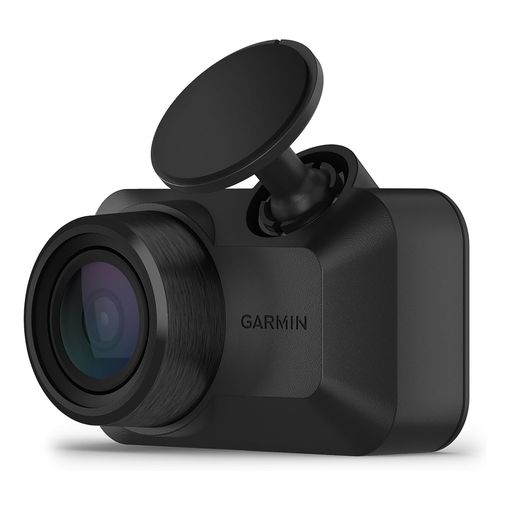
At 52 by 32 by 20mm and just 30 grams, the Mini 3 is smaller than most car key fobs, and that's the entire point.11 It tucks behind the mirror stalk without adding visible bulk to the windscreen. That matters if you'd rather not announce you're running a camera at all. It also helps when your mirror mount already fights for space with a phone holder and a toll transponder. Garmin's Clarity polarizer is built into the lens to cut glare and reflections without needing an add-on filter. Its review pool doesn't offer a genuine ownership timeframe either; the visible reviews describe first impressions after fitting rather than a verdict from months on the windscreen, so the size and build quality are proven, but long-term reliability isn't yet.
Small Body, Real Trade-Offs
Recording tops out at 1080p, and unusually for this category, the Mini 3 has no built-in GPS chip. It can log location data only when paired wirelessly with a separate GPS-equipped Garmin dash cam, so as a standalone unit you get footage and timestamps but no route or speed logging.11 Power comes from a supercapacitor rather than a lithium battery, chosen for its tolerance of the temperature swings inside a parked car, and the standard warranty runs 12 months.11 Storage runs up to 512GB. Buy this one for the size and the build quality, not for a long feature list.
Thinkware U1000 Dash Cam Front and Rear
Best for Remote Monitoring
based on 112 Amazon reviews (4.1★), adjusted for performance, build and value
What We Love About the Connected Pick
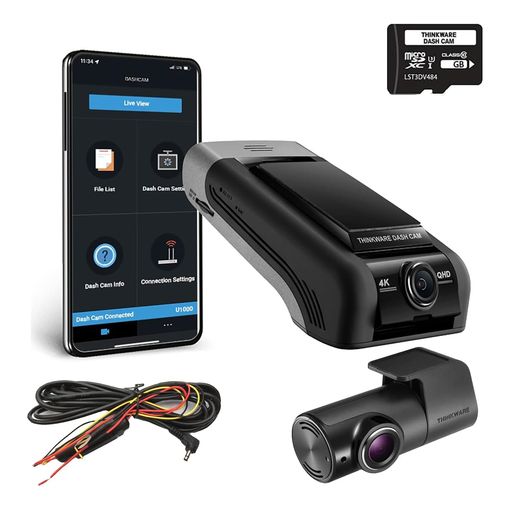
Every other camera here needs you to physically pull the SD card or open a local WiFi connection to see what it recorded. The U1000 is built around Thinkware's Cloud app instead, so you get a genuine live view of your parked car from anywhere there's a WiFi hotspot in the vehicle, plus geo-fencing that pushes a notification if the car leaves an area you've set, and an impact alert with a short clip the moment something hits it. That's a meaningfully different feature set from the rest of this lineup, not just a bigger spec sheet. It comes at a real cost in consistency, though: one owner's front camera developed a flickering fault "after 5 months and 18 days" that ended up draining the car battery, and another reported two separate units failing in a row, each with a different fault, before requesting a third. That pattern is a useful reminder that the cloud features are the strongest reason to buy this over a simpler camera, not a guarantee the hardware itself is flawless.
The Connected Pick: All The Details
Thinkware's own listing pairs a Sony image sensor with a 156-degree wide-angle range shared by both cameras, recording 4K UHD at 30fps or 2K at 60fps depending on which you prioritise, with a 2K rear camera alongside it. Beyond the live view already mentioned, the Cloud platform adds geo-fencing, vehicle location tracking updated every 10 seconds, and impact notifications sent to a registered contact. The hardwire lead monitors your car battery's voltage and shuts the camera down automatically if it drops too low, protecting you from a flat battery caused by the camera itself. A 64GB SD card ships in the box. This is also the most expensive camera in the entire lineup, and Amazon itself flags the price as higher than typical for the category, so it only makes sense if the cloud features are something you'll actually use rather than a novelty.
Miofive S1 Ultra Dual 4K Dash Cam Front and Rear
Best Built-In Speed Camera Alerts
based on 213 Amazon reviews (4.3★), adjusted for performance, build and value
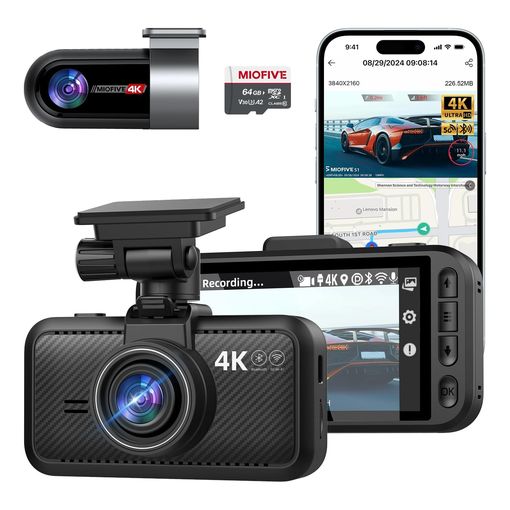
Why the Speed Camera Pick Earns Its Spot
None of the other seven cameras in this roundup build in speed and safety camera warnings as standard. The S1 Ultra does, logging your position via built-in GPS and sounding an alert as you approach a fixed camera, a mobile enforcement van location, or an average-speed check zone, with the current limit shown on its 3-inch screen. It's also one of the only cameras here recording true 4K on both the front and rear lens rather than downgrading the rear to 1080p, which matters if you actually want to make out a following vehicle's plate. Reviewers who fitted it describe the camera alerts as genuinely useful day to day, though one owner noted a real limitation worth knowing: it announces you're clear of a camera as you physically pass it rather than once you're clear of the detection zone, so don't treat the all-clear as instant. None of the reviews we found settled into a genuine multi-month ownership verdict, mostly describing setup and first weeks of driving, so weigh the strong early impressions against the lack of a longer track record.
The Speed Camera Pick: All The Details
Miofive's own product page confirms native 4K recording at 3840x2160 on both cameras, 30fps at the front and 24fps at the rear, and speed camera alerts covering fixed, average-speed and red-light cameras.12 Power comes from a supercapacitor rather than a lithium battery, which Miofive rates to handle temperatures from -20°C to 70°C, useful for a camera that sits on a hot windscreen all summer.12 The kit includes a 64GB card, and connectivity runs over dual-band WiFi with Bluetooth for faster app pairing. One reviewer flagged the supplied mount as flimsy and difficult to angle precisely, worth checking against the sturdier Click&Go-style mounts on the Nextbase cameras above if mount quality matters to you. Continuous parking-mode recording, like most cameras here, needs a separate hardwire kit sold on its own.
Best Dash Cam FAQ
What's the difference between a windscreen dash cam and a mirror dash cam?
A windscreen unit is a small standalone camera on its own suction or adhesive mount, usually tucked near the top of the glass behind the mirror. A mirror dash cam clips over or replaces your actual rearview mirror and typically adds a much larger built-in touchscreen. Windscreen cameras are smaller, usually cheaper to start with, and easier to move between cars; mirror units trade that compactness for a screen you can actually see footage on without pulling out your phone. See our mirror dash cam roundup if a built-in screen matters more to you than a discreet mount.
Which dash cam brand is considered best?
There isn't a single brand that wins across every category. Independent testing from Consumer Reports has evaluated models from Nextbase, VIOFO, REDTIGER, Rexing and Rove. It doesn't name one universal winner, and instead ranks individual models on their own test results.13 Established brands like Nextbase and Garmin carry longer track records and broader accessory support. Newer entrants like VIOFO, Vantrue and REDTIGER often ship more sensor for the money, but with a shorter history behind the warranty.
Does having a dash cam actually lower insurance premiums?
Generally, no, not as an automatic discount. Consumer Reports found that only a small number of insurers offer a direct discount simply for owning a dash cam, and coverage varies a lot by insurer and by country.14 The more consistent benefit is indirect: footage can support your account of an accident or a hit-and-run, which may help you avoid a premium increase after a dispute rather than earning a discount up front. Ask your own insurer what they actually accept as evidence before assuming a discount exists.
What resolution do I actually need?
Less than the marketing badges suggest, and the number only means something if the sensor behind it can support it. A "4K" claim needs roughly 8.3 million pixels of native resolution to be real; a sensor with around 5 million effective pixels, like two of the front sensors in this roundup, is being upscaled to hit that figure.815 For everyday use, a genuine 2K or 2.5K front camera with a sharp, wide lens usually reads plates and signs better than an upscaled 4K one.
Do I need front-and-rear (dual-channel) coverage, or is front-only enough?
Front-only covers the most common dispute: who had right of way, or whether you actually ran the light you're accused of running. Dual-channel adds a rear camera for rear-end shunts and reversing incidents, and 3-channel systems add a cabin view on top of that. If you mostly drive alone on ordinary roads, front-only is a reasonable, cheaper choice. If you carry passengers, drive for a rideshare platform, or park somewhere rear-end knocks are common, the extra camera earns its keep.
What are common dash cam setup mistakes?
Mounting the camera so it blocks part of your forward view is the most basic one; keep it small and tucked near the top of the glass, out of your direct sightline. Powering it only from the 12V socket is another. That setup stops recording the moment you turn the ignition off. If you want parking-mode footage of someone hitting your parked car, wire a hardwire kit to a fused, ignition-switched circuit instead, not a permanently live one that can drain your battery. The third mistake is the memory card. A card can be large enough in gigabytes and still too slow for the job. Look for a card carrying a Speed Class, UHS, or Video Speed Class rating. That number, not the capacity, is what actually determines whether frames get dropped during continuous recording.2
Is it legal to mount a camera on my windscreen?
The general principle holds almost everywhere: your view of the road has to stay clear, and anything you mount cannot compromise it. Beyond that, the specifics vary. Rules differ by country, and sometimes by region within a country, covering exactly where on the glass a device may sit, what counts as admissible footage, and whether recording passengers' voices needs their consent. Mount the camera small and out of your direct line of sight, mute the microphone if you're unsure about passenger consent rules where you drive, and check your own jurisdiction's rules before assuming a mount position is fine.
How long should a dash cam last?
Nobody publishes a service life for these, so warranty length is the most honest proxy: most of the cameras here carry 12 to 18 months of manufacturer cover.476 Treat the memory card as a wear item independent of the camera itself, since it's written to constantly; check your footage periodically rather than assuming it's still recording, and replace the card well before it starts throwing errors.
What does a cloud-connected dash cam actually add over a normal one?
A cloud-connected camera like the Thinkware U1000 above uses a WiFi hotspot in the vehicle to send live footage, location updates, and impact alerts to your phone in something close to real time, rather than making you plug in or physically retrieve the SD card to see what happened. That's genuinely useful if you want to check on a parked car remotely, but it depends on a working data connection in the vehicle, adds another app account to manage, and is one more thing that can fail. If you mainly want evidence after the fact rather than live monitoring, a standard camera without cloud features does that job for less money and with less to go wrong.
Are built-in speed camera alerts legal and reliable everywhere?
Fixed and mobile safety camera locations are generally public information, and alerting a driver to a known camera location is treated very differently by different countries to detecting a radar or laser signal directly, which is restricted or banned in some places. Camera location databases also aren't perfect: they rely on regularly updated data, can miss newly installed cameras, and as one reviewer of the Miofive above noted, may announce you're clear of a camera right as you pass it rather than once you're fully out of its detection zone. Treat the alert as a helpful prompt to check your speedometer, not a guarantee, and check what's permitted where you actually drive before relying on the feature.
The Best Dash Cam for You
Buy the Nextbase 622GW if you want the safest bet: image stabilization that nothing else here offers, a modular accessory system, and a brand with a genuine service network behind it. Step up to the Vantrue E1 Pro if verified 4K detail matters more to you than brand recognition, or pick the VIOFO A119 V3 if you want built-in GPS logging and honestly-specified 2K in a single, well-proven front camera. The REDTIGER F17 makes sense if three-way coverage of front, cabin and rear matters more to you than a genuine 4K front image, and the Nextbase 222X is the sensible route to a trusted-brand front-and-rear system without paying flagship prices. The Garmin Mini 3 is for one specific priority: keeping the camera as close to invisible as possible, GPS and extra features be damned. If you want to check on your parked car from your phone, the Thinkware U1000's cloud features are unmatched here, and the Miofive S1 Ultra is worth a look if built-in speed camera alerts and true dual 4K recording matter more to you than brand recognition.