

Best Smart Light Switch for Homes Without a Neutral Wire

About the author...
Dave has been taking gadgets apart since he was old enough to be told not to. Every pick here is checked against the manufacturer's own documentation rather than the retail listing, and each star rating starts from a product's real Amazon customer score before being adjusted for performance, build quality, features and value. Read more about how ratings are calculated.
Table of contents
- Key Takeaways (TL;DR)
- How We Choose
- Quick Comparison
- TP-Link Tapo S220 Smart Light Switch 2 Gang 1 Way
- Lightwave Smart Dimmer 2 Gang with Energy Monitoring LP22MK2
- Philips Hue Smart Wall Switch Module Twin Pack
- BSEED WiFi Touch Glass Light Switch 1 Gang
- SONOFF MINI DUO-L Zigbee Smart Switch
- Candeo Zigbee Smart Rotary Dimmer Switch
- Aqara Smart Wall Switch H1 (No Neutral, Single Rocker)
- Aqara Light Switch H2 EU (2 Gang, Thread/Zigbee)
- SONOFF ZBM5 Zigbee Smart Light Switch (86-Type, 1 Channel)
- Bosch Smart Home Relay Switch
-
Best Smart Light Switch FAQ
- What exactly is a neutral wire, and why do some switches need one?
- How do I check whether I have a neutral wire before I buy?
- Does a no-neutral switch have any downsides compared to one that uses a neutral?
- What's the real difference between a hub-required and a hub-free switch?
- Can these switches work in a staircase or landing 2-way circuit?
- Is it safe to fit one of these myself?
- What's the maximum load these switches can handle, and does it matter for LED bulbs?
- Do I need a hub I don't already own, and can one hub run switches from different brands?
- What's the actual difference between Zigbee, Thread, and Matter?
- Can one of these switches or relays control something other than a light?
- The Best Smart Light Switch for You
The best smart light switch overall is the TP-Link Tapo S220, because it's confirmed by TP-Link's own spec sheet to need no neutral wire at all, and it controls two separate circuits from a single 2-gang faceplate.1 Nine more picks below cover a hub-free budget option, a dedicated dimmer, a retrofit module that sidesteps the neutral question entirely, a Thread-native switch, and a relay built to run more than just lighting, so you can match one to your actual wall box rather than to a marketing headline.
A smart light switch replaces the mechanical switch already in your wall, so you can turn lights on and off from an app, a voice assistant, or a schedule while still using a normal physical press. That's the whole appeal over smart bulbs: nobody in the house has to remember not to flick the switch, because the switch itself is the smart device.
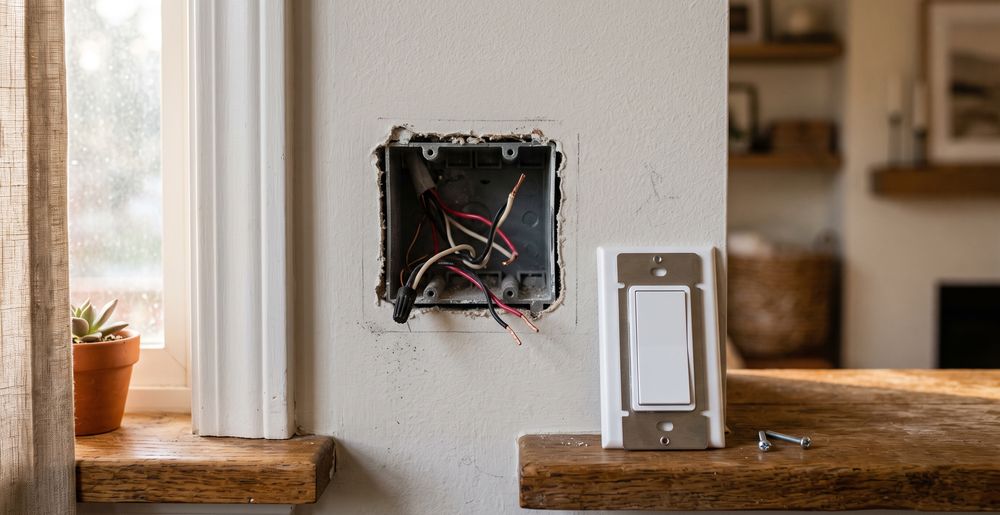
The catch is wiring, and it trips up more buyers in this category than any spec on the box. A standard light circuit sends live and switched-live wires to the switch, but often skips the neutral, because the original switch never needed one to just break a circuit. A smart switch does need one, in most designs, because its own electronics and radio have to stay powered even while the light is off. Open the wall plate on an older switch drop and there's a real chance no neutral is there, which is exactly why several of the picks below are built specifically to work without one.
Key Takeaways (TL;DR)
- Check for a neutral wire before you buy, not after. Pull the existing switch and look in the box; a huge share of returns in this category come from skipping that step.
- No-neutral designs exist for exactly this reason. The Tapo S220, SONOFF MINI DUO-L, and Candeo dimmer below are all confirmed to work without one.
- A retrofit module sidesteps the question entirely. The Hue Wall Switch Module never switches mains power itself, so neutral availability stops mattering.
- Dimmers often set a minimum load. Candeo's own listing states a 10W total minimum, since very low-wattage LED setups can flicker below that.
- Hub-required and hub-free are genuinely different purchases. A hub adds cost and another app, but it's usually needed for full voice and automation support.
- Staircase (2-way) wiring needs checking too. Some switches wire into a true 2-way circuit; others only fake it by syncing two smart units over WiFi.
- A physical switch plate still matters day to day. Anyone in the house who isn't on the app needs a normal press to work, which not every design gets right.
- "No neutral required" on the box isn't always true in practice. A couple of the picks below market flexible wiring but still need a neutral connected for full functionality, per real installer feedback.
- Matter over Thread is a genuinely different protocol from Zigbee or WiFi, not just a rebrand, and only one switch in this lineup is Thread-native.
How We Choose
Each switch is scored on how reliably it does the core job of switching a circuit, how the hardware and app hold up over real use, and whether its extra features (energy monitoring, dual channels, dimming range) are genuinely useful rather than padding. We also weigh price against the other products here, not the whole market. Wiring requirements, load limits, and hub dependencies are checked against the manufacturer's own spec page where one exists, and against the Amazon listing's own stated installation notes otherwise, since those are the two places a buyer would actually go looking.
We don't run our own lab tests on these — no dedicated rig, no controlled conditions. What we do instead: read through the verified-purchase reviews in full, not just the star average, weighting the ones written weeks or months after purchase over launch-week first impressions, since that's where wear, reliability problems, and real-world performance gaps actually show up. Where a product genuinely lacks that kind of track record, we say so in its write-up rather than papering over it.
Quick Comparison
Each product's overall rating starts from its real Amazon customer rating, then gets adjusted by up to half a star for real-world performance, build quality, features and value. Click a product name to jump straight to its full review below.
| Product | Best For | Type | Key Detail | Wiring |
|---|---|---|---|---|
|
TP-Link Tapo S220 Smart Light Switch 2 Gang 1 Way 4.6 |
Households without a neutral wire at the switch | Wall switch, 2 gang | No neutral wire needed, 2 gang | Tapo H100/H200 hub, 4A/250V per gang |
|
Lightwave Smart Dimmer 2 Gang with Energy Monitoring LP22MK2 4.6 |
Apple Home users who want energy insights | Wall dimmer switch, 2 gang | Energy monitoring, neutral optional | HomeKit compatible via Lightwave Link Plus hub |
|
Philips Hue Smart Wall Switch Module Twin Pack 4.7 |
Keeping smart bulbs permanently powered | Retrofit switch module, twin pack | Fits behind your existing switch | Hue Bridge required, works with any existing rocker |
|
BSEED WiFi Touch Glass Light Switch 1 Gang 4.1 |
Buyers who do not want to add a hub | Touch wall switch, 1 gang | Hub-free WiFi, neutral required | 2.4GHz WiFi direct, tempered glass panel |
|
SONOFF MINI DUO-L Zigbee Smart Switch 4.5 |
Running two lighting circuits from one no-neutral box | In-wall relay switch, dual channel | No neutral wire, controls 2 circuits | Zigbee, 12A total load, 8A per channel |
|
Candeo Zigbee Smart Rotary Dimmer Switch 4.7 |
A physical dial with smart dimming control | Rotary dimmer switch | No neutral wire, 10W minimum load | CE/UKCA certified, 2-way compatible |
|
Aqara Smart Wall Switch H1 (No Neutral, Single Rocker) 4.8 |
Buyers who want the widest smart-home platform support without a neutral | Wall switch, 1 gang | No neutral wire, Zigbee 3.0 | Zigbee 3.0, Aqara hub required, works with HomeKit/Alexa/Google/IFTTT |
|
Aqara Light Switch H2 EU (2 Gang, Thread/Zigbee) 4.5 |
Buyers who specifically want a Thread-native switch | Wall switch, 2 gang | Matter over Thread, neutral required for full features | Matter over Thread and Zigbee, power monitoring with neutral |
|
SONOFF ZBM5 Zigbee Smart Light Switch (86-Type, 1 Channel) 4.7 |
A visible wall plate that installs the same way regardless of your wiring | Wall switch, 1 gang | Works with or without a neutral wire | Zigbee 3.0, SONOFF hub required |
|
Bosch Smart Home Relay Switch 4.7 |
Buyers who also want to automate shutters, garage doors, or pumps from the same system | In-wall relay module | Potential-free relay, controls more than lighting | HomeKit certified, Bosch Smart Home Controller required |
TP-Link Tapo S220 Smart Light Switch 2 Gang 1 Way
Best Overall
based on 309 Amazon reviews (4.4★), adjusted for performance, build and value
What We Love About the Overall Pick
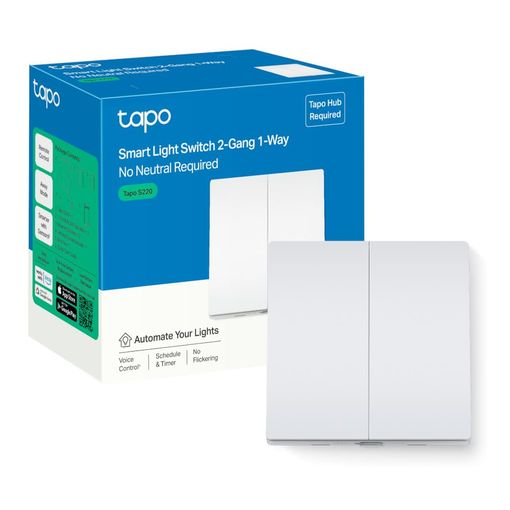
This is the switch to reach for first if you don't yet know whether your wall box has a neutral, because it's designed not to need one. TP-Link's own product page confirms no neutral wire is required. It also states the load ratings plainly: up to 1000W for incandescent and fluorescent bulbs, 600W for LED and CFL, with each gang rated at 4A and 250V.1 The switch face runs on a replaceable battery rather than drawing standby power from the mains circuit, which is part of how it avoids the neutral requirement, and the app flags you before that battery actually runs out. None of its verified-purchase reviews visible on the listing report back with a genuine ownership timeframe, so there's no long-term signal here beyond the 4.4-star average itself.
Overall Pick: All The Details
Two independent gangs sit on one faceplate, each controlling its own light or circuit, and each behaves as a 1-way switch rather than a staircase-style 2-way. TP-Link's spec page lists the Tapo H100 or H200 hub as required for the smart features to work at all. Without one, you still get a normal manual switch, but no app, no voice control, and no schedules.1 That hub is sold separately, so factor it into the real cost if you don't already own one. Voice control runs through Alexa and Google Assistant, and an away mode randomises on and off times to make an empty house look occupied. TP-Link backs it with a two-year warranty.
Lightwave Smart Dimmer 2 Gang with Energy Monitoring LP22MK2
Best for Apple Home and Energy Monitoring
based on 108 Amazon reviews (4.3★), adjusted for performance, build and value
Why the Apple Home Pick Stands Out
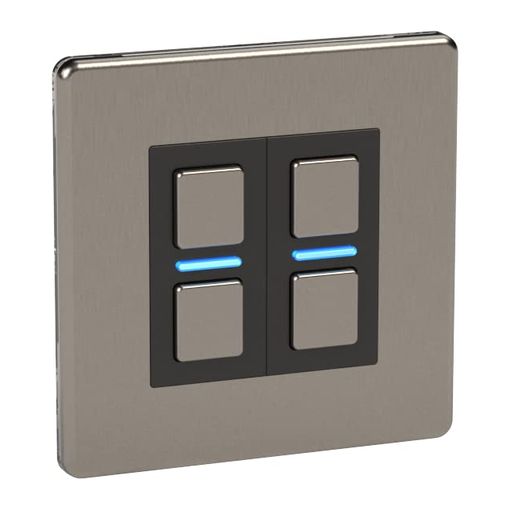
Lightwave is one of the few brands here with genuine HomeKit certification rather than a workaround, and its own product page confirms Siri, Google Home and Alexa are all supported alongside the Lightwave app.2 The standout feature is energy monitoring built into the switch itself: the app tracks how much your lighting actually draws over time, a feature only the Aqara H2 further down this list also offers, and only when that one is wired with a neutral. It's a screwless, stainless-steel-finish unit that looks closer to a premium physical dimmer than most smart switches manage. One buyer reporting back after a month or so of daily use said theirs had been "up and running... without issue," worth the expense in their view despite the premium price.
Apple Home Pick: All The Details
Lightwave states outright that "our dimmers work both with and without a Neutral, its optional," which makes this one of the more flexible switches here on the wiring question, not locked to either wiring style.2 It does need a Lightwave Link Plus hub for any smart control, voice command, timer or automation; without the hub, only the manual dimming still works.2 That hub dependency, plus a price at the premium end of this lineup, is the tradeoff for the certification and the energy data. If you're not already invested in Apple Home or don't care about usage tracking, one of the cheaper picks here does the core dimming job for less.
Philips Hue Smart Wall Switch Module Twin Pack
Best for Existing Hue Smart Bulbs
based on 1576 Amazon reviews (4.4★), adjusted for performance, build and value
What Makes the Hue Module Different
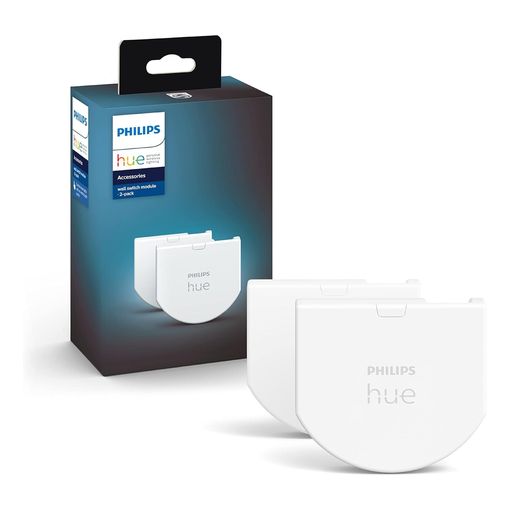
Every other product on this page switches mains power at the wall. This one deliberately doesn't. It fits behind your existing physical switch, and the listing describes exactly how it works: your lights stay permanently powered and reachable, while the module senses the switch being pressed and sends that as a wireless command to your Hue bulbs instead of cutting the circuit. That sidesteps the entire neutral-wire question, because there's no smart relay drawing standby power through the switch loop. It's also, by a wide margin, the most-reviewed product in this roundup. None of its verified-purchase reviews visible on the listing state how long the reviewer had actually owned it before writing, so there's no confirmed long-term signal here to report.
Hue Module: All The Details
The twin pack comes with two modules, four cables and two plug-in terminals, enough for two separate switch positions. It needs a Hue Bridge and Hue smart bulbs already installed to do anything useful, so it's not a standalone switch in the way the rest of this list is; think of it as the missing link between a physical switch and bulbs you've already bought. Because it never interrupts mains power to the bulb, there's also no chance of the bulb losing its network connection because someone switched it off at the wall, a genuine annoyance with ordinary smart bulbs on an ordinary switch.
BSEED WiFi Touch Glass Light Switch 1 Gang
Best Hub-Free Budget Pick
based on 1628 Amazon reviews (4.1★), adjusted for performance, build and value
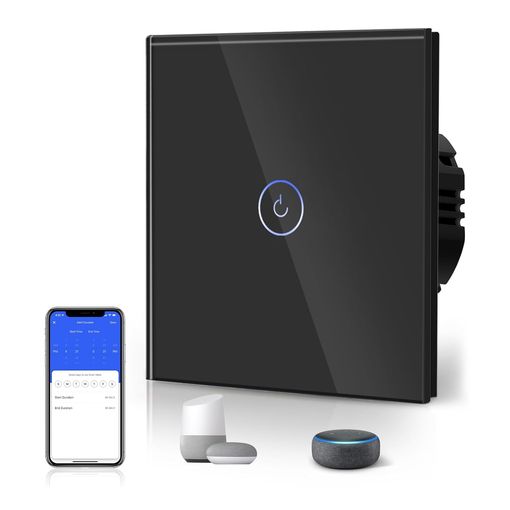
Why the Budget Pick Still Earns Its Place
Over 1,600 reviews back this one, more than any other switch here, and it connects straight to your 2.4GHz WiFi network with no separate hub to buy or manage. The tempered glass panel has a laser-etched button that glows softly in the dark, a small touch that matters more than it sounds like at 2am. It's the cheapest route into this category by a clear margin, and for a single ordinary room light, that's often all the switch anyone needs. Longevity is the real question mark, though: one buyer reported theirs worked well for 15 months before it started switching lights off at random, then failed with a loud bang and tripped the breaker, a reminder that a budget switch is still mains electrical hardware.
The Budget Pick: All The Details
This one does require a neutral wire, the opposite wiring situation to the Tapo and Candeo picks above, so it's worth checking your box before ordering. Its listing also describes a "two-way" mode where multiple BSEED units sync through the SmartLife app to control one light from different switches. That's a software workaround rather than a true wired staircase circuit, and it only syncs with other BSEED units, not other brands. Build quality is the other place it gives ground to the pricier picks on this list: it's a capable, functional switch, but the brand doesn't carry the same support and warranty presence as TP-Link or Philips.
SONOFF MINI DUO-L Zigbee Smart Switch
Best for Two Circuits, No Neutral
based on 188 Amazon reviews (4.2★), adjusted for performance, build and value
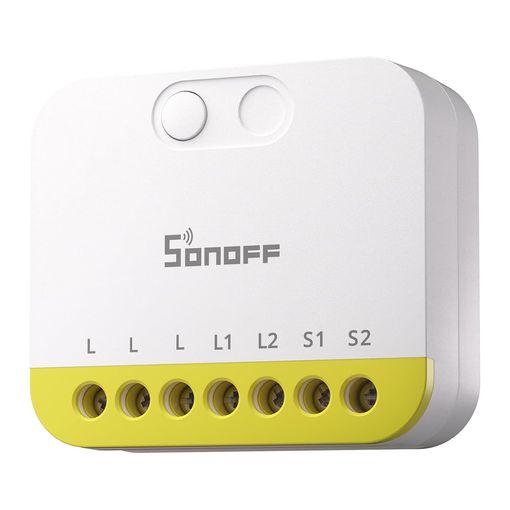
The Case for the Dual-Channel Module
Unlike the rest of this list, this one fits inside the wall box behind whatever physical switch you already have, rather than replacing the visible faceplate. Its listing is explicit that no neutral wire is required, aimed squarely at older homes with single-wire switch drops. The dual-channel design is the real reason to pick it over a single-gang no-neutral switch: it independently controls two lights or circuits from one compact unit, useful for a landing with two separate fittings or a kitchen split across two zones. It's a newer listing than most of this lineup, and none of its reviews yet establish a genuine ownership timeframe, so treat the strong early rating as promising rather than proven over the long run.
Dual-Channel Module: All The Details
Total load across both channels tops out at 12A, with 8A available per individual channel, plenty for LED lighting circuits and most smaller appliance loads. It runs on Zigbee, so unlike the WiFi-based picks on this list, it needs a compatible hub or gateway rather than connecting straight to your router, which does mean an extra piece of hardware if you don't already run a Zigbee setup. The compact housing fits into standard switch boxes even where space is tight, and it keeps your existing switch plate as the physical control surface rather than replacing it with a touch panel.
Candeo Zigbee Smart Rotary Dimmer Switch
Best Physical Dimmer Dial
based on 257 Amazon reviews (4.4★), adjusted for performance, build and value
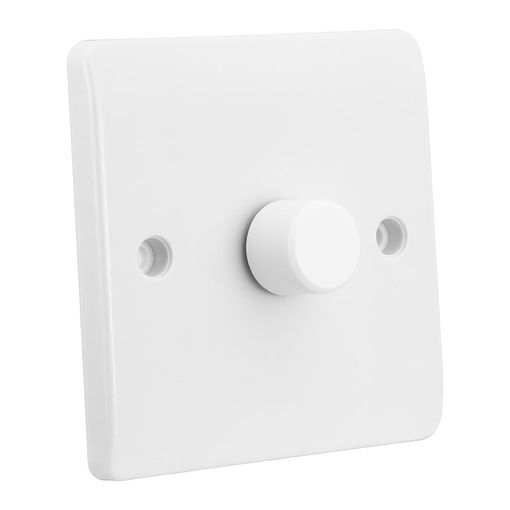
Where the Rotary Dimmer Fits
If touch panels feel like a step backward from an actual dial, this is the pick. It keeps a physical rotary knob that remembers your last brightness setting, while adding Zigbee control on top for app, voice and hub-based automation. The listing states plainly that it installs without a neutral wire and fits standard 25mm back boxes, so it's aimed at the same no-neutral situation as the Tapo and SONOFF picks above, just with dimming instead of plain on/off. None of its verified-purchase reviews visible on the listing state how long the reviewer had owned it, so there's no confirmed long-term signal here beyond the 4.4-star average.
Rotary Dimmer: All The Details
Trailing-edge dimming supports dimmable LED and incandescent bulbs up to 250W. It also supports true 2-way multiway circuits through retractive push switches, a genuine wired staircase setup rather than an app-based workaround. The one limitation worth flagging: Candeo's own listing states bulbs must be at least 5W each, with a 10W total minimum load. Results vary with low-quality bulbs or a very light total load, sometimes requiring a bypass on the first lamp in the circuit. That's the minimum-load flicker issue that catches out anyone pairing a no-neutral dimmer with a single very low-wattage smart LED. It needs a Zigbee 3.0 hub such as SmartThings, Hubitat, Home Assistant or a Tuya gateway, and it carries CE and UKCA certification with built-in overload and overheat protection.
Aqara Smart Wall Switch H1 (No Neutral, Single Rocker)
Best for Multi-Platform Zigbee Support
based on 437 Amazon reviews (4.5★), adjusted for performance, build and value
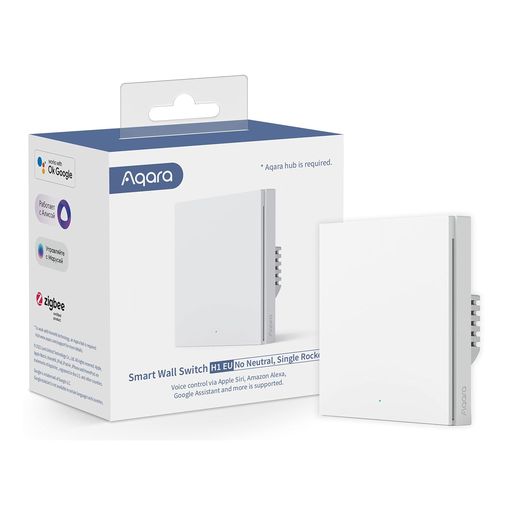
What We Love About the Multi-Platform Pick
Aqara's listing states plainly that the H1 EU "can be installed even if your existing wiring doesn't have the neutral wire," and its review history backs that up: dozens of buyers describe fitting it into older boxes with no neutral present. What sets it apart from the Tapo and SONOFF picks above is breadth of support once it's running. Because it speaks Zigbee 3.0 through an Aqara hub, it reaches Apple HomeKit, Alexa, Google Assistant and IFTTT natively, and several reviewers confirm it also pairs directly into Home Assistant without needing Aqara's own hub at all. None of its verified-purchase reviews we found established a clear ownership timeframe, so there's no confirmed long-term signal here beyond the 4.5-star average, though the review volume (437) is healthy for this category.
Multi-Platform Pick: All The Details
The switch fits both square 86mm boxes and round EU-style boxes, though Aqara's own listing warns that not every double wall box will accommodate the twin version. A single Aqara hub is required for smart features; without one it still works as an ordinary manual switch. Reviewers who use it with Home Assistant note the top button can be decoupled into a wireless trigger. A separate circuit then keeps switching a light. That's useful if you want the same physical switch to control a smart bulb instead of cutting its power. One detailed review flagged that pairing it to a smart bulb rather than a dumb one sometimes needs an extra bypass capacitor at the fitting, the same minimum-load issue that shows up with the Candeo dimmer above. Build quality draws consistent praise in its review history, with the most common complaint being a louder-than-expected click rather than any functional failure.
Aqara Light Switch H2 EU (2 Gang, Thread/Zigbee)
Best Matter/Thread-Native Switch
based on 189 Amazon reviews (4.3★), adjusted for performance, build and value
Why It's the Thread Pick
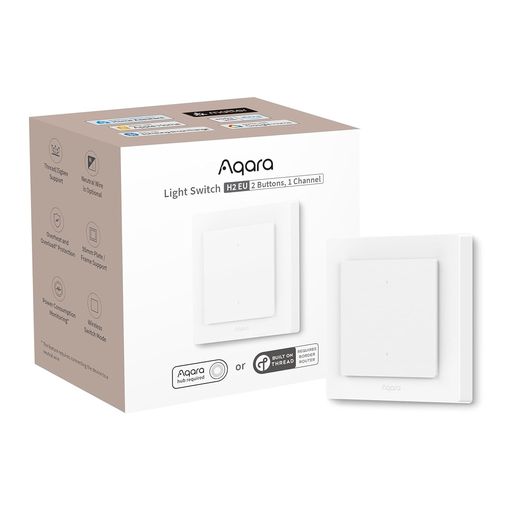
Every other switch in this lineup runs on WiFi or plain Zigbee. This one is built around Matter over Thread, a newer smart-home standard designed to let devices from different brands talk to each other and to a phone directly, without every command routing through a manufacturer's own cloud.3 Aqara's listing frames wiring as flexible, marketed as "2-in-1 Neutral" with no-neutral installs supported. Real-world reports complicate that a little. One buyer, who described themselves as a registered electrician, said they could not get the switch to operate at all without a neutral connected. They followed the no-neutral instructions exactly and still had to fall back to a neutral-only install to get it working. Treat the no-neutral claim on this one as best-effort rather than guaranteed, and check your own box carefully before counting on it.
Thread Pick: All The Details
With a neutral connected you also get power monitoring and overload protection, features Aqara's own listing says are unavailable on the no-neutral path. The switch supports both a 55mm modular frame standard, so it fits many third-party multi-gang plates, and it doubles as two wireless "virtual" switches on top of its one physical relay, useful for triggering scenes without wiring a second circuit. It needs either an Aqara Zigbee hub or a Thread border router, so factor that into cost if you don't already run one. None of its verified-purchase reviews we found stated a clear ownership timeframe, so there's no confirmed long-term signal to report beyond the 4.3-star average and the wiring caveat above.
SONOFF ZBM5 Zigbee Smart Light Switch (86-Type, 1 Channel)
Best Flexible Wall-Plate Switch
based on 146 Amazon reviews (4.5★), adjusted for performance, build and value
Where the Flexible Wall-Plate Pick Fits
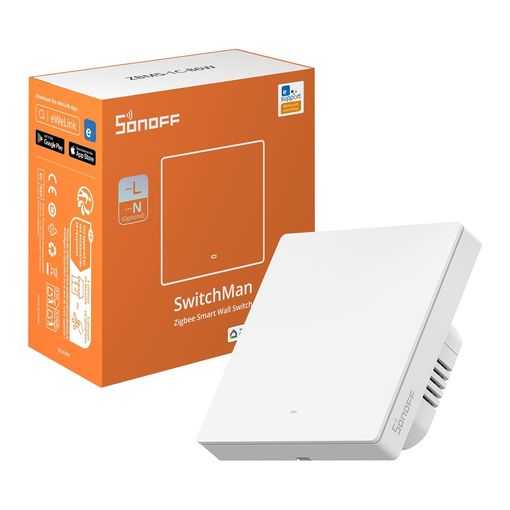
The SONOFF MINI DUO-L above is a hidden relay that sits behind your existing plate. This one replaces the visible faceplate itself, the same way the Tapo and Aqara switches do, but its own listing states it works "seamlessly with both neutral and no-neutral setups," so you don't need to know your wiring situation before ordering. Reviewers confirm both paths work in practice, and several mention it doubling as a Zigbee router for other devices in the house when wired with a neutral. Longevity is a genuine mixed bag here: several buyers report years of trouble-free use, but one reviewer's review is titled simply "Stopped working," reporting the switch died after 4 months, and a buyer in Sweden reported a professionally-wired unit failing after just 2 days. That's a real minority outcome worth knowing about, not the norm, but it's there in the data.
Flexible Wall-Plate Pick: All The Details
It runs on Zigbee 3.0 and needs a SONOFF Zigbee hub for smart features, working as a plain manual switch without one. Reviewers who compared it against other Zigbee switches in this category describe the relay as noticeably quieter, though a couple mention it holding a weaker mesh signal than some alternatives when routing for other devices. Amazon's own spec table for this listing lists a voltage figure that doesn't match a standard domestic supply, which looks like a copy-paste error from a regional sibling listing rather than a real spec, so lean on the wiring bullet points and reviews over that particular field. It's among the more affordable switches in this lineup, and its 86-type form factor means it drops into a standard box without any depth concerns.
Bosch Smart Home Relay Switch
Best Relay for More Than Just Lighting
based on 189 Amazon reviews (4.6★), adjusted for performance, build and value
What Sets the Bosch Relay Apart
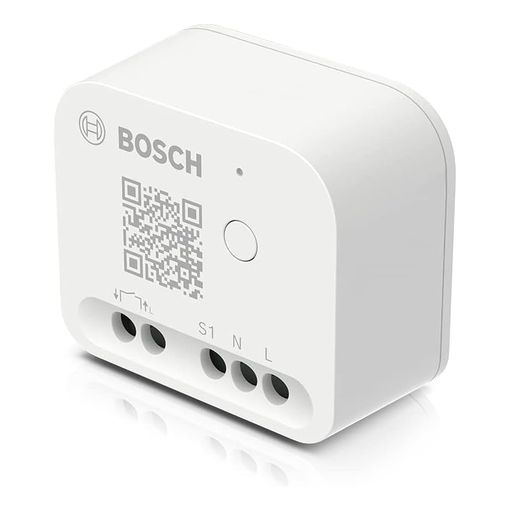
Nothing else on this list is built to switch more than lighting. Bosch's own listing describes this potential-free relay as controlling "garage doors, garden irrigation systems, ventilation systems, pumps, plug sockets and lighting," installed behind an existing switch, in a junction box, or in a weatherproof enclosure outdoors. That versatility is the whole appeal if you're building out a wider Bosch Smart Home system rather than just wanting one smarter light switch. It's HomeKit certified alongside Alexa and Google Assistant support, and it can also relay signal for other Bosch devices further from the controller. Reviews skew strongly positive (81% five-star), but a meaningful minority describe a dead-on-arrival unit or a relay that pairs but never actually switches power, with one buyer calling Bosch's support process for it "awful." None of its reviews we found established how long a working unit had actually been in service, so there's an honest gap on long-term durability here too.
Bosch Relay: All The Details
This is the most expensive product in this roundup, and that price doesn't include what you actually need to use it. A Bosch Smart Home Controller or Controller II is sold separately. Without one, the relay only manages a very basic on/off or momentary-press mode, with no app, automations, or voice control. One buyer summed up the value question bluntly in their review, questioning whether a plug-in smart controller wouldn't do the same job for a fraction of the cost for a simple lighting circuit. Where it earns its place is the same potential-free contact working across genuinely different device types on one system, something none of the dedicated light switches above attempt. Bosch doesn't market this one as a no-neutral solution the way the Aqara and SONOFF picks above do, so if your box only has live and switched-live wires, check Bosch's own installation guide before ordering rather than assuming it'll work the way the no-neutral switches here do.
Best Smart Light Switch FAQ
What exactly is a neutral wire, and why do some switches need one?
In a traditional light circuit, the switch only needs to interrupt the live conductor. Many older installations run just live and switched-live wires to the switch box and never loop a neutral through it, even though one exists at the light fitting itself. A smart switch's own electronics and wireless radio need continuous power to stay online, and the simplest way to provide that is to draw it from a neutral at the switch. Switches without one, like the Tapo S220 and Candeo dimmer above, instead take a very small standby current through the load itself or run their control face on a battery, which is why "no-neutral" is a real design category rather than a workaround.
How do I check whether I have a neutral wire before I buy?
Turn off the circuit at the consumer unit or breaker box, then remove your existing switch plate and look inside the box. If you see a bundle of wires capped off or tucked to one side that isn't connected to the switch itself, that's very likely your neutral. If you only see two or three wires and all of them terminate on the switch, you probably don't have one at that box, and a no-neutral design like the Tapo, SONOFF or Candeo above is the safer purchase. When in doubt, a qualified electrician can confirm it in a couple of minutes.
Does a no-neutral switch have any downsides compared to one that uses a neutral?
Sometimes. Because no-neutral designs often draw their standby power through the bulb itself, very low-wattage LED bulbs can occasionally flicker faintly when the switch is off, since a small current is still passing through them. Dimmers are more exposed to this than plain on/off switches, which is why Candeo's own listing states a 10W minimum total load for its rotary dimmer. If you're fitting one to a single modern low-wattage LED, check the manufacturer's stated minimum load first.
What's the real difference between a hub-required and a hub-free switch?
A hub-free switch, like the BSEED pick above, connects straight to your home WiFi and is controlled through its own app with no other hardware to buy. A hub-required switch, like the Tapo, Lightwave, SONOFF and Candeo picks, needs a separate bridge or gateway box for its smart features to work at all; without it, most of these still function as a normal manual switch, just without the app, voice control or automations. Hub-based systems often support more advanced protocols like Zigbee, which can mean a more stable mesh network in a larger home, at the cost of one more device and app in your setup.
Can these switches work in a staircase or landing 2-way circuit?
Some can, but check carefully, because "2-way" gets used loosely in this category. A true 2-way circuit uses a second physical switch wired into the same circuit so either one can control the light, and the Candeo dimmer above genuinely supports that through compatible retractive push switches. Other switches, including the BSEED pick, instead sync two separate smart units over WiFi or Zigbee so they appear to work together, which achieves a similar result for the user but isn't the same wired arrangement, and it generally only works between two units of the same brand.
Is it safe to fit one of these myself?
Mains wiring carries a real risk of shock or fire if it's done incorrectly. The same basic principle applies everywhere: isolate the circuit at the consumer unit or breaker box, confirm it's actually dead with a voltage tester, and never work on a live circuit. Whether you're legally required to hire a licensed or registered electrician for this kind of work, or whether competent DIY installation is permitted, varies by country and sometimes by region within one, so check the rules that apply where you live before you start. If you're not confident identifying live, neutral and switched-live wires with certainty, hire a qualified electrician rather than guessing.
What's the maximum load these switches can handle, and does it matter for LED bulbs?
Most of the switches here are rated well above what a room of LED bulbs will ever draw. The Tapo S220 is rated to 600W for LED and CFL loads per gang. The SONOFF MINI DUO-L handles up to 8A per channel. Both figures sit comfortably above typical household lighting needs.1 The number that actually catches people out with LEDs is the minimum load on dimmers, not the maximum, since a handful of very low-wattage smart bulbs can sit below what a trailing-edge dimmer needs to switch cleanly.
Do I need a hub I don't already own, and can one hub run switches from different brands?
Check each switch's own requirement before assuming your existing hub covers it. A Zigbee gateway from one ecosystem doesn't automatically talk to another brand's proprietary hub, even though both use the word "Zigbee." The Tapo and Lightwave switches above specifically need their own maker's hub for full functionality.12 Platforms like Home Assistant, SmartThings and Hubitat are the most likely to bridge multiple brands' Zigbee devices into one system, which is worth checking if you're planning to mix switches across this list.
What's the actual difference between Zigbee, Thread, and Matter?
Zigbee and Thread are both low-power wireless networking protocols that a switch uses to talk to a hub or to other devices. Matter sits a level above either of them. It's a shared application-layer standard that lets devices from different brands understand the same commands once they're on a common network. Its first specification runs on both WiFi and Thread as underlying network layers.3 In practice, a Thread-native switch like the Aqara H2 above is built for that newer, more interoperable approach, while a plain Zigbee switch still needs a hub from a supported ecosystem to bridge it into your voice assistant of choice.
Can one of these switches or relays control something other than a light?
Most of the switches in this list are built specifically for lighting circuits and shouldn't be repurposed for other loads. The Bosch relay above is the exception: its own listing describes it controlling garage doors, irrigation systems, ventilation, pumps and plug sockets through the same potential-free contact, provided the connected load matches its rated current. If you want one relay-based system that eventually covers more than just lights, that's the pick built for it; the others here are lighting-specific by design.
The Best Smart Light Switch for You
Start with the TP-Link Tapo S220 if you're not sure what's behind your existing switch plate: it's confirmed no-neutral, controls two gangs, and has the widest voice-assistant support here. Choose the Lightwave LP22MK2 if you're in Apple Home and want genuine HomeKit certification plus real energy data, or the Philips Hue Wall Switch Module if you already own Hue bulbs and would rather never cut their power at the wall again. The BSEED switch is the sensible choice when you just want one room switched over WiFi without buying a hub, provided your box does have a neutral. For a single no-neutral box that needs to run two separate circuits, the SONOFF MINI DUO-L is the more capable pick, and the Candeo rotary dimmer is the one to choose if you want smart dimming without giving up a physical dial. If you'd rather build on a broader, multi-platform Zigbee setup, the Aqara H1 covers that without a neutral, while the Aqara H2 is the one to reach for specifically because it's Thread-native, once you've confirmed your box actually has a neutral to spare. The SONOFF ZBM5 is a sensible middle ground when you genuinely don't know your wiring situation, and the Bosch relay is worth the premium only if you're automating more around the house than just lights.