

Best Dynamic Microphone for Podcasting and Streaming

About the author...
Dave has been taking gadgets apart since he was old enough to be told not to. Every pick here is checked against the manufacturer's own documentation rather than the retail listing, and each star rating starts from a product's real Amazon customer score before being adjusted for performance, build quality, features and value. Read more about how ratings are calculated.
Table of contents
- Key Takeaways (TL;DR)
- How We Choose
- Quick Comparison
- Shure MV7+ USB-C and XLR Podcast Dynamic Microphone
- RODE PodMic Broadcast-Quality Dynamic Microphone
- Samson Q2U USB and XLR Dynamic Microphone Pack
- Shure SM58-LC Cardioid Dynamic Vocal Microphone
- RODE Procaster Dynamic Broadcast Microphone
- Behringer XM8500 Ultravoice Dynamic Vocal Microphone
- Shure SM7dB Dynamic Vocal Microphone with Built-In Preamp
- Electro-Voice RE20 Broadcast Announcer Microphone
- Sennheiser MD 421-II Dynamic Cardioid Studio Microphone
-
Best Dynamic Microphone FAQ
- How much preamp gain does a dynamic microphone actually need?
- What is an inline preamp, and will I need one?
- Do I need an audio interface for an XLR microphone?
- Is a dynamic microphone better than a condenser for podcasting?
- Will phantom power damage a dynamic microphone?
- What does cardioid mean, and does the polar pattern matter?
- Do I still need a pop filter and a shock mount?
- How long should a dynamic microphone last?
- The Best Dynamic Microphone for You
The best dynamic microphone for most people is the Shure MV7+, because its USB-C output sidesteps the gain problem that catches out half the buyers in this category, while the XLR output is still there when your setup grows. Eight alternatives below cover live vocals, broadcast tone, a built-in preamp on XLR, the radio industry's own standard, a mic versatile enough for instruments too, and cheap first rigs.
That gain problem deserves saying up front, because it is the single most common regret purchase here. Dynamic microphones are passive. There are no electronics inside boosting the signal, so the voltage arriving at your recorder is tiny, and your preamp has to make up the difference. Shure's own guidance for the SM7B, the most famous mic in this class, is blunt about it: pick a preamp with at least 60 dB of gain, because interfaces and mixers commonly top out at 40 to 50 dB and that is not enough to bring the signal to line level.1 The SM7B puts out just 1.12 mV at 94 dB SPL.2 Buy one, plug it into an entry-level interface, and you get either a whisper or a hiss-filled recording that you then fix by buying an inline preamp you did not budget for.
The second thing worth knowing before you shop: an XLR microphone is only half a purchase. XLR carries analogue audio and nothing else, so you also need an audio interface or a mixer to convert it, power it, and get it into a computer. That is a real cost on top of the mic, and for a first setup it is often the larger one. USB models, and hybrids with both outputs, contain their own converter and preamp, which is why they dominate the beginner end of this list.
Key Takeaways (TL;DR)
- Output level matters more than frequency response. Passive dynamics need 55 to 60 dB of clean gain.1
- XLR means buying an interface too. Budget for it, or buy a USB or hybrid mic.
- Hybrid USB and XLR mics are the safe first buy. You keep the mic when you upgrade everything else.
- Cardioid is the pattern you want for one voice in an untreated room.
- A built-in shock mount and pop filter save two accessory purchases and a lot of desk thumps.
- Phantom power will not hurt a dynamic mic. It does not need it, and it does not mind it.3
- These things last decades. Nothing here has a battery, a screen, or firmware that expires.
How We Choose
Each microphone is judged on how it actually sounds on a close-miked voice, how it is built and mounted, whether the extras earn their place, and what it costs next to the other five. Sensitivity, frequency range, and connector details come from the manufacturers' published specification sheets rather than the retailer bullet points, which in this category regularly copy figures from the wrong model in the range.
We don't run our own lab tests on these — no dedicated rig, no controlled conditions. What we do instead: read through the verified-purchase reviews in full, not just the star average, weighting the ones written weeks or months after purchase over launch-week first impressions, since that's where wear, reliability problems, and real-world performance gaps actually show up. Where a product genuinely lacks that kind of track record, we say so in its write-up rather than papering over it.
Quick Comparison
Each product's overall rating starts from its real Amazon customer rating, then gets adjusted by up to half a star for real-world performance, build quality, features, and value. Click a product name to jump straight to its full review below.
| Product | Best For | Type | Key Detail | Output & Mount |
|---|---|---|---|---|
|
Shure MV7+ USB-C and XLR Podcast Dynamic Microphone 4.9 |
Skipping the interface entirely | USB-C and XLR | -33 dBV/Pa over USB | Cardioid, onboard DSP, yoke mount |
|
RODE PodMic Broadcast-Quality Dynamic Microphone 4.9 |
A proper podcast voice on XLR | XLR dynamic | -57 dBV sensitivity | Cardioid, internal shock mount, swing mount |
|
Samson Q2U USB and XLR Dynamic Microphone Pack 4.8 |
A first setup with nothing else to buy | USB and XLR | -54 dBV/Pa sensitivity | Cardioid, headphone out, tripod stand |
|
Shure SM58-LC Cardioid Dynamic Vocal Microphone 4.9 |
Live vocals and hand-held use | XLR handheld | -54.5 dBV/Pa sensitivity | Cardioid, pneumatic shock mount, clip |
|
RODE Procaster Dynamic Broadcast Microphone 4.8 |
The deepest broadcast tone here | XLR dynamic | -56 dBV/Pa sensitivity | Cardioid, capsule shock mounting, stand mount |
|
Behringer XM8500 Ultravoice Dynamic Vocal Microphone 4.6 |
The cheapest way to start | XLR handheld | -70 dB sensitivity | Cardioid, internal shock mount, hard case |
|
Shure SM7dB Dynamic Vocal Microphone with Built-In Preamp 4.8 |
Broadcast tone with the gain problem solved | XLR dynamic | +28dB built-in preamp | Cardioid, onboard preamp, bypass switch |
|
Electro-Voice RE20 Broadcast Announcer Microphone 5.0 |
The radio industry's own broadcast standard | XLR dynamic | 1.5 mV/Pa, Variable-D | Cardioid, Variable-D, internal pop filter |
|
Sennheiser MD 421-II Dynamic Cardioid Studio Microphone 4.8 |
One mic for vocals and instruments alike | XLR dynamic | 5-position bass roll-off | Cardioid, large diaphragm, high SPL handling |
Shure MV7+ USB-C and XLR Podcast Dynamic Microphone
Best Overall
based on 1354 Amazon reviews (4.7★), adjusted for performance, build and value
What We Love About the Interface-Free Pick
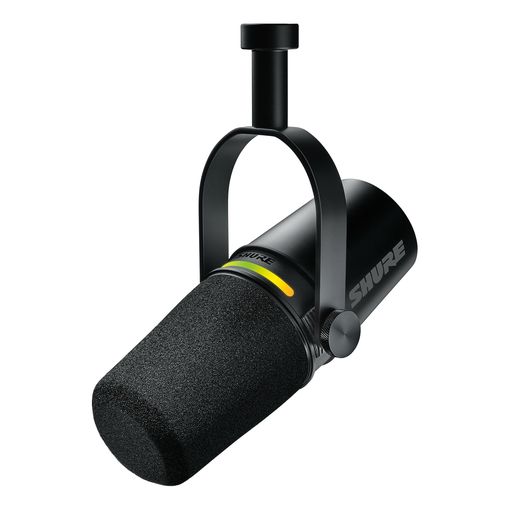
The numbers explain why this one leads. Over XLR the MV7+ measures -55 dBV/Pa, quiet enough to need a decent preamp. Over USB-C it delivers -33 dBV/Pa, because the microphone contains its own preamp and converter.4 That is a 22 dB head start, and it is the difference between a clean recording on a laptop and a project that stalls while you research gain boosters. The onboard processing is genuinely useful rather than decorative: a real-time denoiser, an auto-level mode that tracks how far you drift from the mic, and a digital pop filter that works without a mesh screen in front of your face.4 None of its reviews we found put a real ownership duration on the mic, though; the ones visible are enthusiastic first impressions rather than a verdict from months of daily podcasting, so treat the reputation as earned on sound and features rather than proven long-term durability.
The Interface-Free Pick: All The Details
It is a cardioid dynamic running 50 Hz to 16 kHz, in a diecast aluminium body weighing 573.5 g, on an adjustable yoke that fits standard 5/8-inch threaded stands.4 The converter tops out at 24-bit/48 kHz, which is fine for speech and unremarkable for music. There is a 3.5 mm headphone output for zero-latency monitoring, an LED touch panel for muting, and a compressor, limiter, and high-pass filter on board.4 The box holds a USB-C cable, a foam windscreen, and a thread adapter, so no stand, no boom arm, and no XLR cable.4 It is also comfortably the most expensive microphone in this roundup, which is the whole of its downside.
RODE PodMic Broadcast-Quality Dynamic Microphone
Best XLR Podcast Microphone
based on 7351 Amazon reviews (4.6★), adjusted for performance, build and value
Why the Podcast XLR Pick Earns Its Spot
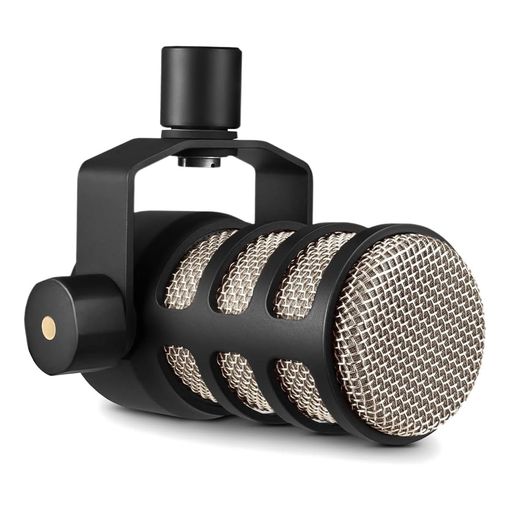
This is the mic that made broadcast-style sound affordable, and the swing mount is a big part of why. It is built into the body, so the mic bolts straight onto a boom arm with no clip and no separate cradle, and it pivots to your mouth without you loosening anything. Inside there is a pop filter and a shock mount, so two of the accessories people usually buy afterwards are already handled.5 The voicing is thick and close, with the low-mid weight that makes a conversational voice sound deliberate. One buyer who'd bought it last year and only got around to reviewing it after months of use said it still "sounds amazing" paired with a RODECaster Duo, exactly the kind of verdict that only shows up once the novelty of a new mic has worn off.
Inside the Podcast XLR Pick: All The Details
RODE quotes a cardioid pattern, a 50 Hz to 15 kHz range, 320 ohm output impedance, and sensitivity of -57 dBV, meaning 1.4 mV at 94 dB SPL.5 Read that number carefully, because it is the lowest of the three broadcast mics here and it needs a preamp with real headroom. Pair it with a cheap two-input interface and you will be running the gain knob near its stop, with audible hiss for company. The all-metal build is dense at 937 g, which also means a flimsy desk arm will droop under it.5 There is no on/off switch, no filter switch, and no USB, so this is strictly a mic for a setup that already has an interface.
Samson Q2U USB and XLR Dynamic Microphone Pack
Best Starter Pack
based on 5430 Amazon reviews (4.6★), adjusted for performance, build and value
Where the Starter Pack Wins
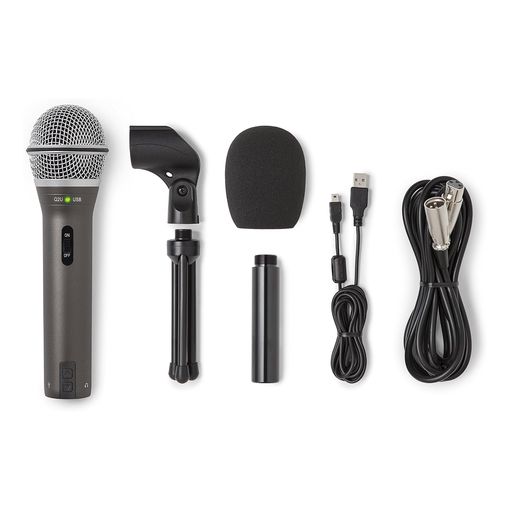
Everything you need arrives in one box. The Q2U ships with a tripod desk stand, an extension post, a mic clip, a foam windscreen, a USB cable, and an XLR cable, so there is no second order and no waiting. Both outputs are live, which means you can start on USB today and move to a mixer later without replacing the microphone. There is a headphone socket on the body with its own level control for monitoring yourself as you speak, plus an on/off switch that works on both outputs.6 Its reviews don't settle into a genuine long-term verdict either; the ones visible describe setup and early streaming sessions rather than months of ownership, so judge it on the spec and the accessory bundle rather than a proven track record.
The Starter Pack: All The Details
Samson lists a cardioid dynamic capsule, 50 Hz to 15 kHz, sensitivity of -54 dBV/Pa, and a maximum SPL of 148 dB, in a 190 mm handheld body weighing 0.32 kg.6 The catch is the converter: up to 16-bit at 44.1 or 48 kHz, where most modern USB mics run 24-bit.6 In practice that is inaudible on a spoken-word podcast and noticeable if you push the recording hard in editing. The build is the other compromise. It is a light hand-held shell rather than a machined block, the tripod is only steady on a desk you do not lean on, and it will never sound as full as the RODE mics above and below it. As a way to find out whether you enjoy podcasting at all, it is unbeatable.
Shure SM58-LC Cardioid Dynamic Vocal Microphone
Best for Live Vocals
based on 10311 Amazon reviews (4.7★), adjusted for performance, build and value
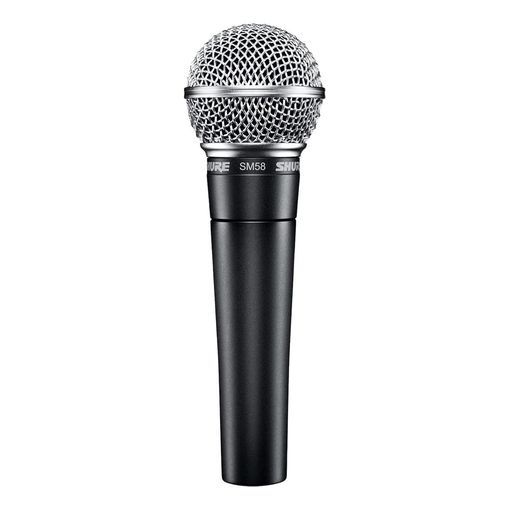
What Works on the Stage Classic
Sixty years of touring have not turned up a better answer for a voice in front of a loud PA. The cardioid pattern rejects what is behind it, which is what keeps a monitor wedge from feeding back, and the pneumatic shock-mount system means hand movement does not arrive in the mix as thuds.7 The spherical grille is a working pop filter, not a styling choice. Shure quotes -54.5 dBV/Pa, or 1.85 mV, which makes it the hottest passive mic in this group and the least fussy about what preamp you hand it.7 None of its reviews we found state a genuine ownership duration either, though that's less surprising for a design that's been in continuous production since the 1960s and has decades of stage use behind it even without a fresh timestamped account.
Stage Classic: All The Details
The response runs 50 Hz to 15 kHz with a deliberate midrange lift and bass rolloff, tuned so a voice cuts through a band rather than sounding flat and accurate.7 Rated impedance is 150 ohms, the body is die-cast metal, and it weighs 330 g.7 The -LC version in the box comes with a break-resistant swivel stand adapter and a zipped pouch, and Shure backs it with a two-year warranty. Where it gives ground is desk work. It is a hand-held mic with no built-in stand mount, no switch, and no USB, and its forward midrange is less flattering on a close-miked podcast voice than the broadcast designs here. Buy it to sing into, not to sit behind.
RODE Procaster Dynamic Broadcast Microphone
Best Broadcast Tone
based on 1942 Amazon reviews (4.7★), adjusted for performance, build and value
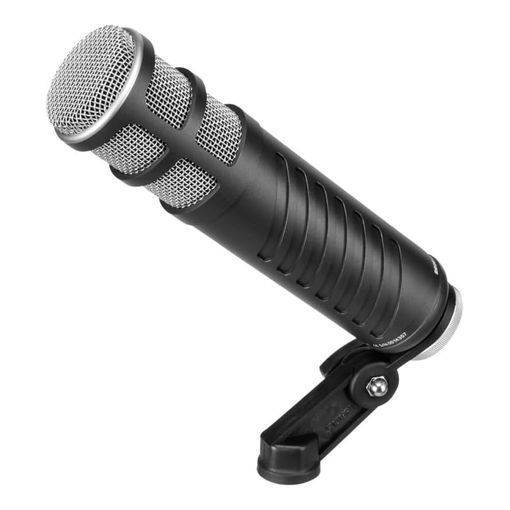
What We Love About the Broadcast Voice
If you have ever wondered why radio presenters sound like that, this end-address design is a large part of the answer. The response starts at 75 Hz rather than 50, so it simply does not pass much of the room rumble and desk noise that muddies a home recording, and the tight cardioid pattern trims the rest.8 Internal capsule shock mounting and an internal pop filter come as standard, the shell is all metal, and RODE covers it with a ten-year warranty once registered.8 Its reviews don't put a firm number of months or years on ownership either, though several describe it as a settled daily driver rather than a new purchase, which is a reasonable proxy for durability even without a dated verdict.
The Broadcast Voice: All The Details
Specifications are 75 Hz to 18 kHz, cardioid, 320 ohm output impedance, and -56.0 dB re 1 V/Pa, which is 1.60 mV at 94 dB SPL.8 Like the PodMic it is a gain-hungry mic, so plan the preamp before you plan anything else. It weighs 745 g in a 214 mm body and ships with a stand mount, though a sturdy boom arm is close to compulsory rather than optional.8 Understand what the 75 Hz low-end limit means, too: it flatters speech and it is the wrong choice if you also want to record a kick drum or a bass cabinet with the same microphone. There is no switch, no filter, and no USB, and it costs near the top of this group for a mic that does exactly one job.
Behringer XM8500 Ultravoice Dynamic Vocal Microphone
Best Budget Pick
based on 11209 Amazon reviews (4.6★), adjusted for performance, build and value
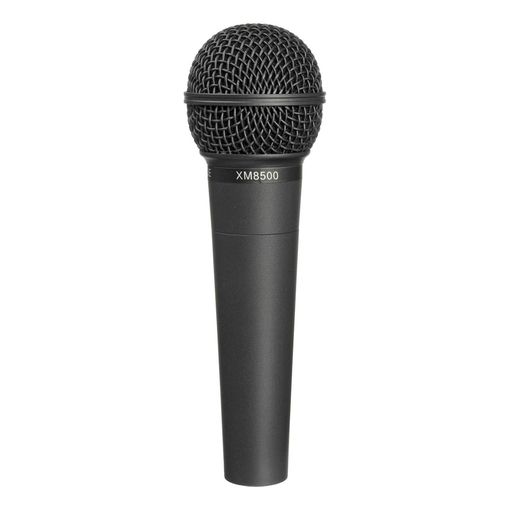
Where the Budget Workhorse Fits
No microphone here delivers more per unit of money. The XM8500 is a cardioid dynamic covering 50 Hz to 15 kHz with the same midrange presence lift that stage vocal mics have used for decades, and it arrives with an internal shock mount, a spherical pop filter, a clip, and a hard case.9 Eleven thousand ratings is a lot of road testing for something this cheap. Buy two and mic a second guest, or keep one in a bag as the spare that never matters if it gets stood on. None of its reviews we found put a genuine ownership timeframe on the mic, so weigh that huge review count as a volume signal rather than confirmed long-term proof.
The Budget Workhorse: All The Details
Behringer publishes 150 ohm impedance and sensitivity of -70 dB, quoted against a different reference from the dBV/Pa figures the other brands here use, so do not read it as directly comparable.9 Treat it as a passive dynamic that wants a preamp with plenty of headroom, like everything else on this page. The honest limits are audible. The top end is coarser than the Shure and RODE mics, the metal shell is thinner, and there is no switch, no USB, and no XLR cable in the box.9 It will not make you sound like a broadcaster. It will make you sound clearly better than a headset or a laptop, which for a first XLR mic is the entire point.
Shure SM7dB Dynamic Vocal Microphone with Built-In Preamp
Best Broadcast Mic With Built-In Preamp
based on 922 Amazon reviews (4.4★), adjusted for performance, build and value
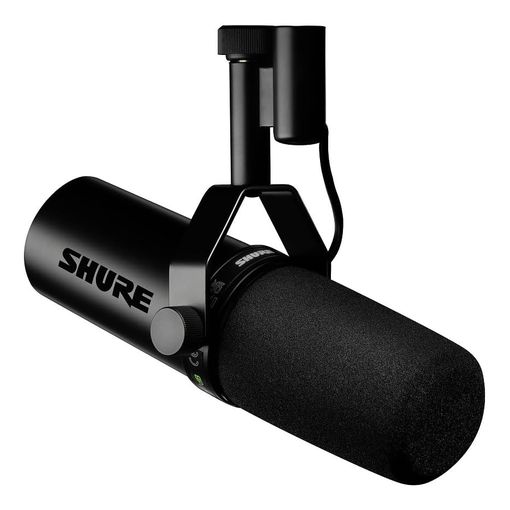
Why the Built-In Preamp Pick Earns Its Spot
The gain problem this whole article opened with has a famous villain: the SM7B, beloved for its sound and notorious for needing a hefty preamp to reach usable volume. Shure's answer is the SM7dB, which keeps the exact same capsule and sound signature but adds a switchable onboard preamp offering +18dB or +28dB of clean gain, with a bypass switch if you'd rather feed an external preamp instead.10 That solves the gain problem without giving up the XLR connection or the broadcast tone, which is a genuinely different approach from the MV7+'s USB route above. One owner who'd been using it for "just over a year now" for content creation and voice calls called it "easily the best microphone I've owned," and specifically noted it let them drop the inline preamp their old SM7B setup needed. It isn't cheap, and several reviewers are blunt that you're paying a real premium over the standard SM7B for the convenience alone.
The Built-In Preamp Pick: All The Details
Shure's own spec sheet lists a frequency range of 50Hz to 20,000Hz, a cardioid pattern, and a preamp delivering +18dB or +28dB of selectable gain, requiring 48V phantom power to operate.10 The bypass switch reverts the mic to standard SM7B output for use with an external preamp if you already own one. Build quality carries over from the SM7B: an internal air-suspension shock isolation system, a rugged all-metal body, and the same detachable foam windscreen. It's comfortably the most expensive microphone in this roundup, so it earns its place only if the built-in gain solution is worth paying for over adding a separate inline preamp to a standard SM7B or PodMic.
Electro-Voice RE20 Broadcast Announcer Microphone
Best Radio-Standard Broadcast Mic
based on 207 Amazon reviews (4.8★), adjusted for performance, build and value
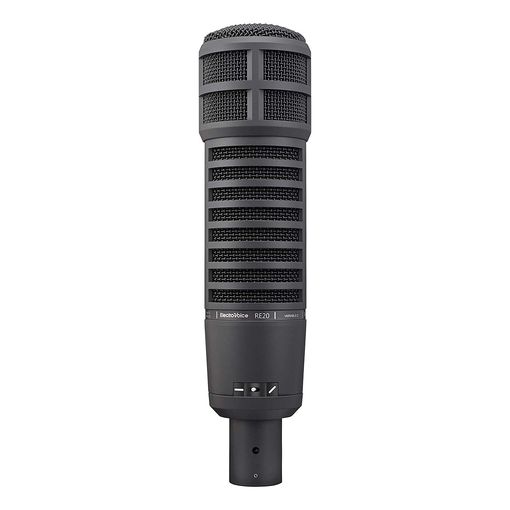
What Makes the Radio Standard Stand Out
Every mic in this roundup gets compared to something, and for the RE20 that something is FM radio itself. It's been the sound behind radio hosts since 1968, and its Variable-D design is the reason: a series of internal ports along the body that control how bass frequencies build up as you move closer to the capsule, keeping your tone consistent whether you're leaning in or sitting back rather than swinging wildly with proximity effect the way simpler cardioid mics do.11 One buyer who compared it directly against the SM7B chose the RE20 for its flatter frequency response and found it drove cleanly off a standard interface without needing extra gain hardware, a genuine point of difference from the SM7B and RODE mics elsewhere in this list. Reviews we found didn't settle into a genuine long-term ownership verdict, though several described it in the same breath as decades of broadcast history, which is a reasonable proxy even without a fresh dated account. Note this specific listing ships as an import from the US market, so factor that into delivery time and any import charges shown at checkout.
The Radio Standard: All The Details
Electro-Voice's own spec sheet lists a sensitivity of 1.5 mV/Pa, a frequency response of 45Hz to 18,000Hz, and a true cardioid pattern with minimal coloration even 180 degrees off-axis.11 The body is steel rather than the aluminium used elsewhere in this lineup, with a humbucking coil to reject electrical interference and an internal element shock-mount alongside the built-in pop filter. There's a bass roll-off switch for taming proximity effect further. It has no USB option and no onboard preamp, so budget for an interface with reasonable gain on top of the mic itself, the same caveat as the RODE Procaster above.
Sennheiser MD 421-II Dynamic Cardioid Studio Microphone
Best Multi-Purpose Dynamic for Vocals and Instruments
based on 132 Amazon reviews (4.6★), adjusted for performance, build and value
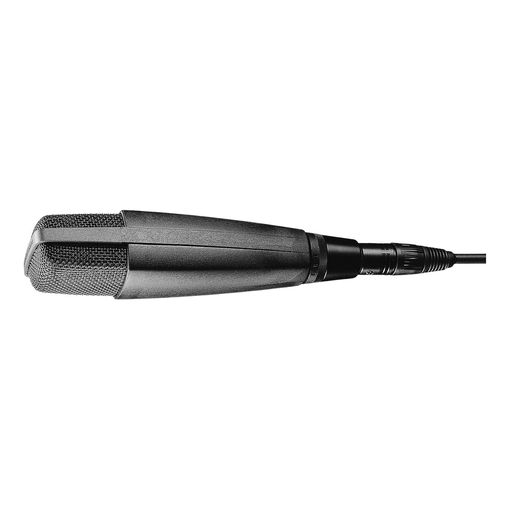
Where the Multi-Purpose Pick Fits
Every other mic on this page is built primarily for one voice at a desk. The MD 421-II is the one exception, a large-diaphragm dynamic that's spent over 35 years on drum kits, guitar cabs and brass sections as readily as it has on talk-show panels and broadcast booths.12 Buy it if you record more than a podcast, since it doubles as an instrument mic without needing a second purchase. The five-position bass roll-off switch is unique in this lineup too, letting you dial out proximity-effect boom for close vocal work or leave it flat for miking a kick drum, rather than accepting one fixed low-end response. A long-time owner who'd used pairs of them for around a decade across recording and live sound said they "never let me down," though that review predates Amazon's verified-purchase labelling, so we're treating it as colour rather than a confirmed verified account. The known weak point, echoed by several owners, is the mic clip: it's proprietary, plastic, and doesn't fit any other stand adapter, so don't lose it.
The Multi-Purpose Pick: All The Details
Sennheiser's own spec sheet lists a sensitivity of 2 mV/Pa, a frequency response of 30Hz to 17,000Hz, a nominal impedance of 250 ohms, and the signature five-position bass roll-off switch.12 The cardioid pattern gives strong rear rejection, useful for keeping spill out of a busy drum kit or a multi-mic panel discussion, though off-axis rejection to the sides is comparatively weaker than the tighter supercardioid pattern on some vocal-specific mics. The body is metal and, per long-term owners, close to indestructible; the well-known failure point is the plastic mic clip rather than the mic itself. There's no USB option and no onboard preamp, so this is strictly an XLR purchase for a setup that already has an interface with decent gain.
Best Dynamic Microphone FAQ
How much preamp gain does a dynamic microphone actually need?
More than most people expect. Passive dynamics have no internal amplification, so their output is measured in millivolts while line level is around one volt. Shure's guidance for the SM7B is a minimum of 60 dB of gain, and it points out that plenty of preamps, mixers, and interfaces stop at 40 to 50 dB because they assume a hotter condenser signal.1 Check your interface's published gain figure before you buy the mic, not after. If it is under about 55 dB, either choose a hotter mic such as the SM58, choose a USB or hybrid model, or accept that an inline booster is part of the purchase.
What is an inline preamp, and will I need one?
It is a small box that sits between the microphone and the interface and adds roughly 20 to 25 dB of clean gain, powered by phantom power from the interface. You need one when a low-output mic and a low-gain interface are already paired and you would rather not replace either. The clearest evidence that this is a widespread problem is that Shure now sells a version of the SM7B with the preamp built in, offering +18 dB or +28 dB of onboard gain and describing it as freeing you from clunky inline preamps.10 Avoid the situation entirely by matching mic sensitivity to interface gain at purchase.
Do I need an audio interface for an XLR microphone?
Yes. An XLR cable carries a balanced analogue signal and nothing more, so something has to amplify it and convert it to digital before a computer can record it. That is an audio interface, a USB mixer, or a standalone recorder, and it is a genuine second purchase. Only the USB and hybrid models here, the MV7+ and the Q2U, can go straight into a computer on their own.
Is a dynamic microphone better than a condenser for podcasting?
For most home setups, yes, though it is a room decision more than a quality one. Dynamics are far less sensitive, so they pick up much less of the traffic, keyboard, and room reflection happening a metre away, and they tolerate loud sources without distorting. Condensers capture more detail and more air, which is wonderful in a treated room and merciless in a spare bedroom. If you cannot control your space, a cardioid dynamic held close to your mouth is the easier path to a clean recording.
Will phantom power damage a dynamic microphone?
Almost certainly not. A dynamic mic has no active electronics, so it neither needs nor uses the 48 V that condensers require, and Shure states that applying phantom power will not damage other microphones in the vast majority of cases.3 The usual practice is still to switch it off when you are plugging and unplugging cables, mostly to avoid loud pops through the monitors. Ribbon microphones are the genuine exception, and none of the mics here is a ribbon.
What does cardioid mean, and does the polar pattern matter?
The polar pattern describes which directions the mic listens to. Cardioid is a heart-shaped pattern that is most sensitive in front, less to the sides, and largely deaf behind, and every microphone in this roundup uses it. That rejection is why cardioid is standard for one voice per mic: it keeps your co-host's mic out of yours, and on stage it keeps the speaker cabinets from feeding back. The trade is that you must stay in front of it. Drift off-axis and the tone thins out noticeably.
Do I still need a pop filter and a shock mount?
Often not, because several of these mics already contain both. The MV7+, PodMic, Procaster, SM58, and XM8500 all have an internal shock mount and some form of built-in pop filtering.45789 What is built in handles ordinary plosives and desk knocks. If you speak very close to the grille, or your boom arm is clamped to the same desk you type on, an external pop screen and an elastic cradle still help. The MV7+ takes a different route and removes plosives digitally instead, which keeps a mesh screen out of your shot on camera.4
How long should a dynamic microphone last?
Longer than almost anything else you will buy for a desk. There is no battery, no display, and no firmware with an expiry date, and the passive models here are a diaphragm, a coil, a magnet, and a transformer inside a metal shell. The SM58 has been in continuous production for decades, and working examples from the 1970s still turn up on stages. The realistic failure points are a bent grille, a dented body, and a worn XLR socket, all of which are repairable. A USB model has more to go wrong, since the port and the electronics inside it are the parts that age.
The Best Dynamic Microphone for You
Start with the connection, not the sound. If you do not own an interface and do not want to buy one, the Shure MV7+ is the pick, because its USB path solves the gain problem in the microphone itself and its XLR output waits for the day you outgrow that. The Samson Q2U does the same trick for far less, with a 16-bit converter and a plainer sound as the price of admission. If you already have an interface with real gain to spare, the RODE PodMic is the value choice for podcasting and the Procaster is the one to reach for when you want that dense broadcast weight. The Shure SM58 belongs to anyone singing into it rather than sitting behind it, and the Behringer XM8500 is the sensible way to find out whether you like any of this before committing properly. If you want the SM7B's broadcast tone but the gain problem solved without leaving XLR, the SM7dB earns its premium price, while the Electro-Voice RE20 is worth seeking out if you'd rather have the original radio-industry standard. The Sennheiser MD 421-II is the one mic here worth buying if you also record instruments, not just your own voice.
-
SM7B Output Level and Preamp Gain Specifications, Shure ↩︎ ↩︎ ↩︎
-
SM7B Cardioid Dynamic Microphone Specification Sheet, Shure ↩︎
-
MV7+ Podcast Microphone User Guide, Shure ↩︎ ↩︎ ↩︎ ↩︎ ↩︎ ↩︎ ↩︎
-
SM Wired Microphones Specification Sheet, Shure ↩︎ ↩︎ ↩︎ ↩︎ ↩︎
-
XM8500 Dynamic Cardioid Vocal Microphone, Behringer ↩︎ ↩︎ ↩︎ ↩︎
-
SM7dB Dynamic Vocal Microphone With Built-in Preamp, Shure ↩︎ ↩︎ ↩︎