

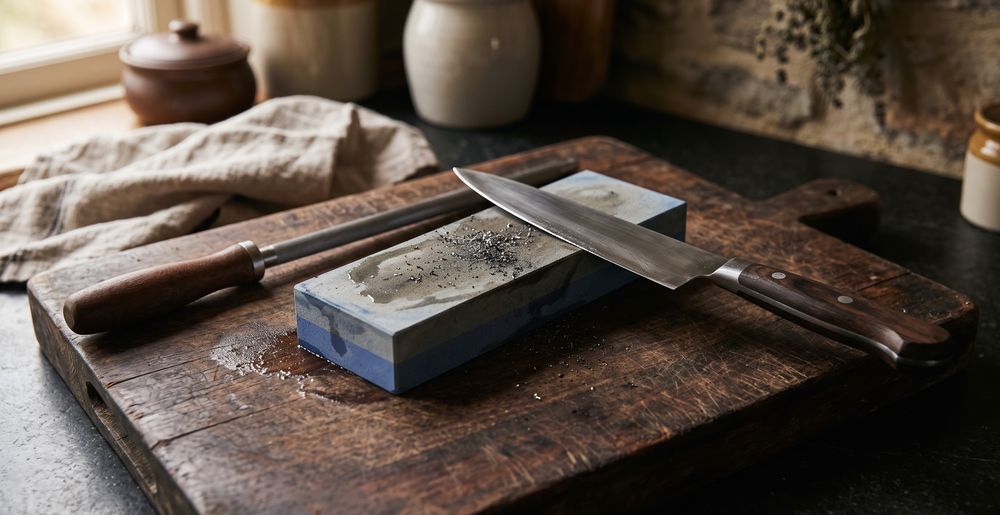
Best Knife Sharpener for Razor-Sharp Kitchen Blades

About the author...
Dave has been taking gadgets apart since he was old enough to be told not to. Every pick here is checked against the manufacturer's own documentation rather than the retail listing, and each star rating starts from a product's real Amazon customer score before being adjusted for performance, build quality, features and value. Read more about how ratings are calculated.
Table of contents
- Key Takeaways (TL;DR)
- How We Choose
- Quick Comparison
- SHARPAL 198H Electric Sharpener
- AnySharp Knife Sharpener
- Work Sharp Guided Field Sharpener
- HORL 2 Oak Rolling Knife Sharpener
- KEENBEST Whetstone Knife Sharpening Stone Kit
- SHARPAL 156N Diamond Whetstone
- SHARPAL 101N 6-in-1 Pocket Knife Sharpener
- Lantana Smart Sharp Knife Sharpener
- ZWILLING 4-Stage Pull Through Knife Sharpener
- Global Ceramic Pull-Through Water Knife Sharpener G-91/SB
- Accusharp Camouflage Knife Sharpener
- Wüsthof 10 Inch Sharpening Steel
- Best Knife Sharpener FAQ
- The Best Knife Sharpener for You
The best knife sharpener right now is the SHARPAL 198H Electric Sharpener, thanks to its three-stage diamond wheel system and its ability to handle both straight and serrated blades without any technique to learn. See the comparison below for how 11 other well-reviewed alternatives stack up depending on your priorities.
A dull knife is more dangerous than a sharp one. It slips and skids across whatever you're cutting instead of biting into it cleanly. Anyone who cooks regularly, or works outdoors with a fixed blade, needs some way to restore an edge. The right tool for that depends heavily on how much time and skill you're willing to trade for how sharp the result is.
Electric sharpeners and suction-base pull-throughs ask almost nothing of you. Feed the knife through, and you get back a good, usable edge in seconds. Whetstones and diamond stones take longer to learn. You have to hold a consistent angle by hand, but in return you control exactly how much metal comes off, and can reach a noticeably finer edge once you've got the hang of it. Honing steels don't sharpen at all; they realign an edge that's gone slightly out of true. That's why good kitchens use one alongside an actual sharpener, not instead of one. A bad unit in any of these categories grinds unevenly, chews up more metal than it needs to, or won't hold its own abrasive surface flat. The result is a knife that goes in dull and comes out only patchily sharp.
Key Takeaways (TL;DR)
- Grit progression matters more than grit count. A stone or wheel set that jumps straight from coarse to polish leaves a rough, inconsistent edge; look for at least a mid grit in between.
- Angle consistency beats raw sharpness. A sharpener that holds a steady angle every pass, whether that's a fixed guide or your own steady hand, outperforms one that can technically reach a finer grit but wanders.
- Diamond abrasives cut fast and don't need soaking, which makes them the better pick if you want a five-minute touch-up rather than a twenty-minute session.
- Ceramic and ceramic-wheel sharpeners are gentler on thin, hard Japanese-style edges, but they're slower to remove metal from a genuinely damaged blade.
- A honing steel isn't a sharpener. It realigns a rolled edge between real sharpenings and won't rescue a knife that's actually gone blunt.
- Not every sharpener is safe for serrated bread knives, so check that specifically if you have one you care about.
- Expect to replace or re-flatten some abrasive surfaces over time. Diamond plates lose their coating eventually and whetstones need occasional flattening; budget for that as ongoing upkeep, not a one-off purchase.
How We Choose
We judged every sharpener here on four things: how consistently it restores a genuinely dull edge, how well it's built where it actually touches the blade, whether its extra features are useful rather than padding, and how it stacks up on price against the other options in this exact lineup.
We don't run our own lab tests on these. There's no controlled rig for measuring edge angle, and no standardised blunt-knife test bench in this kitchen. What we do instead is read through the verified-purchase reviews in full, not just the star average. We weight the ones written weeks or months after purchase over launch-week first impressions, since that's where a wobbly suction base, a skipping diamond coating, or a struggling motor actually shows up. Where a product genuinely lacks that kind of track record in its own reviews, we say so in its write-up below, rather than papering over the gap.
Quick Comparison
Each product's overall rating starts from its real Amazon customer rating, then gets adjusted (up to ±0.5) for real-world performance, build quality, features, and value. Click a product name to jump straight to its full review below.
| Product | Best For | Type | Key Detail | Key Spec |
|---|---|---|---|---|
|
SHARPAL 198H Electric Sharpener 4.9 |
Cooks who want consistent results with no technique to learn | Electric sharpener | 3-stage diamond wheels | 325/1000 grit diamond wheels plus a ceramic V-slot |
|
AnySharp Knife Sharpener 4.8 |
Anyone wanting an effortless everyday sharpener | Suction pull-through | 20° fixed angle | Tungsten carbide blades on a PowerGrip suction base |
|
Work Sharp Guided Field Sharpener 5.0 |
Campers, hunters and pocket-knife owners | Guided field sharpener | 20°/25° diamond, ceramic and leather | 220/600 grit diamond plate, ceramic rod and leather strop |
|
HORL 2 Oak Rolling Knife Sharpener 4.9 |
Buyers who want a showpiece that also performs | Rolling disc sharpener | 15°/20° magnetic angle guide | Interchangeable diamond and ceramic discs |
|
KEENBEST Whetstone Knife Sharpening Stone Kit 4.9 |
First-time whetstone users on a budget | Whetstone kit | 400/1000/3000/8000 grit | Four-grit progression plus a flattening stone and leather strop |
|
SHARPAL 156N Diamond Whetstone 5.0 |
Sharpeners who want stone control without the soaking wait | Diamond whetstone | 325/1200 grit diamond surface | 325 coarse and 1200 extra-fine diamond surface |
|
SHARPAL 101N 6-in-1 Pocket Knife Sharpener 4.9 |
Campers, anglers and everyday-carry knife owners | Pocket multi-tool sharpener | 6-in-1 with fire starter | Carbide, ceramic and a diamond-coated serration rod |
|
Lantana Smart Sharp Knife Sharpener 4.6 |
Buyers who want a cheap, no-fuss sharpener | Manual pull-through | 3-stage ceramic, carbide and diamond | Tungsten carbide, ceramic and diamond-rod stages |
|
ZWILLING 4-Stage Pull Through Knife Sharpener 4.5 |
Households mixing Western and Asian-style knives | Manual pull-through | 10°/15° dual-angle slots | Ceramic sharpening rods on separate 10° and 15° slots |
|
Global Ceramic Pull-Through Water Knife Sharpener G-91/SB 4.7 |
Global and other thin-edged Japanese-style knife owners | Ceramic pull-through | 10-15° ceramic wheels | Twin ceramic wheels in a stainless steel body |
|
Accusharp Camouflage Knife Sharpener 4.9 |
Hunters and outdoor knife users on a budget | Handheld pull-through | Reversible tungsten carbide blades | Diamond-honed tungsten carbide sharpening blades |
|
Wüsthof 10 Inch Sharpening Steel 4.7 |
Anyone wanting to stretch time between real sharpenings | Honing steel | 10-inch magnetic honing rod | Fine-cut steel rod with a magnetic core |
SHARPAL 198H Electric Sharpener
Best Electric Knife Sharpener
based on 2273 Amazon reviews (4.6★), adjusted for performance, build and value
What We Love About the Electric All-Rounder
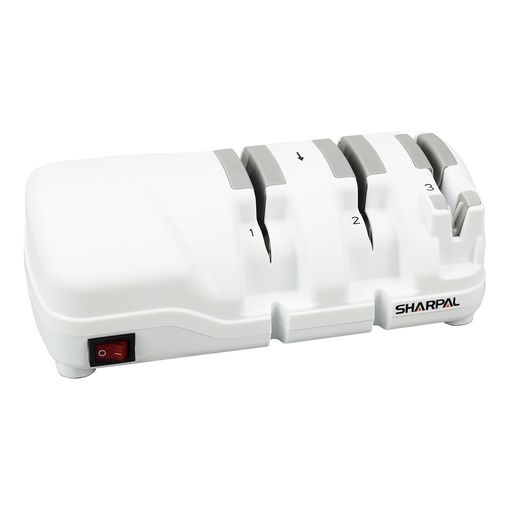
This is the sharpener to buy if you want a genuinely blunt knife back to useful sharpness in under a minute. No angle-holding skill is required. The three slots each do a different job: a coarse diamond wheel for badly dulled edges, a finer diamond wheel to refine that edge, and a manual ceramic V-slot for a final polish or for serrated blades that can't go through the powered stages. One reviewer who became disabled and lost the use of one arm specifically credited it with letting them keep sharpening their own knives again. That says a lot about how little physical technique it demands. We didn't find a verified buyer who reported back after months of regular use, so we can't yet confirm how the motor or the diamond coating hold up over the long run. The 3-year warranty behind it is a reasonable hedge in the meantime.
Diamond Wheel Sharpening: All The Details
Stage one runs a 325-grit coarse diamond wheel for edge repair. Stage two steps up to a 1000-grit extra-fine diamond wheel for refinement. Stage three is a manual ceramic slot for touch-ups and serrated blades1. It runs from mains power, sits on non-slip feet, and includes a filings tray that catches the metal dust each pass produces. SHARPAL backs it with a 3-year warranty and has offices in the US, Germany and Australia for support.
AnySharp Knife Sharpener
Best Overall Manual Sharpener
based on 79572 Amazon reviews (4.5★), adjusted for performance, build and value
What We Love About the Suction-Base Pick
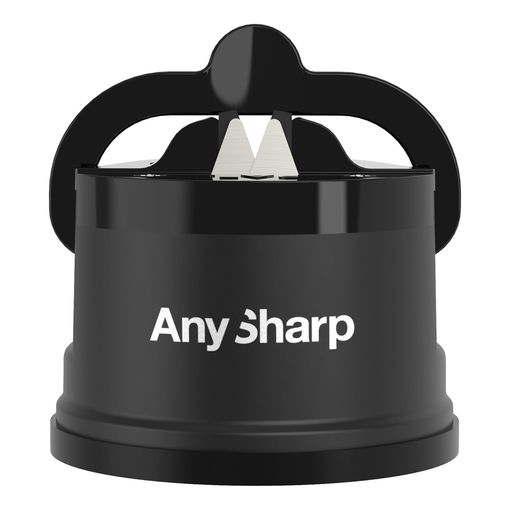
Almost 80,000 ratings on a single kitchen gadget is unusual. The AnySharp earns that reputation by being almost impossible to get wrong. Stick the base to a worktop, pull the knife through the crossed carbide blades a few times, and you get a genuinely sharper edge with none of the angle-guessing that trips people up on a stone. It works on serrated bread knives too, which not every sharpener here manages. One long-time user reviewed it again six months after buying it, specifically to confirm it was "still producing good results and continues to stick to the countertop." That kind of follow-up report is hard to find for most of this category. It's a fixed 20° angle rather than an adjustable one, so it won't match every knife's factory edge exactly, and a few buyers found the results merely fine rather than exceptional on cheaper blades.
Hands-Free Suction Sharpening: All The Details
The PowerGrip base uses suction to lock onto a flat, smooth worktop. The knife is drawn through a pair of angled tungsten carbide blades set at a fixed 20°. It's compact enough to store in a drawer, comes in several colours, and AnySharp backs it with a 2-year warranty. It isn't intended for scissors. Heavy or repeated use will also gradually remove more metal than a whetstone would for the same result, so it suits everyday kitchen knives better than an expensive set you're trying to preserve.
Work Sharp Guided Field Sharpener
Best Portable Sharpener for Outdoor and Pocket Knives
based on 904 Amazon reviews (4.8★), adjusted for performance, build and value
The Field Sharpener's Standout Qualities
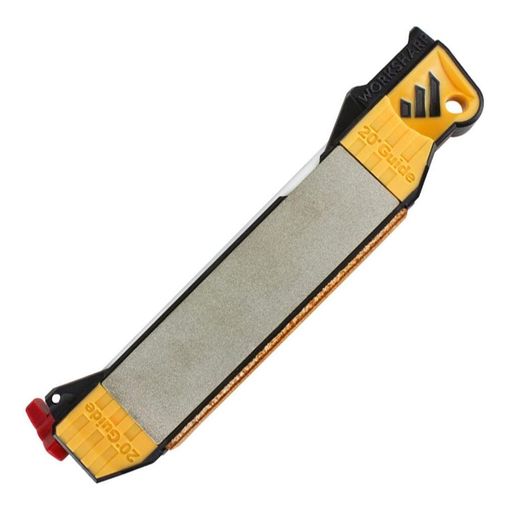
This is the highest-rated product in the entire lineup. It earns that by packing a diamond plate, a ceramic honing rod and a leather strop into something that clips onto a keyring. Reviewers who'd struggled for years with loose whetstones consistently described this as the tool that finally made angle-consistent sharpening click for them, whether they were working on kitchen knives, pocket knives or hunting fixed blades. It sharpens plain and serrated edges, and one buyer specifically called out how well it handled gut hooks and fish hooks alongside ordinary blades. The leather strop is on the small side, so stropping a long chef's knife takes several overlapping passes rather than one clean stroke. We also didn't come across a review reporting back after months of ownership, so treat its long-term wear as unproven rather than disproven.
Guided Diamond, Ceramic and Leather: All The Details
The diamond plate carries 220-grit coarse and 600-grit fine faces, backed by a ceramic honing rod and a leather strop loaded with a chromium oxide polishing compound2. It's built around fixed angle guides: 20° for sharpening and 25° for honing2. The whole thing folds into a compact, pocketable case with a keyring hole. Work Sharp backs it with a 3-year warranty from its Oregon-based, family-run manufacturing operation.
HORL 2 Oak Rolling Knife Sharpener
Best Premium Knife Sharpener
based on 877 Amazon reviews (4.6★), adjusted for performance, build and value
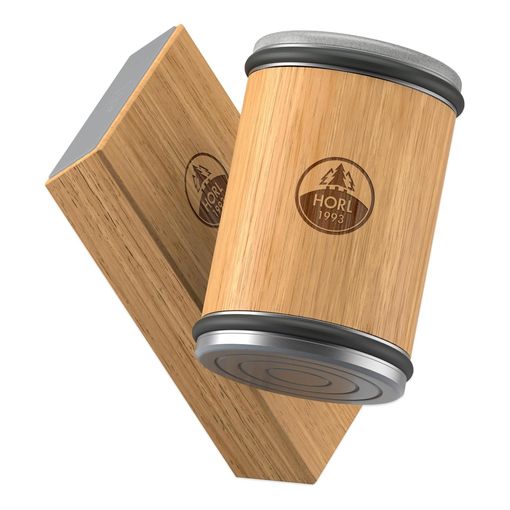
Why the Oak Roller Earns Its Price
Made in Germany and finished in solid oak, this is as much a countertop object as a tool. Reviewers who own it consistently say it out-sharpens cheaper sharpeners rather than just looking nicer than them. The rolling disc mechanism swaps between a diamond disc and a ceramic finishing disc. Both are held to a magnetic angle guide set at 15° for a finer edge or 20° for a tougher one, so you're not eyeballing anything by hand. Repeat buyers describe the edge actually improving over successive sharpenings once they've settled on one angle and stuck with it. It needs a flat, level surface to work properly, and at this price it's a hard sell if you're only sharpening a couple of everyday knives. None of the reviews we found stated how many years theirs had held up, so we can't yet confirm long-term durability beyond the quality of the materials themselves.
Rolling Disc Mechanics: All The Details
A weighted roller carries interchangeable diamond and ceramic discs across the blade. A magnetic block guides it, holding either a 15° or 20° angle consistently on every pass. The housing is solid oak with a non-slip base. HORL sells replacement discs separately, so the tool itself can outlast its abrasive surfaces. It's a hand tool with no motor or batteries, so setup is just placing the knife and rolling.
KEENBEST Whetstone Knife Sharpening Stone Kit
Best Whetstone Kit for Beginners
based on 3601 Amazon reviews (4.6★), adjusted for performance, build and value
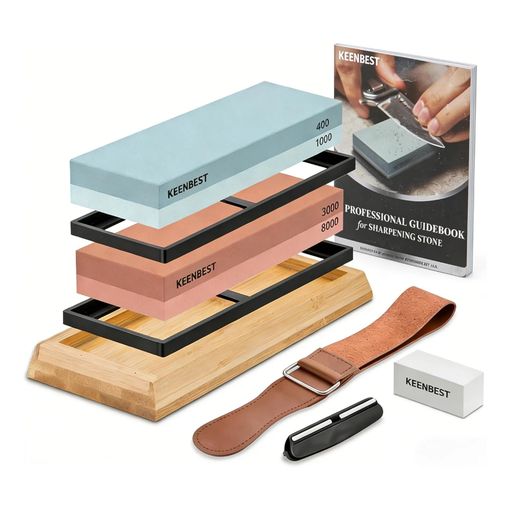
The Beginner Whetstone Kit, Explained
Whetstones intimidate a lot of first-timers. This kit softens that learning curve by bundling everything you'd otherwise buy separately: two double-sided stones covering four grits, a bamboo base, an angle guide, a flattening stone and a leather strop. Buyers sharpening everything from kitchen knives to woodworking chisels report the stones staying flat and cutting consistently rather than gouging unevenly, which is the failure mode that ruins cheaper stones. One long-term issue is worth flagging honestly. A verified buyer found the grit numbers printed on the stones didn't match their actual coarseness. The same buyer opened the storage box a month after use to find the stones had gone mouldy, because they hadn't been fully dried first. That's a genuine care requirement, not a rare fluke, so dry every stone thoroughly before it goes back in the wooden case.
Four-Grit Progression: All The Details
The kit runs 400 and 1000 grit on one stone, and 3000 and 8000 grit on the other. That lets you take a genuinely blunt edge through repair, refinement and polish without buying anything else. It ships with a bamboo base with recessed non-slip corners, a plastic angle guide, a flattening stone to keep the surfaces true, and a leather strop for a final finish. The full kit weighs 1.7kg and comes with a printed guidebook for anyone who's never used a stone before.
SHARPAL 156N Diamond Whetstone
Best Diamond Stone for No-Soak Sharpening
based on 3033 Amazon reviews (4.8★), adjusted for performance, build and value
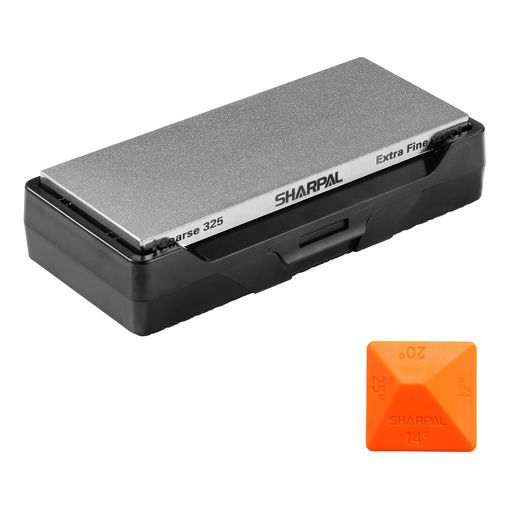
Why This Diamond Stone Rates So Highly
Traditional oil and water stones need soaking or dressing before every session. A diamond surface skips that entirely; you can use it wet or dry straight out of the box. One detailed review came from a home cook who'd previously worn through the factory edge on several expensive knives using a "drag-through" sharpener. They described getting those knives back to a genuinely razor edge in ten to fifteen minutes once they'd learned the technique, a fraction of the time a traditional whetstone takes for the same result. It comes in a rugged storage case that doubles as a non-slip stand while you sharpen. One reviewer with a five-year joiner's apprenticeship behind them called it their best buy of the year, for wood chisels as well as knives. The included angle guide is basic rather than precise, so it works better as a rough reminder than a locked-in angle. Nobody in the reviews we read specified exactly how many years theirs had been in service.
Two-Grit Diamond Surface: All The Details
One side carries a 325-grit coarse surface for repair work. The other has a 1200-grit extra-fine surface for polishing, on a 152x63mm plate. The stone sits in a hard storage case with a soft rubber base for stability, and a small magnetic angle guide is included for reference. Unlike a whetstone, the diamond coating doesn't wear flat the way natural or synthetic stones do, though SHARPAL notes it will gradually lose grit over years of heavy use.
SHARPAL 101N 6-in-1 Pocket Knife Sharpener
Best Pocket and Outdoor Sharpener
based on 39014 Amazon reviews (4.5★), adjusted for performance, build and value
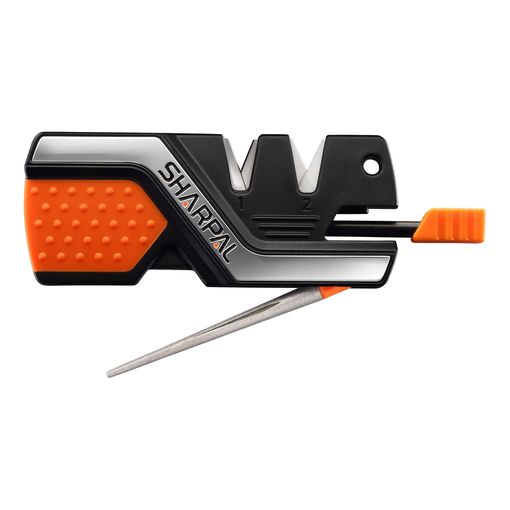
Small Tool, Genuinely Useful Extras
Nearly 40,000 ratings make this the single most-reviewed product in this whole roundup. It earns that volume by being cheap, small enough for a tackle box or glovebox, and genuinely functional rather than gimmicky. The carbide slot does the real sharpening work, the ceramic slot fine-tunes it, and a fold-out diamond-coated rod handles serrations, gut hooks and fish hooks that flat sharpeners can't reach. A built-in ferro rod and a loud whistle round it out as a small survival tool as much as a knife sharpener. It won't restore a badly worn or chipped edge on its own. One buyer also noted the fire starter itself wears out faster than the sharpening surfaces do, so don't rely on it as your only fire-starting backup. Nobody in the reviews we read reported back after months of pocket or bag carry, so we can't yet vouch for how the coating holds up under that kind of daily abuse.
Carbide, Ceramic and Diamond Rod: All The Details
Stage one is a pair of crossed tungsten carbide blades for setting a fresh edge. Stage two is ceramic, for fine honing. A separate fold-out diamond-coated rod handles serrated sections. It also includes a ferro fire starter and a whistle, and SHARPAL backs it with a 3-year warranty. It's small enough to clip to a belt loop or drop in a bag, and is aimed as much at hunters, anglers and campers as home cooks.
Lantana Smart Sharp Knife Sharpener
Best Budget Pull-Through Sharpener
based on 24219 Amazon reviews (4.5★), adjusted for performance, build and value
Where the Budget Pick Fits In
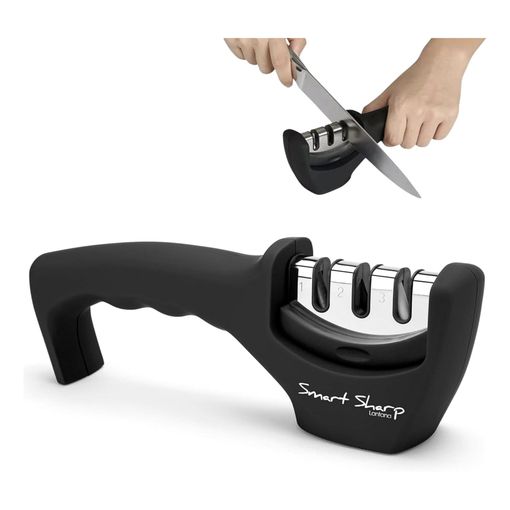
At its price, this is aimed squarely at someone who just wants a drawer sharpener that works, not a sharpening hobby. The three stages progress from diamond rod to tungsten carbide to ceramic. One long-standing reviewer described bringing an entire mixed set of blunt Zwilling, Sabatier and Procook knives back to a usable edge, after years of failed attempts with steels and stones. Results are genuinely mixed on cheaper own-brand and very hard steels, though. A couple of buyers found the improvement barely noticeable compared with what they were replacing. It's explicitly not built for serrated knives or scissors. None of the verified reviews we read described how it performed after weeks or months of regular use, so treat the long-term picture as unconfirmed.
Three-Stage Ceramic and Carbide: All The Details
The three pull-through slots use a diamond rod, tungsten carbide plates and a ceramic stone in sequence, held in a moulded handle with a rubberised grip. Lantana offers customer support seven days a week. The sharpener is sold in several colours, at a price that undercuts most of the other pull-throughs in this lineup.
ZWILLING 4-Stage Pull Through Knife Sharpener
Best for Western and Asian-Style Blades
based on 2286 Amazon reviews (4.4★), adjusted for performance, build and value
A Sharpener Built for Two Edge Styles
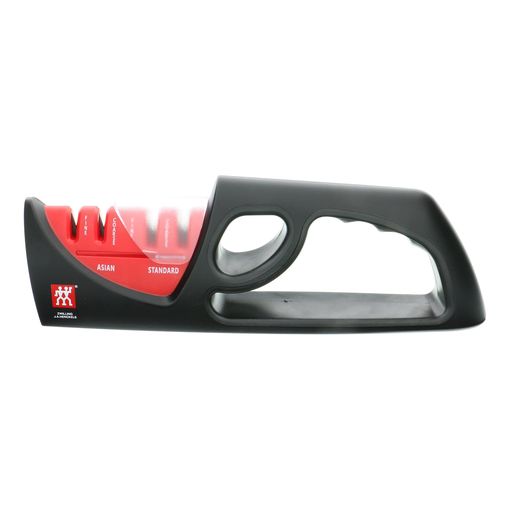
Households that mix a set of German-style chef's knives with one or two Asian-style blades run into a real problem. Those two knife families are ground at different factory angles, and a single fixed-angle sharpener will get one of them wrong. ZWILLING's answer is two separate slots on the same tool: one set for the wider Western edge, one for the narrower Asian edge, each running ceramic rods through coarse and fine stages. Long-time buyers who'd cycled through several sharpeners over the years consistently rank this as the best they'd used, and it feels noticeably sturdier on the worktop than cheaper pull-throughs. It isn't universally loved, though. One detailed one-star review reported it made an already-sharpened knife blunter after several passes, which stands out against the mostly positive results and is worth knowing going in. None of the reviews we found established a clear ownership timeframe either way.
Dual Ceramic Rod Stages: All The Details
One side of the sharpener is labelled for standard, Western-style blades at roughly a 15° angle. The other is for Asian-style blades at around 10°, each running ceramic rods in coarse and fine grits. A protected finger guard sits between the blade slots and the carrying handle, and the whole unit is built from stainless steel and durable plastic. It doesn't handle serrated edges or scissors, so it's a straight-edge tool only.
Global Ceramic Pull-Through Water Knife Sharpener G-91/SB
Best Gentle Sharpener for Japanese-Style Knives
based on 852 Amazon reviews (4.5★), adjusted for performance, build and value
Why Global Knife Owners Rate This So Highly
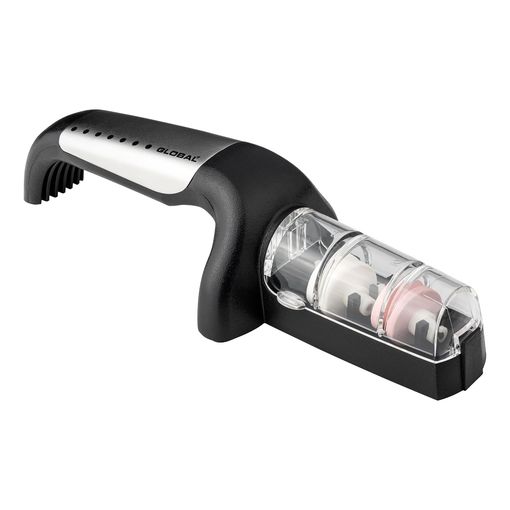
Global's own knives are ground much thinner than most Western blades. A general-purpose sharpener set for a 20° edge can blunt one instead of sharpening it, which is exactly the mistake more than one reviewer here says they made before finding this. Made by Global's own manufacturer in Japan, the twin ceramic wheels are cut to match that factory angle. Buyers who'd struggled for years with a whetstone consistently describe switching to this and getting their knives sharp again with almost no learning curve. It isn't just for Global knives either; anyone with a thin, straight-edged blade and no serrations can use it. It's priced well above the average pull-through for what is, mechanically, two ceramic wheels in a handle. It also only covers two grit stages, rather than the three or four some rivals offer. We didn't find a review that pinned down exactly how long the reviewer had owned theirs.
Ceramic Wheel Design: All The Details
Two ceramic wheels, one coarse and one fine, sit in a stainless steel and rubberised handle designed around Global's factory sharpening angle of 10 to 15 degrees3. It's hand-wash only, doesn't sharpen serrated blades, and is built specifically for straight, thin edges rather than the heavier bevels found on many Western chef's knives.
Accusharp Camouflage Knife Sharpener
Best Rugged Sharpener for Hunting and Outdoor Knives
based on 28243 Amazon reviews (4.6★), adjusted for performance, build and value
Simple, Cheap and Genuinely Effective
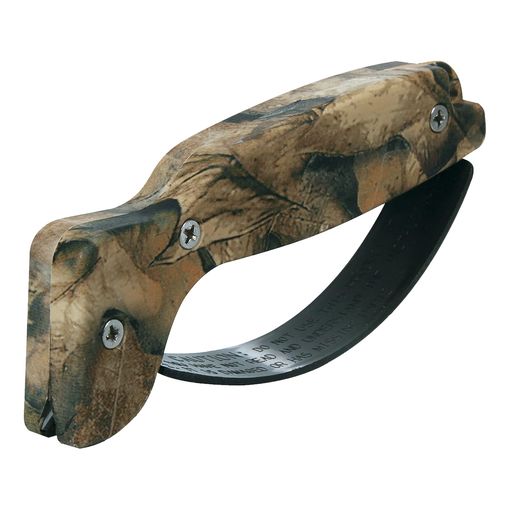
There's no angle guide, no grit selection and no learning curve here. You draw the blade through a fixed carbide groove and it works, which is exactly why it's picked up over 28,000 ratings. One reviewer who'd tried a proper abrasive-belt system costing many times more said this cheaper option surprised them, by being the easiest and most effective sharpener they'd used. You can even swap the blades round for double the service life once one side dulls. It uses a shearing action rather than a fine abrasive wheel, so a microscope would show a rougher edge than a whetstone produces. In practical kitchen or camp use, though, that's rarely noticeable. One honest buyer said plainly they weren't sure how long it would last. We didn't find a later review confirming or denying that, so the lifetime warranty behind it is doing some of the reassurance work here, rather than a long proven track record.
Reversible Carbide Blades: All The Details
A full-length finger guard sits above a pair of diamond-honed tungsten carbide blades set in a fixed V-groove. The blades themselves are reversible, so you get a second working edge before needing a replacement. It's dishwasher safe, won't rust, and Accusharp backs it with a lifetime warranty. It also handles serrated blades and basic garden or outdoor tools, not just kitchen knives.
Wüsthof 10 Inch Sharpening Steel
Best Honing Steel for Between-Sharpening Maintenance
based on 2160 Amazon reviews (4.6★), adjusted for performance, build and value
The Case for Owning a Steel Too
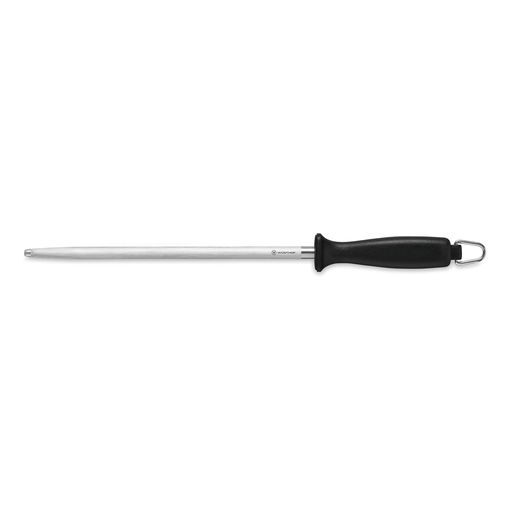
This one is different from everything else on this list: it doesn't sharpen a knife at all. A honing steel realigns the microscopic edge that bends out of true after normal cutting4. That's what makes a knife feel like it's going blunt within days of a proper sharpening. Wüsthof's steel is a 200-year-old Solingen brand's take on the idea. Buyers consistently describe it as the tool that finally made their expensive knives feel consistently sharp between real sharpening sessions, rather than sharp for a day and dull again by the weekend. Several reviewers specifically noted they wished they'd bought one years before they finally did. It won't do anything for a knife that's actually dull, and several buyers make that distinction clearly. It's worth repeating here, because it's the single most common point of confusion in this whole category.
Honing, Not Sharpening: All The Details
The 10-inch fine-cut steel rod has a magnetic core that collects metal filings as you use it. It's mounted in a synthetic non-slip handle with a hanging loop. Wüsthof recommends a roughly 14.5° angle against the steel for its own knives, and closer to 10° for Asian-style blades4. It's a maintenance tool meant to be used every few uses between actual sharpenings, not a replacement for any of the sharpeners above it on this list.
Best Knife Sharpener FAQ
What's the difference between sharpening and honing a knife? Sharpening removes a small amount of metal to create a new edge. That's what every product in this list except the Wüsthof steel does. Honing doesn't remove metal; it straightens the microscopic edge that bends out of alignment during normal use4. That restores the feel of sharpness without actually reshaping the blade. Most kitchens benefit from both: a sharpener occasionally, and a honing steel far more often in between.
What angle should I sharpen my knives at? It depends on the knife. Wüsthof recommends around 14.5° per side for its own Western-style knives, and roughly 10° for Asian-style blades4. Global specifies a 10-15° factory angle for its own range3. As a rough rule, Western chef's knives generally sit in the 15-20° range, and thinner Japanese-style blades closer to 10-15°. That gap is exactly why dual-angle sharpeners like the ZWILLING exist.
Do Japanese-style knives like Global need a different sharpener? Often, yes. A sharpener set for a wide 20° Western edge can round over or blunt a knife factory-ground to 10-15°. That's why the Global sharpener above is built specifically around that shallower angle, rather than a generic setting.
Can an electric sharpener damage or overheat my knife's edge? It's a fair concern with any powered abrasive. But the electric sharpener in this list uses brief, guided passes at a controlled speed, rather than one continuous heavy grind, which is the scenario that actually risks overheating hardened steel. Follow the manufacturer's guidance on light, repeated passes rather than pressing hard for a single pass, and heat build-up shouldn't be a practical issue.
Will a pull-through sharpener ruin an expensive knife? Not if it's used occasionally and correctly. But repeated heavy use will remove more metal over time than a whetstone would for the same result, since pull-throughs typically use a fixed, fairly aggressive angle. If you own genuinely expensive knives you want to keep for decades, a whetstone or diamond stone gives you more control over how much metal comes off each time.
Can any of these sharpen serrated blades? Some can and some explicitly can't. The AnySharp, the SHARPAL electric and pocket sharpeners, the Work Sharp field sharpener and the Accusharp all handle serrated edges to varying degrees. The Lantana, ZWILLING and Global sharpeners are designed for straight edges only. Check the specific product before assuming.
What grit progression should I use on a whetstone? A typical beginner progression runs from around 400 grit, for repairing a damaged or very dull edge, through 1000 grit for general sharpening, up to 3000-8000 grit for polishing and refinement. You don't need every stage every time. A knife that's only slightly dull often just needs the higher grits.
Do I still need a honing steel if I already own a pull-through or electric sharpener? Yes, and it's one of the more common gaps in a home kitchen. A sharpener resets the edge from scratch. Using a honing steel every few uses in between keeps that edge tracking straight for longer, which means you need the sharpener itself far less often.
How long does a diamond sharpening surface actually last? Diamond stones and wheels don't wear flat the way natural or ceramic stones can. The diamond coating does gradually thin with years of heavy use, though manufacturers generally expect it to outlast several whetstones over that time. Keeping the surface clean and dry after use, rather than leaving metal swarf and moisture sitting on it, meaningfully extends that life.
Is it safe to pack a pocket sharpener with a built-in fire starter when travelling? Rules on carrying blades, and on anything with a spark-producing ferro rod, vary by country and by airline. Hand-luggage restrictions in particular can be stricter than checked-baggage rules. Check the specific regulations for your destination and the airline you're flying with before packing one, rather than assuming it will be treated the same as an ordinary kitchen tool.
The Best Knife Sharpener for You
For most people who just want reliably sharp kitchen knives with zero learning curve, the SHARPAL 198H Electric Sharpener or the AnySharp will cover it. The electric option handles serrated blades a little more gracefully. If you cook with a mix of Western and Asian-style knives, go for the ZWILLING. If you specifically own Global knives, pick the Global ceramic sharpener built around that shallower factory edge instead. Anyone who carries a knife outdoors should look at the Work Sharp Guided Field Sharpener or the pocket-sized SHARPAL 101N. If you're ready to learn real stone technique for the sharpest, most controllable edge, the KEENBEST kit is the easiest entry point. Whichever sharpener you land on, pair it with a Wüsthof honing steel to stretch the time between full sharpenings.