

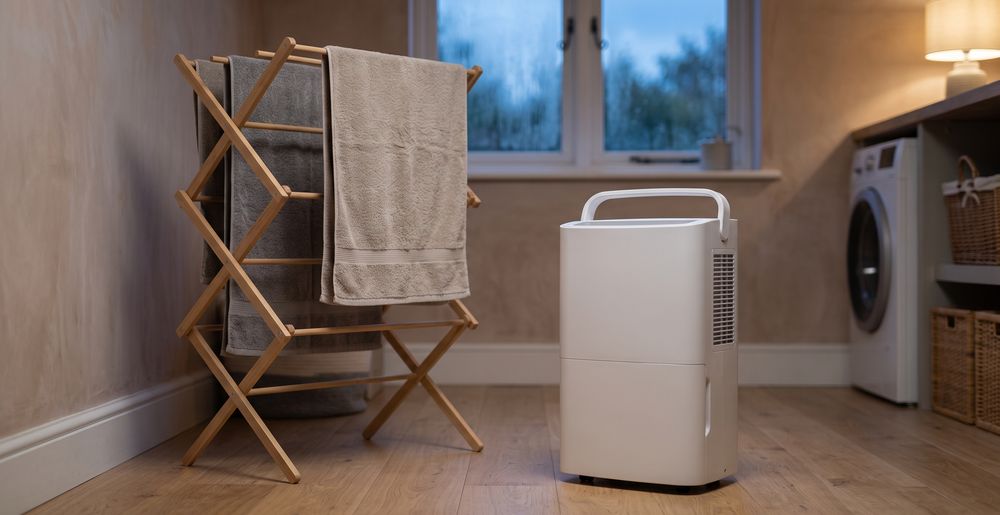
Best Dehumidifier for Damp, Mould, and Condensation

About the author...
Dave has been taking gadgets apart since he was old enough to be told not to. Every pick here is checked against the manufacturer's own documentation rather than the retail listing, and each star rating starts from a product's real Amazon customer score before being adjusted for performance, build quality, features and value. Read more about how ratings are calculated.
Table of contents
- Key Takeaways (TL;DR)
- How We Choose
- Quick Comparison
- Meaco 20L Low Energy Dehumidifier and Air Purifier 2 in 1
- Russell Hobbs RHDH1001 10L Dehumidifier
- Duronic DH201 20L Dehumidifier
- Hangsun 20L/Day WiFi Dehumidifier
- Inventor Fresh 12L/Day Dehumidifier
- EcoAir DD1 Simple MK3 Desiccant Dehumidifier
- EcoAir DD1 Mini Desiccant Dehumidifier
- Pro Breeze 1500ml Mini Dehumidifier
- Meaco 25L Ultra Low Energy Dehumidifier
- Best Dehumidifier FAQ
- The Best Dehumidifier for You
The best dehumidifier overall is the Meaco 20L Low Energy Dehumidifier. It backs up a genuine 20L/day extraction rate with a bolt-on HEPA filter and one of the largest verified-purchase review histories in the category. See the comparison below for how nine other well-reviewed alternatives stack up depending on your room, your climate, and your budget.
A dehumidifier pulls excess moisture out of the air. That matters if you're dealing with condensation on windows, black mould creeping up a bathroom ceiling, a musty smell in a wardrobe, or laundry that won't dry indoors over winter. It's not a cosmetic appliance, either. Persistent dampness and the mould growth that follows it are linked to respiratory symptoms and worsened allergies and asthma. That's why health bodies treat controlling indoor dampness as a real public-health recommendation, not just a housekeeping tip1.
Not every dehumidifier works the same way, and that's the single most important thing to get right before buying one. Compressor models use a cold coil to condense moisture out of the air, the same basic principle as a fridge. They're the cheaper, quieter choice for a normal living space. Desiccant models pull moisture through an absorbent wheel instead. They keep working just as well in a cold garage or unheated conservatory, where a compressor would struggle and spend half its time defrosting. Buying the wrong type for your space is the most common, most expensive mistake people make in this category, so the lineup below deliberately covers both.
Key Takeaways (TL;DR)
- Match capacity to room size, not price. A 10-12L/day unit suits a bedroom or bathroom; a 20L+ model is needed for a whole floor or a persistently damp house.
- Compressor dehumidifiers work best above roughly 10°C, and get progressively less effective and more defrost-heavy as the room gets colder.
- Desiccant dehumidifiers keep performing in cold, unheated spaces like garages and boats, at the cost of running slightly hotter and more expensively.
- Continuous drainage via a hose saves daily emptying, but needs a sink or drain nearby. Without it, expect to empty the tank at least once a day in a damp room.
- A HEPA filter add-on is a genuine bonus for allergy sufferers, not just marketing, but it adds cost and only appears on select compressor models.
- Noise is unavoidable with any compressor unit on its fastest setting — budget for somewhere to put it that isn't your bedroom headboard.
- Expect a 3-5 year realistic lifespan from a decent unit, longer with care; cheaper thermoelectric minis tend to fall off well before that.
How We Choose
We weigh four things for every dehumidifier here. How effectively it actually pulls moisture from the air, relative to its advertised extraction rate. How solid the build quality and tank or drainage design is. How useful its extra features genuinely are, rather than how long the spec sheet reads. And how it stacks up on price against the other picks in this exact lineup.
We don't run our own lab tests on these — no humidity chamber, no calibrated hygrometer rig, no climate-controlled room. What we do instead: read through the verified-purchase reviews in full, not just the star average. We weight the ones written weeks or months after purchase over launch-week first impressions, since that's where tank-drainage wear, control-panel reliability, and compressor longevity actually show up. Sometimes a product genuinely lacks that kind of track record. Sometimes the only long-term reviews we found were clearly describing a different model variant, pooled onto the same listing. Either way, we say so below rather than papering over it.
Quick Comparison
Each product's overall rating starts from its real Amazon customer rating, then gets adjusted (up to ±0.5) for real-world performance, build quality, features, and value. Click a product name to jump straight to its full review below.
| Product | Best For | Type | Key Detail | Capacity |
|---|---|---|---|---|
|
Meaco 20L Low Energy Dehumidifier and Air Purifier 2 in 1 4.9 |
Best Overall Dehumidifier | Compressor dehumidifier and air purifier | 20L/day, H13 HEPA filter | H13 HEPA filter, Energy Class A, laundry mode |
|
Russell Hobbs RHDH1001 10L Dehumidifier 4.9 |
Best Value Dehumidifier | Compressor dehumidifier | 10L/day, 30m² coverage | Smart timer, washable filter |
|
Duronic DH201 20L Dehumidifier 4.8 |
Best for Large Rooms and Dust Allergies | Compressor dehumidifier | 20L/day, 5.1L tank | 440W, child lock, continuous drainage |
|
Hangsun 20L/Day WiFi Dehumidifier 4.8 |
Best Smart WiFi App Control | Compressor dehumidifier | 20L/day, WiFi app control | WiFi app, continuous drainage, digital display |
|
Inventor Fresh 12L/Day Dehumidifier 4.9 |
Best Mid-Range All-Rounder | Compressor dehumidifier | 12L/day, R290 refrigerant | Eco-friendly R290 refrigerant, continuous drainage |
|
EcoAir DD1 Simple MK3 Desiccant Dehumidifier 4.8 |
Best for Cold Garages and Unheated Spaces | Desiccant dehumidifier | 7.5L/day, works down to 1°C | 1-35°C operating range, 3-year warranty |
|
EcoAir DD1 Mini Desiccant Dehumidifier 4.8 |
Best Compact Desiccant for Small Spaces | Desiccant dehumidifier | 6L/day, 5.1kg | 32dBA quiet operation, 3-year warranty |
|
Pro Breeze 1500ml Mini Dehumidifier 3.9 |
Best Ultra-Quiet Mini for Wardrobes and Caravans | Thermoelectric (Peltier) mini dehumidifier | 1500ml tank | Peltier technology, no compressor |
|
Meaco 25L Ultra Low Energy Dehumidifier 4.9 |
Best for Large Family Homes | Compressor dehumidifier | 25L/day | Ultra low energy, digital display, laundry mode |
Meaco 20L Low Energy Dehumidifier and Air Purifier 2 in 1
Best Overall Dehumidifier
based on 3789 Amazon reviews (4.6★), adjusted for performance, build and value
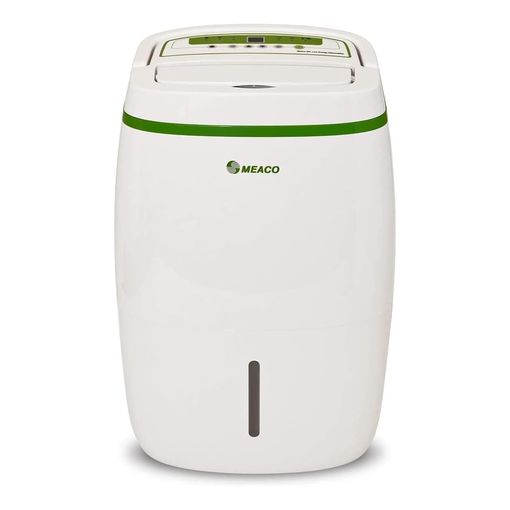
What We Love About the Overall Pick
Meaco built its reputation on dehumidifiers specifically, not on a general appliance catalogue, and the 20L model shows it. It offers a genuine 20L/day extraction rate for medium-to-large homes. A clip-in H13 HEPA filter turns it into a basic air purifier when allergy season hits. An Energy Class A rating keeps running costs reasonable, even used daily. Nearly 3,800 verified reviews is an unusually deep track record for this category. The pattern in them is consistent: buyers report loft and window condensation disappearing within a week of use. One reviewer used it for three weeks straight in a five-bedroom house. The unit "has transformed the house," they said, and even the kids noticed the difference from day one. It isn't cheap, and a couple of owners mention the weight makes it awkward on stairs. Still, nothing else in this lineup backs up its claims with this much owner history.
The Overall Pick: All The Details
The 20L/day extraction figure is tested at 20°C and 60% relative humidity. That's the industry-standard benchmark, not a best-case marketing number. It ships with a 2-metre power cable, a tip-over safety cutout, and a detachable water tank that's straightforward to carry to a sink. There's no continuous-drainage hose included as standard. The HEPA filter is sold as a clip-in accessory and needs replacing roughly every three months with regular use. Meaco backs the unit with a two-year warranty, and several reviewers specifically praised its customer support for resolving filter and parts queries quickly.
Russell Hobbs RHDH1001 10L Dehumidifier
Best Value Dehumidifier
based on 343 Amazon reviews (4.6★), adjusted for performance, build and value
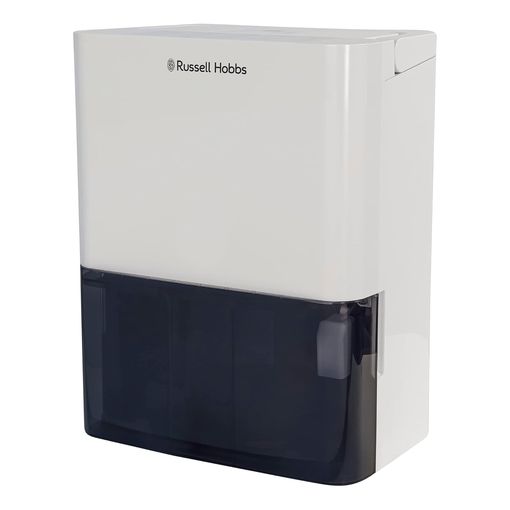
What We Love About the Value Pick
Russell Hobbs is a known name with real support behind it, and that matters more in this category than in most. A dehumidifier that breaks after a year with no warranty backup is a worse deal than a pricier unit that lasts. The RHDH1001 covers a 30m² room at a genuinely accessible price point, with a smart timer and digital humidity readout that undercut units costing noticeably more. It gives up some of the finesse of the pricier picks here: there's no app, no HEPA option, and the tank needs manual emptying. One owner used it near-daily for two years in a mould-prone bedroom. They said they'd "never touched" the filter, and still pulled ten pints of water out of the room in a single week when needed. That's a genuinely reassuring signal for a budget unit.
The Value Pick: All The Details
The RHDH1001 is rated for 10 litres/day extraction and suits rooms up to roughly 30m². That puts it firmly in bedroom-and-bathroom territory rather than whole-house duty. It has a washable dust filter at the back that Russell Hobbs recommends cleaning every 30 days, a built-in humidity sensor with a visible readout, and a simple digital timer. There's no continuous-drainage hose port, so the tank has to be carried and emptied by hand. Russell Hobbs' standard warranty applies, and the brand has decades of small-appliance manufacturing behind it.
Duronic DH201 20L Dehumidifier
Best for Large Rooms and Dust Allergies
based on 584 Amazon reviews (4.6★), adjusted for performance, build and value
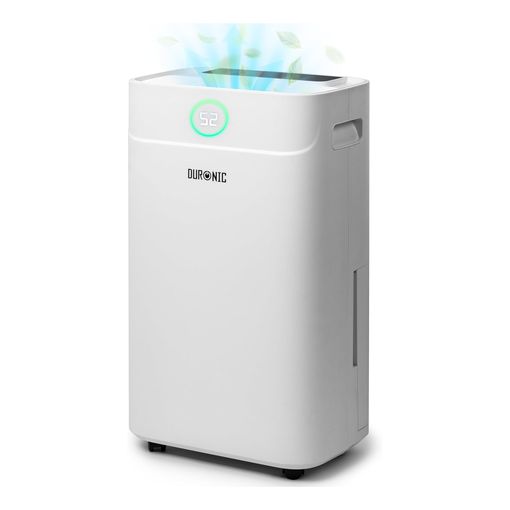
The Large-Room Pick Explained
Dust and allergy sufferers specifically ask for this category of dehumidifier, because lower humidity makes a room less hospitable to dust mites. The DH201 is built around a 20L/day rate with a child lock and a continuous-drainage option for running it unattended over long stretches. It covers a genuinely large footprint, and several owners mention using it on a two-storey landing to dry an entire house's worth of laundry racks at once. We weren't able to find a verified-purchase review, from an owner reporting back after months or years of use, that was unambiguously about this exact model. The long-term reviews we found instead described an older, since-discontinued Duronic unit pooled onto the same listing, so we're flagging that gap honestly rather than guessing.
Large-Room Pick: All The Details
The DH201 draws 440W and ships with a 5.1-litre tank. That's on the larger side for this capacity class and means fewer trips to empty it during heavy-humidity periods. It includes a child lock, a built-in timer, and both manual and continuous-drainage modes via a rear hose port. Reviewers consistently note it removes large volumes of water quickly, even in multi-room use with doors left open. A few mention the printed manual and control-panel icons are harder to follow than they'd like.
Hangsun 20L/Day WiFi Dehumidifier
Best Smart WiFi App Control
based on 447 Amazon reviews (4.6★), adjusted for performance, build and value
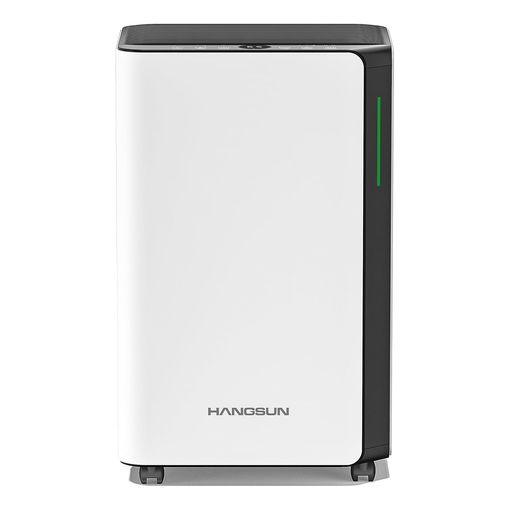
Why the Smart Pick Earns Its Spot
If you want to check humidity levels or switch modes from your phone, without walking to the utility room, the Hangsun is the pick. A genuine WiFi app connection sits alongside the usual 20L/day extraction, digital humidity display, and continuous-drainage option. Reviewers who've had it for a week or two report it solving stubborn condensation in garden rooms and upstairs landings quickly. One called it "effective, easy to use, and surprisingly powerful." Its review history skews recent compared with the rest of this lineup. We couldn't find a verified-purchase review establishing ownership over several months or longer. That's worth knowing going in, rather than assuming it has the same proven track record as the older brands here.
Smart Pick: All The Details
The unit covers up to roughly 325 square feet, or about 30m², and includes a digital display, continuous-drainage hose port, and a 24-hour timer alongside the WiFi app control. One recurring complaint in reviews concerns the water-tank drawer. It's smaller than the unit's overall size suggests, which means more frequent emptying in very damp rooms. A couple of owners also note water can spill from underneath if the drawer is jostled while full. Worth keeping in mind if you plan to run it unattended rather than on continuous drainage.
Inventor Fresh 12L/Day Dehumidifier
Best Mid-Range All-Rounder
based on 1901 Amazon reviews (4.6★), adjusted for performance, build and value
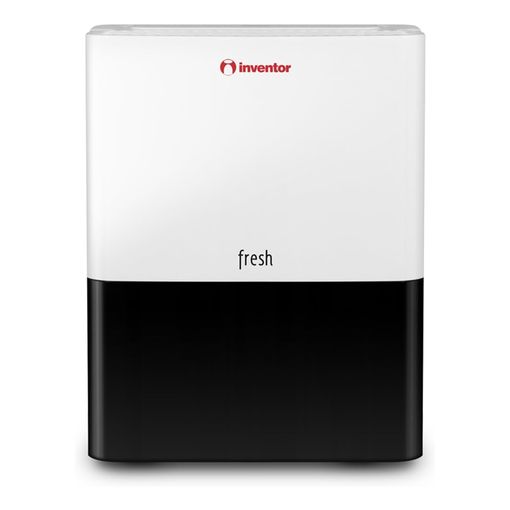
The All-Rounder, Justified
Nearly 1,900 reviews back up the Inventor Fresh's position as a genuine middle-ground pick. It has a 12L/day extraction rate that suits most single rooms or small flats, plus continuous drainage for set-and-forget operation. It also uses R290 refrigerant, a low-impact gas that's now the modern standard in small appliances, replacing older, more harmful refrigerants. It isn't silent, and a couple of first-time buyers were initially unimpressed. They hadn't realised it can take up to 24 hours of continuous running before it visibly starts collecting water in a very damp room. One long-term owner reviewed it three years after purchase. Their unit was "still powering on after 3 years like it was on day one," they said. They'd bought a second as a gift and recommended it to family.
All-Rounder: All The Details
Rated for 12L/day extraction, the Fresh suits rooms up to roughly 15m² at full effectiveness, with wider coverage possible if doors are left open between rooms. It uses R290 refrigerant gas, a low-GWP option increasingly standard across small compressor appliances, and includes continuous drainage, a 24-hour timer, and a laundry-drying mode. Several reviewers specifically praised Inventor's customer service for handling filter and parts questions directly, rather than redirecting to Amazon.
EcoAir DD1 Simple MK3 Desiccant Dehumidifier
Best for Cold Garages and Unheated Spaces
based on 6319 Amazon reviews (4.6★), adjusted for performance, build and value
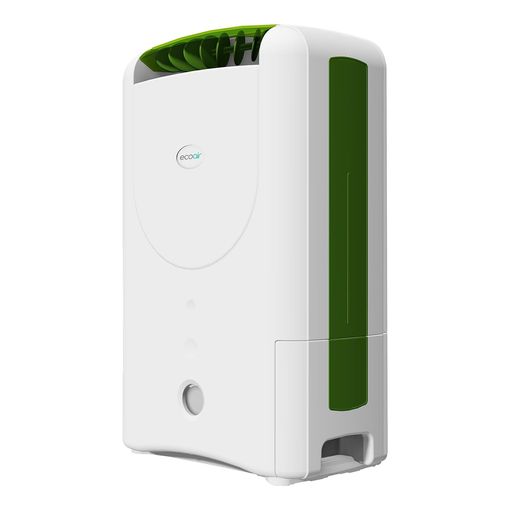
Why This Is the Cold-Space Pick
This is where the compressor-versus-desiccant split actually matters in practice. A compressor unit loses effectiveness as the room gets colder, and spends more and more of its cycle defrosting itself below about 10°C. EcoAir's desiccant wheel doesn't rely on a cold surface at all. The manufacturer rates the DD1 Simple MK3 for operation down to 1°C2. That covers an unheated garage, a boat, or a cellar through winter, without the performance drop-off a compressor would suffer. With over 6,300 verified reviews, this is the single most-reviewed product in this entire lineup, and the pattern is strongly positive for exactly this cold-space use case. The honest trade-off: it's a desiccant, so the air coming out runs noticeably warmer than a compressor's. That's a bonus in a cold garage, but an unwelcome side effect anywhere already warm.
Cold-Space Pick: All The Details
EcoAir rates the DD1 Simple MK3 at 7.5L/day extraction, tested at 20°C and 60% relative humidity, with an operating range of 1-35°C. It has a 2-litre tank and a simple rotary dial rather than a digital display, which several reviewers specifically liked for ease of use by older household members. It weighs 6kg, runs at 34dB on its low setting, and includes a silver-ion antibacterial filter. EcoAir backs it with a 3-year warranty2. We checked several long-reported reviews on this listing and found a number of them clearly describing older EcoAir Classic or DD122 models, rather than this exact Simple MK3 variant. We've excluded those from this writeup rather than attributing mismatched experience to the wrong product.
EcoAir DD1 Mini Desiccant Dehumidifier
Best Compact Desiccant for Small Spaces
based on 325 Amazon reviews (4.6★), adjusted for performance, build and value
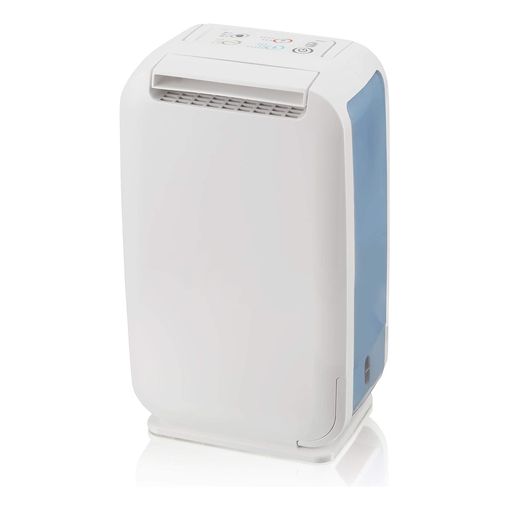
The Compact Desiccant, Explained
At 5.1kg and a modest 6L/day extraction, the DD1 Mini trades capacity for genuine portability and near-silent 32dBA operation. That makes it the right call for a single damp wardrobe, a small boat cabin, or a conservatory, rather than a whole house. What really stands out is longevity. One owner's review was originally posted in 2018 and updated in late 2025. They bumped their rating up to five stars specifically because the unit was "about 8 years" old, used most days for laundry and general use, and "hasn't missed a beat." That kind of multi-year endorsement is rare in this category. It says more about build quality than any spec sheet.
Compact Desiccant: All The Details
Rated at 6 litres/day extraction and suited to smaller rooms than its 7.5L sibling above, the DD1 Mini runs at a quiet 32dBA. It includes a 4-in-1 filter for basic dust and odour reduction alongside its desiccant wheel. EcoAir covers it with a 3-year warranty. The same original 2018 reviewer noted it's light enough to move around a flat regularly without strain, something the heavier compressor units in this lineup can't match.
Pro Breeze 1500ml Mini Dehumidifier
Best Ultra-Quiet Mini for Wardrobes and Caravans
based on 37090 Amazon reviews (4.1★), adjusted for performance, build and value
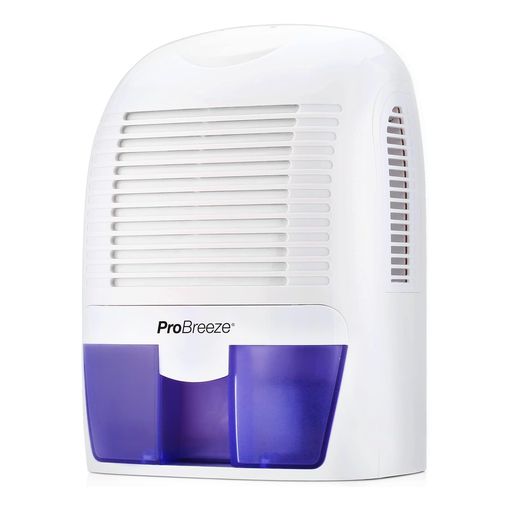
Where This Mini Fits, Honestly
This is the lowest-scoring product in the lineup. It's here on merit for one specific job: something genuinely silent and pocket-sized for a caravan, wardrobe, or small bathroom, where a full-size compressor or desiccant unit would be overkill. It uses Peltier, or thermoelectric, technology rather than a compressor. That means no moving parts to wear out. It also means meaningfully less extraction power than anything else on this list, and that's reflected honestly in its build and performance scores here. Its 37,000-plus reviews make it the single most-reviewed dehumidifier in this entire category on Amazon. A sizeable share of those span multiple capacity variants pooled onto one listing, though, which thinned our options for a clean, on-variant longevity quote. One verified owner of this exact 1500ml size used it seasonally across two winters. They reported a frightening fault: smoke and a burnt circuit board, on a night they happened to be awake to catch it. That's a single user's experience, not a general verdict on the product. Still, it's the kind of honest, negative long-term signal we think belongs here rather than being left out.
Mini Pick: All The Details
The unit holds up to 1500ml before auto shut-off and is rated for rooms up to roughly 220 square feet. Peltier technology means it runs without a compressor and is genuinely near-silent. That's the entire reason to choose it over a compressor mini. It has no digital display, just a water-level viewing window and an auto-shutoff light, and Pro Breeze's standard warranty applies. Given the safety report above, we'd suggest plugging it into a socket you'd notice tripping if you run it unattended overnight. Avoid leaving it running in an unventilated space for extended unsupervised stretches, as you would with any mains appliance.
Meaco 25L Ultra Low Energy Dehumidifier
Best for Large Family Homes
based on 305 Amazon reviews (4.6★), adjusted for performance, build and value
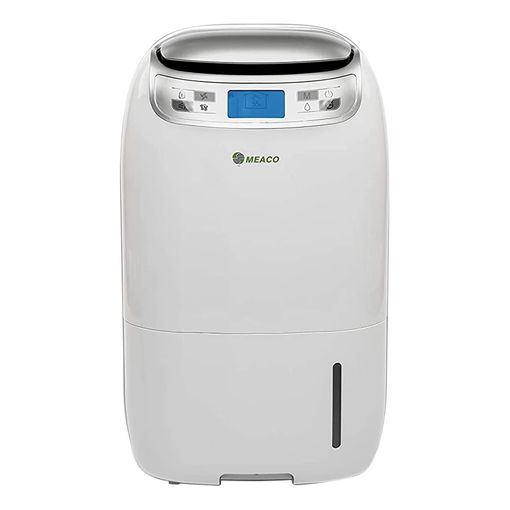
Why This Is the Big-House Pick
The largest capacity in this lineup, the 25L model is built for a genuinely large or persistently damp family home, where a 20L unit would be running close to constantly. One owner, reviewing after several months of daily use, said it had removed black mould that "has not gone back again." Drying clothes and bedding indoors had become "a God send," they added. They said they "couldn't live without it." It commands a premium price for that capacity. More than one reviewer flagged this directly, including the reviewer above, who said they were "delighted" but "wish it wasn't so expensive."
Big-House Pick: All The Details
Meaco rates this unit at 25L/day extraction, intended for medium-to-large family homes rather than single rooms. It has a digital display, adjustable fan speed, and a dedicated laundry-drying mode. The water tank has a narrow viewing slot that a couple of owners found hard to read in low light. The tank itself isn't the easiest to set down when full, due to its base shape, though both are minor niggles rather than dealbreakers. It carries the same engineering pedigree and manufacturer support as the 20L model above. Meaco sells roughly equal numbers of compressor and desiccant units, so it has no particular reason to oversell either technology.
Best Dehumidifier FAQ
What's the actual difference between a compressor and a desiccant dehumidifier? A compressor dehumidifier works like a small fridge. It chills a coil, and moisture condenses out of the air that passes over it. A desiccant dehumidifier pulls air through an absorbent wheel instead, with no cold surface involved. Compressor units are generally cheaper to run and are the right default for most living spaces above about 10°C. Desiccant units cost a little more to run. But they keep working at full effectiveness in colder, unheated spaces, where a compressor would struggle and spend much of its time defrosting2.
What size dehumidifier do I actually need? Rated extraction, in litres per day, is tested under standard lab conditions, not your actual room. Treat the figure as a relative guide, not a literal promise. As a rough rule, 10-12L/day suits a single bedroom or bathroom. 20L/day suits a larger room or a persistently damp flat. 20-25L/day is appropriate for a whole small house, or a severe damp problem spread across several rooms.
Will a dehumidifier actually stop mould from coming back? It addresses the root cause: excess moisture in the air. That's the main driver of the mould and dampness that international health guidance links to respiratory symptoms and worsened allergies1. It won't fix an active leak, rising damp, or a structural ventilation problem, and existing mould should still be cleaned off surfaces. Think of it as prevention and ongoing control, not a one-time cure for a structural issue.
Can I use a dehumidifier instead of a tumble dryer? Yes. With a laundry mode, most of the models above will dry a load of washing hung on an indoor airer, usually within several hours rather than tumble-dryer speed. It uses meaningfully less electricity than a tumble dryer, and it avoids the extra humidity a tumble dryer's exhaust or condenser can add to a room. That's one of the main reasons this category has grown in popularity.
Is it safe to leave a dehumidifier running unattended or overnight? Most modern units include a tip-over safety cutout and an automatic shutoff when the tank is full. That covers the two most common failure points. As with any mains-powered appliance, check the cord and plug for damage from time to time, and avoid running it on an extension lead not rated for its wattage. Electrical safety rules and plug standards vary by country, so check your own appliance is certified for your local supply before plugging it in.
Why does my dehumidifier blow out warm air? This is normal and expected, not a fault. Compressor units warm the air slightly as it passes through. Desiccant units warm it noticeably more, by around 10°C in some cases, because the desiccant wheel releases heat as it regenerates. In a cold room, this extra warmth is a genuine side benefit. In an already-warm room, it's worth factoring into your choice of technology.
Do I need a hygrometer as well? It's a useful, inexpensive add-on. Most dehumidifiers here have a built-in humidity sensor and display, but a separate hygrometer lets you confirm the reading independently and check humidity in rooms the dehumidifier isn't currently in. Aiming for 40-60% relative humidity is a reasonable general target for most homes.
How long should a dehumidifier realistically last? A well-built compressor or desiccant unit from an established brand can reasonably be expected to run for several years. That's with normal use and basic filter care. A few verified-purchase reviews here report three, four, or even eight years of daily or near-daily service. Cheaper thermoelectric mini units tend to have a shorter realistic lifespan. We found at least one reported hardware failure in that category after roughly two winters of seasonal use.
Does the water collected need any special disposal? No. It's ordinary condensed water. You can pour it down a sink, or use it for low-stakes tasks like topping up a steam iron or cleaning windows, as a couple of reviewers mentioned doing. It isn't purified to drinking standard, though, and shouldn't be consumed.
What else should I pair with a dehumidifier for a genuinely damp room? Good ventilation does more of the underlying work than people expect. A dehumidifier manages moisture that's already in the air, but an extractor fan, or simply opening a window periodically, reduces how much moisture builds up in the first place. For a bathroom specifically, pairing a dehumidifier with better extraction tends to solve persistent condensation faster than relying on the dehumidifier alone.
The Best Dehumidifier for You
If you want one dehumidifier that handles a whole normal-sized home without overthinking it, the Meaco 20L is the safest, best-reviewed choice here. Buyers on a tighter budget should look at the Russell Hobbs RHDH1001. Anyone dealing with an unheated garage, boat, or conservatory needs a desiccant model like the EcoAir DD1 Simple MK3 rather than a compressor, regardless of how good its reviews look. For a persistently damp, larger family home, step up to the Meaco 25L. For a single damp wardrobe or small space, the EcoAir DD1 Mini or the Pro Breeze mini will do the job without the footprint of a full-size unit.